






Aerial view of a square outdoor air conditioning condenser unit on a concrete pad beside a house wall with a sliding glass door.

AC Maintenance in Centreville, MD

Tell us about the job

Takes about a minute. No obligation.

Tune-up, service, or cleaningCentral ACQueen Anne's County, MD
Step 1 of 2

What ZIP code is the job in?

Electricity in Maryland ran 17.86 cents per kilowatthour in 2024, well above what a lot of other states pay. A dirty coil or a weak capacitor makes your AC work harder to do the same job, and every extra minute it runs gets billed at that rate. A unit that's been skipped on maintenance for a few summers is pulling more power than it needs to, month after month. That gap is small on any one bill but it doesn't go away on its own. A tune-up catches the stuff driving that extra draw before the season runs up the cost of ignoring it.

4 months
June through September, your air conditioner is on duty
86°F
the average summer afternoon it cools against
10 hail events
in ten years, and hail bends the fins on outdoor coils
104 wind events
in ten years, and wind drives debris into outdoor units
Isometric line illustration of a cutaway single-story house showing interior rooms with furniture, ceiling ductwork, an indoor air handler, and an outdoor condenser unit connected by lines along the exterior wall.
Your air conditioner works hardest from June through August.

NOAA nClimDiv, 1991–2020 normals

Half the homes in Queen Anne's County were built in 1990 or later.

A system that age still has years of working life, and a yearly check keeps it that way.

Four months of real work is still worth one visit a year

Cooling runs June through September
Summer afternoons average 86°F
104 damaging wind events from 2015 to 2024
June is when it goes to workCooling runs June through September here. Get the check done in May.

A tune-up is where that extra draw gets found instead of paid for. A technician checks the refrigerant charge, tests the capacitor, and cleans the coil, since a weak reading on any of those makes the unit run longer than it should. Left alone, that adds minutes to every cycle, all season. Catching it before the heat sets in means the fix happens once instead of showing up on the bill month after month. That's the case for doing this every year instead of waiting until something fails.

Keep a newer system running like one

If your system came with a house built in 1990 or later, it's got a lot of working life left. A yearly check is what keeps it that way instead of letting small problems chip away at it unnoticed.

Find a contractor
A gray residential air conditioner condenser unit mounted on a concrete pad in an open grass field.

What a season of running does to the filter, the coils and the drain

The filter sits in the path of every bit of air the system moves, and it loads up with dust the whole time the system runs. Once it's clogged, air can't get through it the way it should, and the coil behind it starts starving for airflow. A coil that isn't getting enough air across it has to stay cold longer to pull the same heat out, so the compressor runs longer than it needs to. The outdoor coil has its own version of this problem. Dirt and grass clippings cake onto the fins and the coil can't shed heat the way it was built to, so the compressor works harder from that side too. The drain is a different kind of risk. It only has to clog partway before condensate backs up instead of draining out, and from there it finds the nearest low spot, which is usually a pan or the ceiling underneath it. None of these parts fail all at once. They foul gradually with use, and a system that runs for months straight collects a lot more of that buildup than one that only kicks on now and then.

The refrigerant charge drifts without anyone touching it

A system can lose a little refrigerant through the fittings and flare joints over time without ever springing a real leak. Low charge means the compressor runs longer to move the same heat. It also runs colder than it should on the indoor coil. Left long enough, that coil can ice over, and once it's iced the airflow drops even further. Nobody sees any of this happen. It just shows up as a system that runs more and cools less.

Skipped maintenance doesn't break the system, it wears out the parts that protect it

A capacitor that's starting to weaken still starts the compressor most of the time, so there's no obvious sign anything is wrong. It just makes the motor work harder to start each cycle, and that wear adds up. A dirty coil or a low charge works the same way. Neither one causes a breakdown on day one. What it does is push the compressor and motor past the load they were built for, cycle after cycle, until something finally gives out.

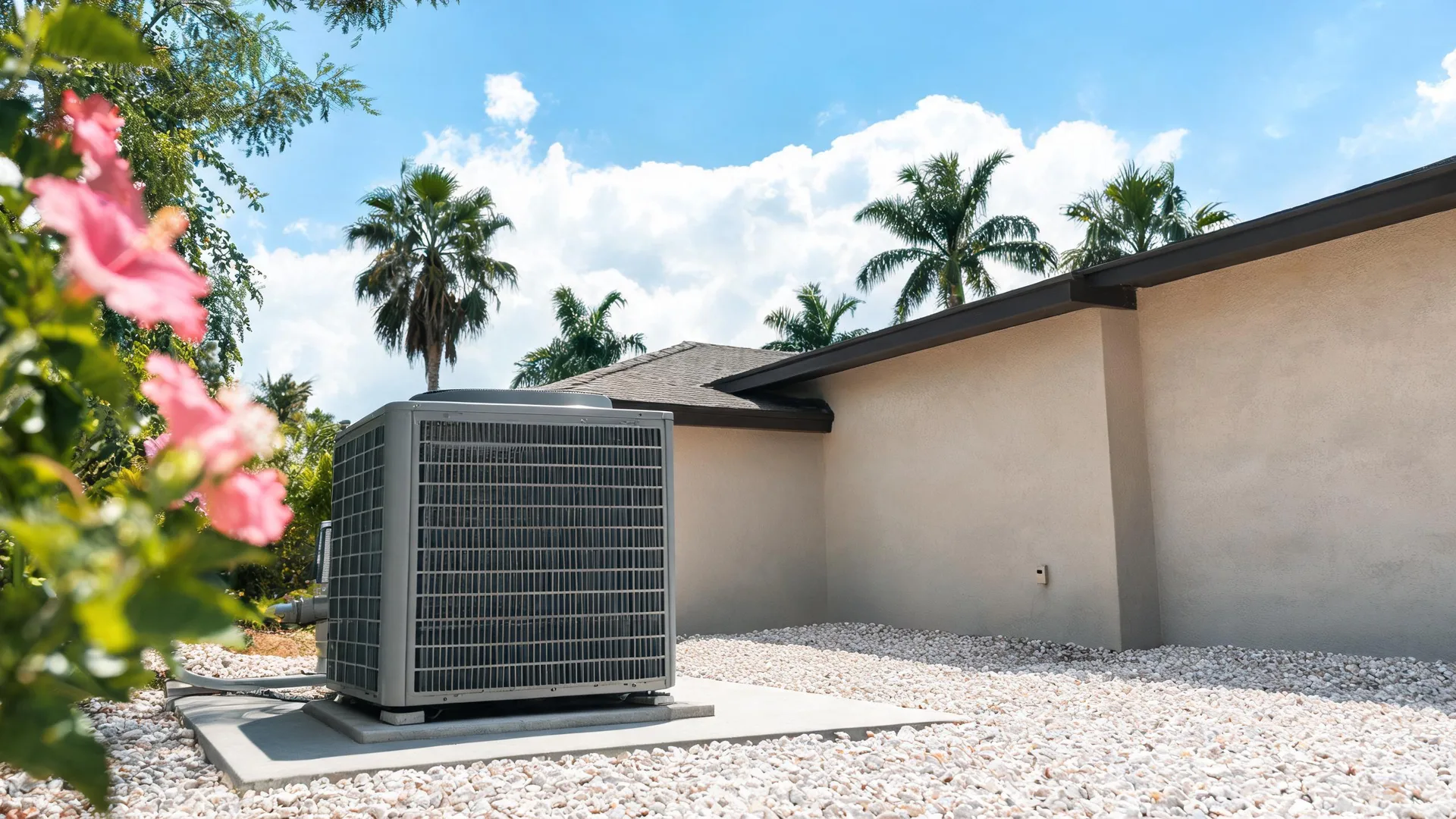
An overhead view of a residential air conditioning condenser unit mounted on a concrete pad next to a house with vinyl siding.

Book your AC tune-up in May, before homes here start needing cooling in June.

  1. Jan
  2. Feb
  3. Mar
  4. Apr
  5. May
  6. Jun
  7. Jul
  8. Aug
  9. Sep
  10. Oct
  11. Nov
  12. Dec

A tune-up checks the refrigerant charge, cleans the coils, tests the capacitor and tightens the electrical connections.

A proper tune-up starts with the technician cutting power and pulling the filter, since nothing downstream can be checked right if airflow is blocked. From there it's gauges on the refrigerant lines to check the charge against what the system is supposed to hold, a test of the capacitor and contactor in the outdoor unit, and a look at the run amps on the compressor and fan motor while everything is running. The indoor coil and outdoor coil both get inspected and cleaned if they need it, since a coil caked with dust or debris can't move heat the way it should. The condensate drain gets flushed, because a clog there backs water up into the pan and sometimes past it. The last step is checking the thermostat calls for cooling properly and the system cycles on and off the way it's supposed to. None of this is guesswork. It's the same set of checks every time, done whether the system seems fine or not, because the parts that fail quietly are the ones this is built to catch.