





A row of similar gray clapboard houses with gabled roofs behind a white picket fence, with mown grass in front and dense green trees behind.

AC Maintenance in Chesapeake Beach, MD

Tell us about the job

Takes about a minute. No obligation.

Tune-up, service, or cleaningCentral ACCalvert County, MD
Step 1 of 2

What ZIP code is the job in?

Electricity in Maryland ran 17.86 cents per kilowatthour in 2024, higher than a lot of the country. A dirty coil or a low charge makes the compressor work harder to do the same job, and that extra draw shows up on every bill until it's fixed. A unit that's never been serviced is usually the one working hardest for the least cooling. At this rate, the waste costs more here than it would somewhere with cheaper power.

4 months
June through September, your air conditioner is on duty
85°F
the average summer afternoon it cools against
14 hail events
in ten years, and hail bends the fins on outdoor coils
120 wind events
in ten years, and wind drives debris into outdoor units
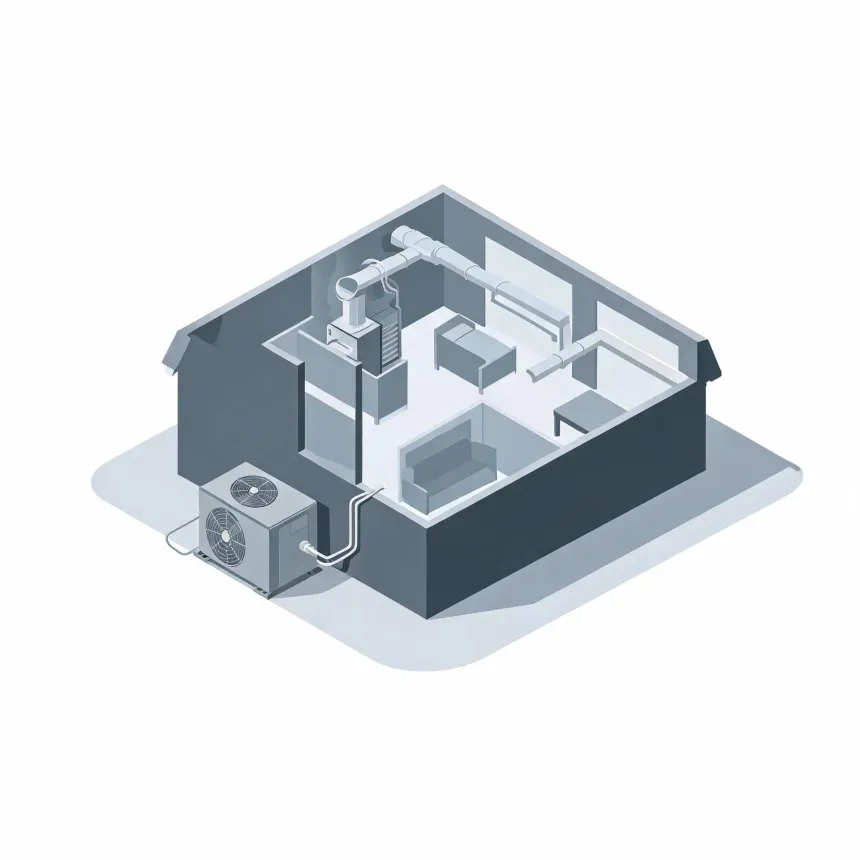
Isometric grayscale illustration of a cutaway house interior showing a furnace with ductwork, interior rooms with furniture, and an outdoor condenser unit connected by lines at the exterior wall.
Your air conditioner works hardest from June through August.

NOAA nClimDiv, 1991–2020 normals

Four months of real heat is enough to expose whatever maintenance skipped.

One visit before June catches it before the season does.

June is when it starts working. May is when it gets checked.

Cooling runs June through September
Summer afternoons average 85°F
120 damaging wind events from 2015 to 2024
A lot of these systems are still youngHalf the homes in Calvert County were built in 1990 or later.

A tune-up before summer is what keeps that 17.86 cents from turning into a bigger bill than it needs to be. A technician cleans the coil, checks the refrigerant charge, and makes sure the compressor isn't pulling more current than it should to do the same job. That's the whole point of the visit. Skip it, and the system still runs, just harder, and you pay for that difference on every bill until someone fixes it. The visit costs less than the waste does.

A newer system is still worth protecting with a yearly check

If your system came with a house built in 1990 or later, it's still got a lot of years ahead of it. A yearly check before summer keeps it running the way it did when it was new, instead of losing ground a little at a time.

Find a contractor
A gray metal air conditioning condenser unit mounted on a concrete pad in a flat grassy field under a partly cloudy sky.

The machine tells you before it quits

A system that's losing ground doesn't usually stop working. It just starts working harder to do the same job, and that shows up before anything actually breaks. Warm air out of the vents when it's been running a while, ice on the copper line running to the outdoor unit, a short cycle that used to be a long one. A fan that rattles when it starts or a compressor that hums and doesn't kick in. Any of these means something's off, and the rest of the season is just more of the same strain on the same part until it gives out.

The filter is the first thing to fail

A clogged filter chokes the airflow the whole system depends on. The coil behind it needs air moving across it to pull heat out of the house, and without enough air that coil can ice over even on a hot day. Once it ices, it stops cooling and starts blocking airflow entirely, and the system just runs without doing much of anything.


The drain line decides where the water goes

Every pound of moisture the coil pulls out of the air has to leave through the condensate drain. That line grows algae over time like any damp tube does, and once it clogs the water backs up into the pan and the house instead of outside. A technician clears it during a tune-up so the blockage never gets the chance to build.

Overhead view of a gray residential air conditioning condenser unit mounted on a concrete pad beside a house with asphalt shingle roofing.

Book your AC tune-up in May, before homes here start needing cooling in June.

  1. Jan
  2. Feb
  3. Mar
  4. Apr
  5. May
  6. Jun
  7. Jul
  8. Aug
  9. Sep
  10. Oct
  11. Nov
  12. Dec

A tune-up checks the refrigerant charge, cleans the coils, tests the capacitor and tightens the electrical connections.

A tune-up isn't a quick look and a sticker on the unit. The technician checks refrigerant charge against what the system actually calls for, not just whether the lines feel cold. The capacitor and contactor get tested under load, since those are the parts that wear out quietly and then strand the compressor on the hottest day of the year. Electrical connections get tightened, because a loose one builds resistance and heat right at the terminal. The blower wheel gets checked for dust buildup, which throws off airflow even when the filter upstream is clean. None of this is guesswork. Each reading gets compared against what the manufacturer specifies for that unit, so the technician knows whether it's running the way it's supposed to or just running.