






An outdoor air conditioning condenser unit positioned beside a blue-sided house at sunset.

AC Maintenance in Columbia, MD

Tell us about the job

Takes about a minute. No obligation.

Tune-up, service, or cleaningCentral ACHoward County, MD
Step 1 of 2

What ZIP code is the job in?

Electricity in Maryland ran 17.86 cents per kilowatthour in 2024, well above what a lot of the country pays. A dirty coil or a low charge makes the compressor work harder to hit the same temperature, and that extra work shows up on the meter every month the system runs. A tune-up catches the dirty coil or the weak capacitor before it turns into harder work for the compressor. That's worth more here than somewhere power is cheap, because the same inefficiency costs more to carry all summer.

4 months
June through September, your air conditioner is on duty
85°F
the average summer afternoon it cools against
14 hail events
in ten years, and hail bends the fins on outdoor coils
177 wind events
in ten years, and wind drives debris into outdoor units
Isometric cutaway illustration of a single-story house showing interior rooms with furniture, attic ductwork connected to an indoor air handler, and an outdoor condenser unit on a pad linked by refrigerant lines.
Your air conditioner works hardest from June through August.

NOAA nClimDiv, 1991–2020 normals

Howard County saw 177 damaging wind events between 2015 and 2024.

One tune-up a year checks the wiring and connections before wind works them loose.

June is the first full month of cooling here, and the hardest. May is when to get the system checked.

Cooling runs June through September
Summer afternoons average 85°F
177 damaging wind events from 2015 to 2024

Get the refrigerant charge and the outdoor coil checked while the system is still running light, before the hot stretch arrives. Ask for the capacitor to be tested under load, not just looked at, since a weak one can read fine sitting still and fail once the compressor leans on it. Catching that now is cheap. Ignoring it means the same system runs harder at 17.86 cents a kilowatthour straight through the summer.

Half the homes here were built in 1989 or later, and the systems in them are still worth protecting

Half the homes in Howard County were built in 1989 or later. A system that age still has years ahead of it if it's kept clean and checked. A yearly visit catches the small wear, the dirty coil, the weak connection, before it turns into a bigger repair or a shorter life for the unit.

Find a contractor
A man in a cap, dark shirt and tan work pants walks up concrete steps toward a red front door, carrying a canvas tool bag with tools in its side pocket.
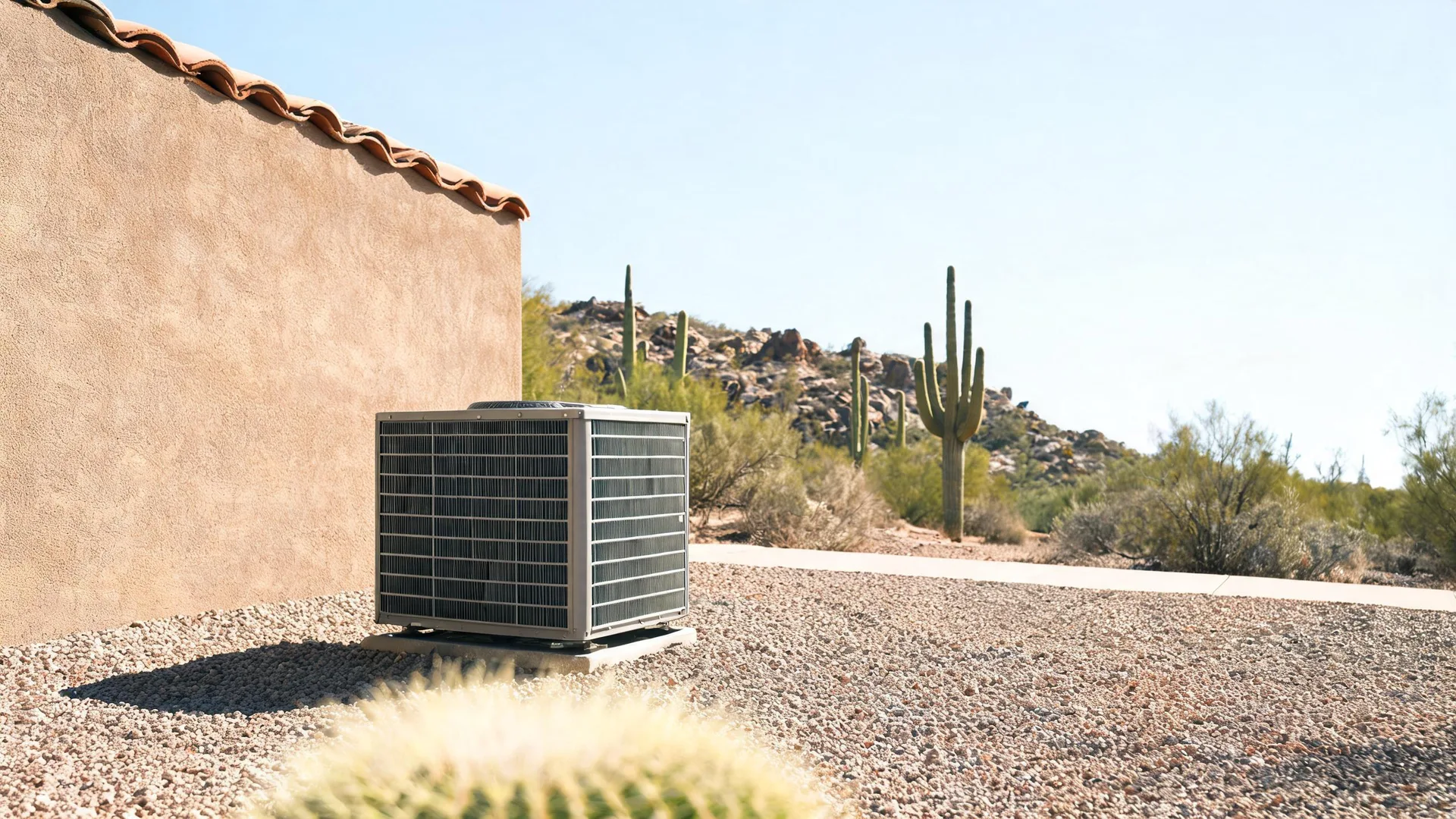
A gray residential air conditioning condenser unit mounted on a concrete pad outdoors, surrounded by green grass under a partly cloudy blue sky.

Catch it young and it stays young longer

If your system came with the house and the house is on the newer side, keep the yearly check going. A unit that's only run a handful of summers has the most to gain from staying clean and caught early, since small wear fixed now is what keeps it running that whole stretch without a major repair.

Gauges on, panels off

A thorough visit puts gauges on the system and checks the charge against what the nameplate calls for, not just whether the air coming out feels cold. The panel comes off the condenser so the coil and the wiring inside get looked at, not just hosed down from the outside. A quick visit skips the gauges and goes by feel, which misses a charge that's off by enough to matter.

What a short visit leaves on the table

Checking the capacitor under load, clearing the condensate drain, and tightening electrical connections all take a few extra minutes a fast visit tends to skip. None of those show up as a problem today. They show up midsummer as a tripped float switch, a seized compressor, or a connection that's worked itself loose from months of vibration.

An outdoor air conditioning condenser unit positioned on a concrete pad next to a blue-sided house, surrounded by green shrubs and flowering hydrangeas at sunset.

Book your AC tune-up in May, before homes here start needing cooling in June.

  1. Jan
  2. Feb
  3. Mar
  4. Apr
  5. May
  6. Jun
  7. Jul
  8. Aug
  9. Sep
  10. Oct
  11. Nov
  12. Dec

A tune-up checks the refrigerant charge, cleans the coils, tests the capacitor and tightens the electrical connections.

A real tune-up starts outside at the condenser. The panel comes off, not just a rinse from the top, so the coil fins get cleaned where dirt actually builds up and the wiring inside gets a look. The fan motor gets checked for play in the bearing, since a wobble there now means a seized motor later. Inside, the evaporator coil gets checked too, along with the blower wheel, which collects dust that cuts airflow even when the filter is clean. The condensate drain gets cleared before it backs up and trips the float switch. None of this is guesswork. It's the same handful of parts, checked the same way, every time, because those are the parts that fail.