







An outdoor air conditioning condenser unit mounted on a concrete pad next to a blue-sided residential house at sunset.

AC Maintenance in Denton, MD

Tell us about the job

Takes about a minute. No obligation.

Tune-up, service, or cleaningCentral ACCaroline County, MD
Step 1 of 2

What ZIP code is the job in?

Electricity in Maryland ran 17.86 cents per kilowatthour in 2024, and a neglected air conditioner pulls more of it to do the same job. A dirty coil or a low charge makes the compressor work harder for the same cooling, and that extra draw shows up on every bill while the system runs. A tune-up gets it back to pulling only what it needs. Skip it for a season or two and the difference in power used can add up to more than the tune-up would have cost.

4 months
June through September, your air conditioner is on duty
86°F
the average summer afternoon it cools against
2 hail events
in ten years, and hail bends the fins on outdoor coils
75 wind events
in ten years, and wind drives debris into outdoor units
Isometric illustration of a cutaway house showing interior rooms, an attic furnace with large ducts, and an outdoor condenser unit connected by a line set, on a white background.
Your air conditioner works hardest from June through August.

NOAA nClimDiv, 1991–2020 normals

Half the homes in Caroline County were built in 1981 or later.

A system that age still has years of work left in it, worth protecting with a yearly check.

June is when cooling starts here, so May is when it gets checked

Cooling runs June through September
Summer afternoons average 86°F
75 damaging wind events from 2015 to 2024
Four months of workCooling runs June through September here, with afternoon highs near 86°F.

A tune-up is a contractor going through the system before the weather turns hot. The coil gets cleaned, the charge gets checked against what the system calls for, and the electrical connections get tightened down. None of that shows up to the eye. It shows up on the meter instead, every month the system runs. Getting it done early means whatever the check turns up gets fixed before the compressor has to work through a Maryland summer on a dirty coil or a low charge.

A tune-up pays for itself here

A neglected system uses more power, and power costs more here. A tune-up pays for itself.

Find a contractor
A man in a dark cap, gray T-shirt and brown work pants climbs porch steps toward an orange front door, carrying a worn canvas tool bag, with a potted shrub beside the entry.
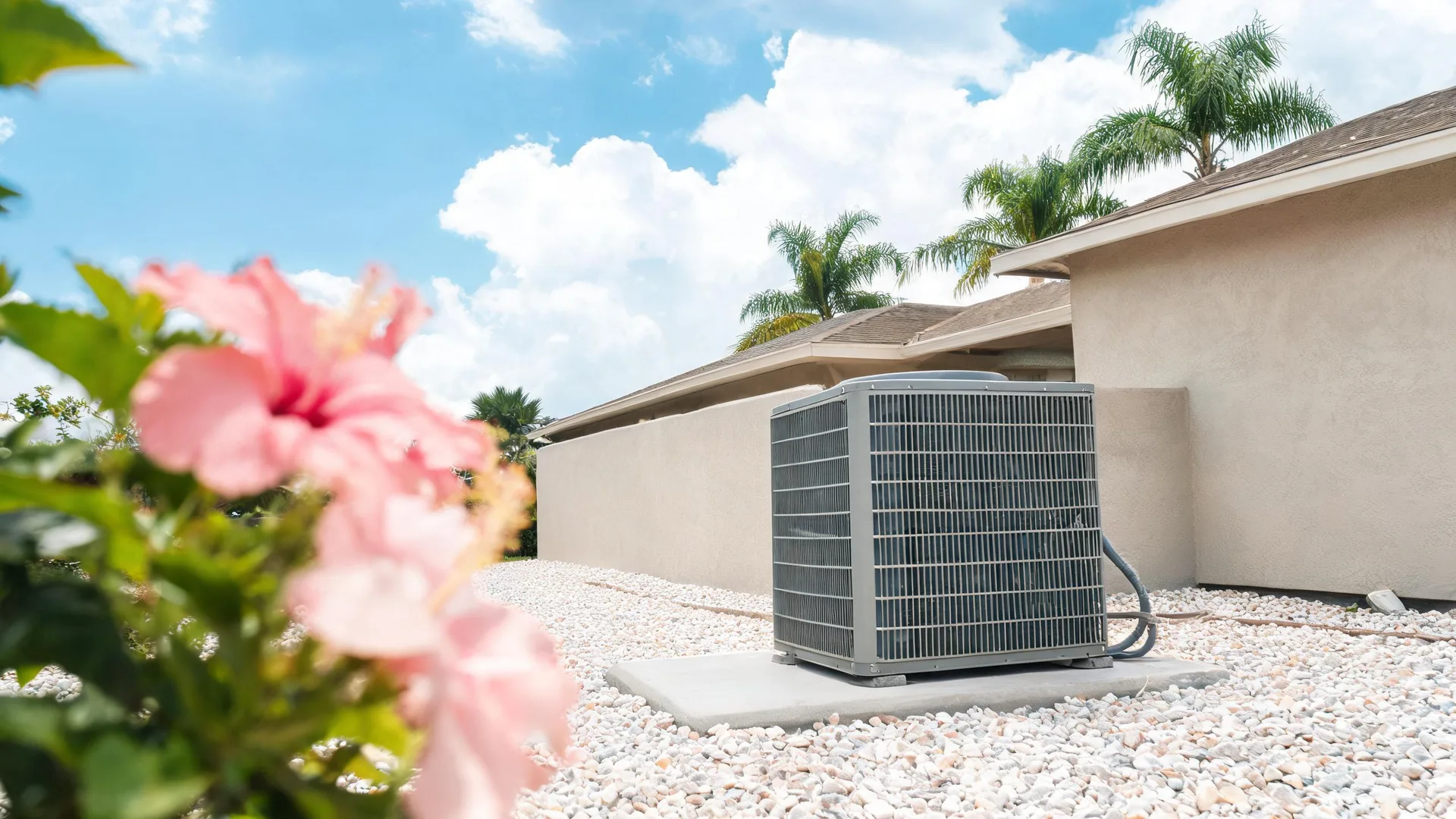
A gray cylindrical air conditioning condenser unit mounted on a concrete pad next to a light-colored vinyl-sided house exterior.

What a real tune-up touches

A thorough tune-up means the contractor opens the cabinet and gets hands on the system. The coil gets washed, not just looked at. The refrigerant charge gets checked with gauges against what the system is rated for, not guessed at. Capacitor readings get tested under load. The condensate drain gets cleared so it cannot back up later. Electrical connections get tightened, because a loose connection heats up and that heat wears the part it's attached to. A quick visit skips most of this. Someone checks that air is blowing cold, glances at the outdoor unit, and leaves. It looks the same on the invoice. It is not the same inside the cabinet, and a system that only gets looked at keeps whatever problem was quietly building before the visit started.

Keep the airflow clear

The filter is the one part of the system a homeowner is meant to handle. A clogged filter starves the coil of airflow, and a coil that can't breathe struggles to pull heat out of the air. Check it on a schedule and swap it when it looks gray or matted. Outside, keep the area around the condenser clear of leaves, grass clippings and anything planted close enough to block the sides.

Know what's not yours to open

The refrigerant circuit, the electrical connections inside the cabinet, and the capacitor are not a homeowner job. Refrigerant is sealed and pressurized, and the wiring carries enough current to hurt someone who doesn't already know where the hazards are. If the system is short cycling, blowing warm, or making a new noise, that's a sign for a contractor to look at, not a project to start with a wrench.

An outdoor central air conditioning unit mounted on a concrete pad beside a blue-sided house at sunset.

Book your AC tune-up in May, before homes here start needing cooling in June.

  1. Jan
  2. Feb
  3. Mar
  4. Apr
  5. May
  6. Jun
  7. Jul
  8. Aug
  9. Sep
  10. Oct
  11. Nov
  12. Dec

A tune-up checks the refrigerant charge, cleans the coils, tests the capacitor and tightens the electrical connections.

A tune-up has an order because the system has an order. Power gets shut off before any panel comes off, because the capacitor inside can hold a charge even with the unit dead. The coil gets cleaned before anything else gets measured, since a dirty coil throws off every reading taken after it. Refrigerant gets checked only once airflow is right, because charge measured against a starved coil tells a contractor nothing true. Capacitor and contactor come last, tested under load rather than judged by sight, since a capacitor can look fine and still fail the moment the compressor leans on it. Skip the order and a tune-up turns into a glance that misses the thing actually going wrong.