







Two white colonial houses with lit windows and black shutters photographed at dusk along a tree-lined residential street.

AC Maintenance in Easton, MD

Tell us about the job

Takes about a minute. No obligation.

Tune-up, service, or cleaningCentral ACTalbot County, MD
Step 1 of 2

What ZIP code is the job in?

Electricity in Maryland ran 17.86 cents per kilowatthour in 2024, well above what a lot of the country pays. That changes the math on a neglected air conditioner. A dirty coil or a low charge makes the compressor work harder to move the same amount of heat, and it pulls more power every hour it runs to do it. In most places that waste gets buried in the bill. Here it stands out. A system that gets looked at once a year runs closer to how it was built to run, and that shows up on what Easton homeowners actually pay to keep it going.

4 months
June through September, your air conditioner is on duty
86°F
the average summer afternoon it cools against
4 hail events
in ten years, and hail bends the fins on outdoor coils
93 wind events
in ten years, and wind drives debris into outdoor units
Isometric line illustration of a cutaway single-story house showing interior rooms, ducted air handler, ceiling ductwork, and an outdoor condenser unit connected by refrigerant lines.
Your air conditioner works hardest from June through August.

NOAA nClimDiv, 1991–2020 normals

AC here runs June through September, about four months a year.

One visit before June covers the stretch that actually uses the system.

June is when it starts working. May is when to check it.

Cooling runs June through September
Summer afternoons average 86°F
93 damaging wind events from 2015 to 2024
Half these homes are newerHalf the homes in Talbot County were built in 1983 or later, young enough that yearly maintenance keeps a system running the way it was designed to.

A tune-up before summer is what puts that math to work. A technician checks the refrigerant charge, cleans the outdoor coil, and makes sure the blower and airflow are doing what they should. None of that shows from inside the house. A system low on charge or caked with dirt on the coil can run the whole season without ever throwing an error, quietly pulling more power the entire time. Catching that early means the system runs the way it was built to for the months it actually works.

Keep a newer system newer

If your system came with the house built in 1983 or later, it's young enough that a yearly check is what keeps it that way. Catching a low charge or a dirty coil early means less wear on a system that still has most of its life ahead.

Find a contractor
A man in a gray long-sleeve shirt and work pants carries a canvas tool bag as he climbs porch steps toward an orange front door of a gray clapboard house, with a potted shrub to the right.
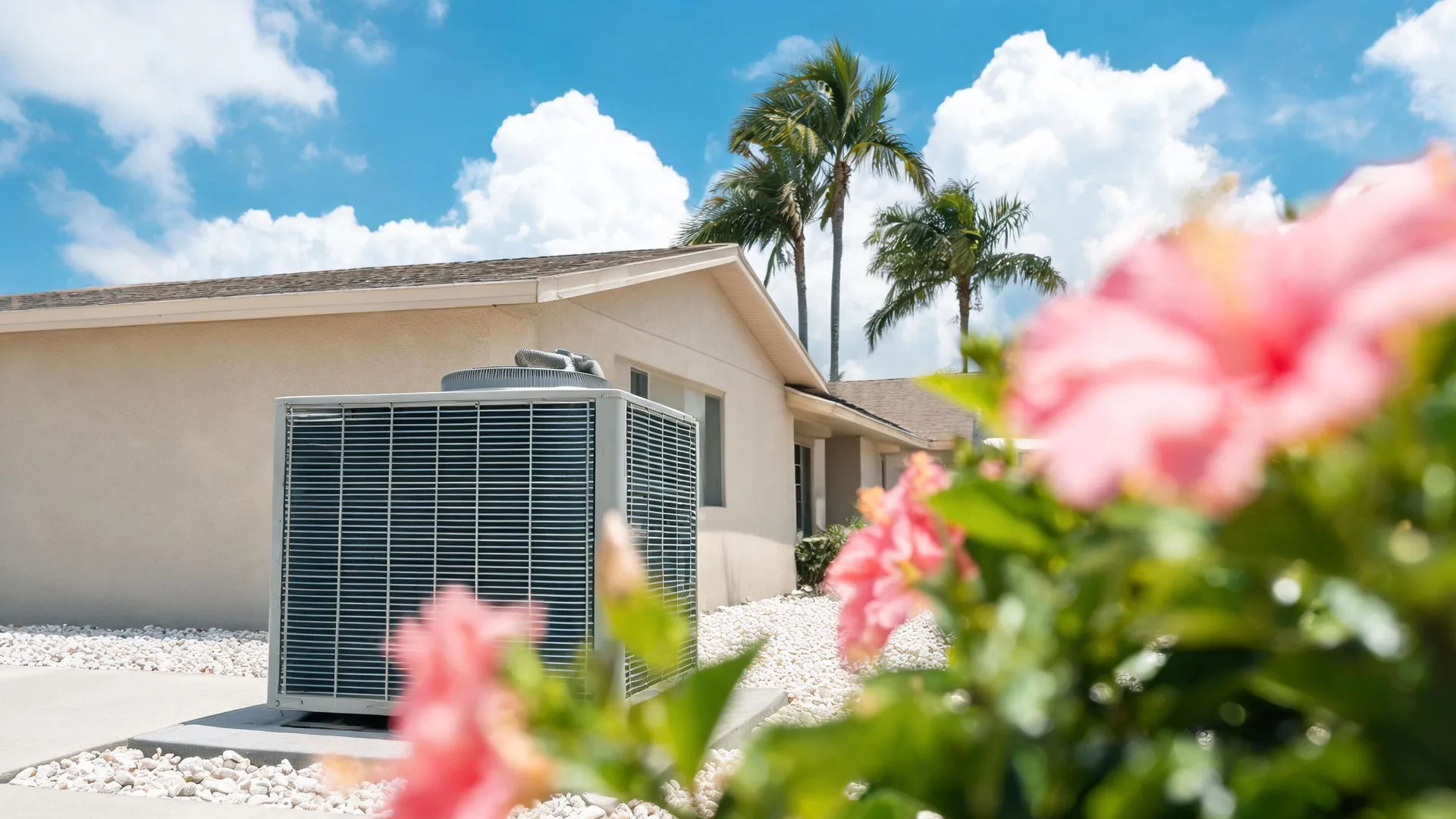
An outdoor air conditioning condenser unit mounted on a concrete pad beside a house, with electrical conduit running to a wall-mounted disconnect box.

What the thermostat can't tell you

A technician checks things a homeowner has no way to see from the thermostat. Static pressure in the ducts, the delta between return and supply air, whether the contactor is pitting, whether the capacitor is still holding its charge. A capacitor can read fine on a hot day and fail on a hotter one. A blower wheel can carry a layer of dust thick enough to cut airflow long before it ever trips a switch. The system keeps running through all of this. It just runs worse, and nothing on the thermostat tells you that.

What skipping it looks like

Nobody skips maintenance on purpose. A summer goes by, the system cools the house fine, and there's no reason to think about it. Meanwhile the coil picks up a layer of dirt, the charge drifts down a little, and the blower loses some of its airflow. None of that trips a switch. The air still comes out cold.

What catches up with it

A compressor that runs hot season after season because the coil never gets cleaned wears out sooner than one that does. A system low on charge makes the compressor work harder for the same cooling, and that strain doesn't ease up on its own. By the time the system quits, it's usually the compressor itself, not some smaller part that could have been swapped out at a checkup.

Aerial view of a gray outdoor air conditioning condenser unit mounted on a concrete pad next to a house with vinyl siding.

Book your AC tune-up in May, before homes here start needing cooling in June.

  1. Jan
  2. Feb
  3. Mar
  4. Apr
  5. May
  6. Jun
  7. Jul
  8. Aug
  9. Sep
  10. Oct
  11. Nov
  12. Dec

A tune-up checks the refrigerant charge, cleans the coils, tests the capacitor and tightens the electrical connections.

A tune-up is more than a filter swap. The technician checks refrigerant charge against what the system calls for, since too little makes the compressor run longer to hit the same temperature. The outdoor coil gets cleaned, because dirt on those fins holds heat in instead of letting it release outside. They check the blower wheel and the evaporator coil inside too, since both can lose airflow without ever cutting it off completely. Electrical connections get checked for pitting or looseness, and the capacitor gets tested under load, not just glanced at. Condensate drain checked for a clog, since a blocked line backs water up into the house instead of out. Each piece is small on its own. Skip enough of them and the system is still running, just not the way it was built to.