A row of illuminated white colonial houses along a road photographed at dusk.

AC Maintenance in Frederick, MD

Tell us about the job

Takes about a minute. No obligation.

Tune-up, service, or cleaningCentral ACFrederick County, MD
Step 1 of 2

What ZIP code is the job in?

Dirt is the slow killer

A dirty coil cannot shed heat the way it should, so the compressor runs longer and harder to get the same cooling. Dust on the blower wheel cuts airflow the same way a clogged filter does. None of this trips a breaker or stops the system cold. It just makes the unit work harder every single cycle until a part that was never meant to carry that load finally gives out.

Small problems hide until they don't

A refrigerant leak starts small and stays small for a long time, but a low charge makes the compressor run hotter than it was built to. A weak capacitor still starts the unit most days, right up until the morning it doesn't. Checked once a year, these show up as a reading slightly off from where it should be. Left alone, they show up as a no-cool call.

4 months
June through September, your air conditioner is on duty
84°F
the average summer afternoon it cools against
20 hail events
in ten years, and hail bends the fins on outdoor coils
276 wind events
in ten years, and wind drives debris into outdoor units
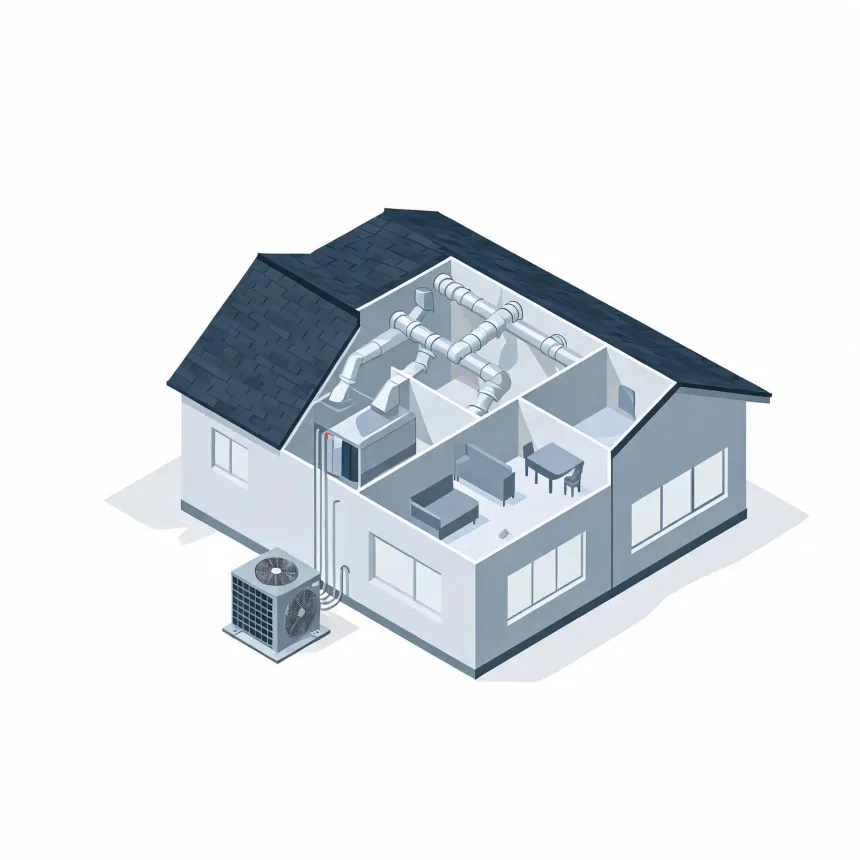
Isometric illustration of a cutaway single-story house showing attic ductwork, an indoor air handler, interior rooms with furniture, and an outdoor condenser unit connected by lines, on a white background.
Your air conditioner works hardest from June through August.

NOAA nClimDiv, 1991–2020 normals

Afternoons here average 84°F from June through September, and the system runs that whole stretch.

One check before summer catches a weak part before four months of steady running finishes it off.

June is when it starts working hardest, so May is when it gets checked

Cooling runs June through September
Summer afternoons average 84°F
276 damaging wind events from 2015 to 2024
Frederick County doesn't need extra visits, just the right one325 severe weather events hit the county between 2015 and 2024, and most years here still only call for one AC check.

Between visits, the filter is the one thing worth checking yourself. A dirty filter chokes airflow before it ever trips anything, so the coil behind it starts icing over and the system cools less for the same run time. Look at it in daylight. If you can't see light through it, swap it. Outside, keep the area around the condenser clear of leaves, grass clippings and anything stacked against it, since that unit needs open air on all sides to shed heat. Don't point a hose at it or try to clean the coil fins yourself. They bend easily, and a bent fin blocks airflow the same way dirt does.

A system working harder costs more here than most places

Electricity here runs 17.86 cents per kilowatt-hour. A dirty coil or weak capacitor makes the compressor work harder for the same cooling every time it cycles on, and that extra draw adds up over a summer of steady running. A check now catches it before the cost does.

Find a contractor
A man in a dark cap, dark shirt and brown pants, seen from behind, walks up porch steps toward an orange front door while carrying a brown canvas tool bag.
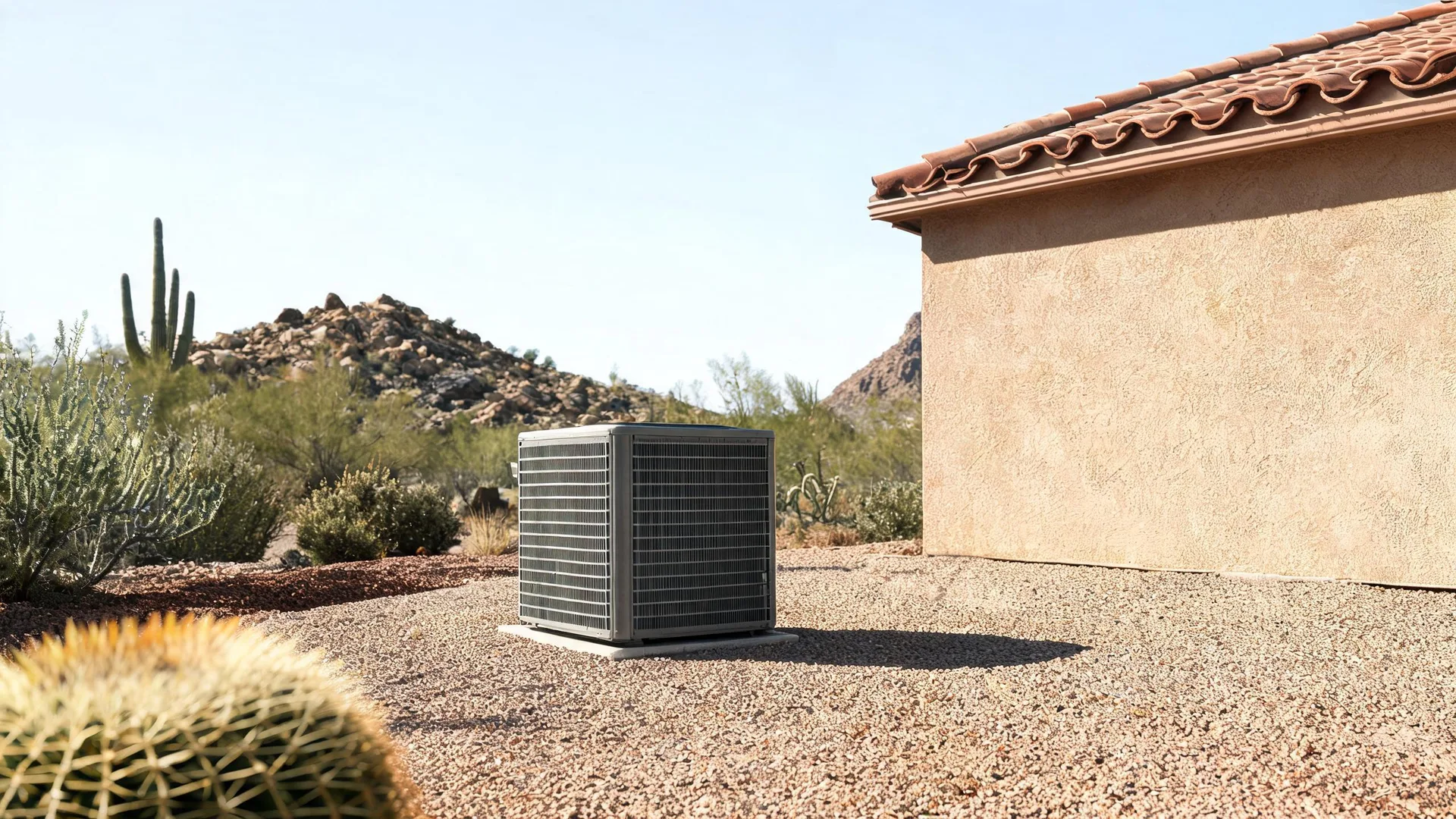
A gray residential air conditioner condenser unit mounted on a concrete pad in an open grass field.

A newer system still needs the check

Half the homes in Frederick County were built in 1991 or later. If yours is one of them, or if the system itself has been swapped out more recently than the house, it's probably still within its working life. A yearly check is what keeps it there. The parts inside a newer system still wear the same way, just on a longer timeline, and catching a weak capacitor or a coil going dirty early is what keeps that timeline intact.

Warm air from a cold vent means something's already wrong

If the air coming out isn't as cold as it used to be, the system is still running but not doing its job. That can mean a refrigerant leak, a coil losing its ability to transfer heat, or a compressor on its way out. None of these fix themselves, and all of them get worse the longer the system keeps cycling.

Sounds and smells are the system telling you something

A hum before the compressor kicks on, a rattle from the outdoor unit, a musty smell from the vents. Any of these is worth a look before it turns into a no-cool call. A technician checking the system once a year catches the worn belt or failing part making that noise before it strands you without cooling.

The condensate drain is the part nobody thinks about until water shows up where it shouldn't. As the coil pulls moisture out of the air, that water has to go somewhere, and it drips into a pan and down a line to the outside. Dust, algae and a little bit of coil residue travel with it, and over time that buildup narrows the line until it backs up. A clogged drain doesn't slow the system down the way a dirty filter or coil does. It just overflows, and depending on where the unit sits, that water ends up in the pan, on the floor, or staining the ceiling below it. Checking that the line still drains freely is part of what gets caught on a yearly visit, before it's a puddle instead of a reading.

A proper tune-up starts with readings, not just a look. The technician checks refrigerant pressure against what the system is supposed to run at, since that number says whether the charge is right without waiting for warm air to prove it wrong. The capacitor gets tested under load, not just eyeballed, because a capacitor can look fine and still be too weak to start the compressor reliably. Electrical connections get checked for a loose lug or a connector starting to corrode, since that kind of thing causes a short somewhere down the line, not today. The coil gets inspected for dirt or corrosion, and if it's dirty, cleaned, since a coil caked in dust can't shed heat no matter how well everything else is running. The blower wheel gets checked too. Dust builds up on the blades the same way it builds up on a filter, and it cuts airflow the same way.