Electricity here isn't cheap
Maryland homes paid 17.86 cents per kilowatthour in 2024. A dirty coil or a low charge makes the compressor run longer to cool the same house, and every extra minute shows up on the bill at that rate.
Takes about a minute. No obligation.
Maryland homes paid 17.86 cents per kilowatthour in 2024. A dirty coil or a low charge makes the compressor run longer to cool the same house, and every extra minute shows up on the bill at that rate.
A technician cleaning the coil, checking the refrigerant charge and testing the capacitor catches the kind of wear that makes a system work harder than it should. Catching it before summer means the air conditioner isn't fighting itself all season.

NOAA nClimDiv, 1991–2020 normals
Half the homes in Montgomery County were built in 1980 or later.
A system that age still has years left in it, and a yearly check is what gets it there.



Cooling runs June through September here, with afternoon highs averaging 85°F through the summer. That's four months of steady work for the system, not just a few hot days. One visit before June is enough to cover it. The county also sees its share of damaging wind and hail, and a system that sat through a rough storm can be carrying wear you won't notice from the thermostat. A yearly check is where that gets caught.
A neglected system uses more power, and power costs more here. A tune-up pays for itself.
Find a contractor
The filter is the one part that's on you, not the technician. A dirty filter chokes the airflow across the evaporator coil, and the system has to run longer to move the same amount of cool air through the house. Check it monthly and swap it when it looks gray or matted. Outside, keep the area around the condenser clear. Leaves, grass clippings and anything stacked against it blocks the airflow the unit needs to dump heat, and a plant growing in too close does the same thing over months without anyone noticing. Keep at least a couple feet open on all sides. Inside, listen for anything new. A rattle, a hum that wasn't there before, or a system that's cycling on and off faster than it used to are all worth a call rather than a wait. None of this replaces what a technician checks under load, but it keeps the system from working against itself between visits.
A capacitor can be on its way out and still get the compressor running every time you check it yourself. The failure only shows up under load, which is why the system that quit on the hottest day worked fine when you tested it that morning. A technician tests it under load and finds the weak one before it strands you.
The evaporator coil sits inside the air handler, not out where you'd see it, and it collects a film that cuts how well it absorbs heat from the air. By the time a warm vent tells you something's wrong, the compressor has been running longer than it should for weeks. Cleaning the coil is routine during a tune-up and almost never happens otherwise.
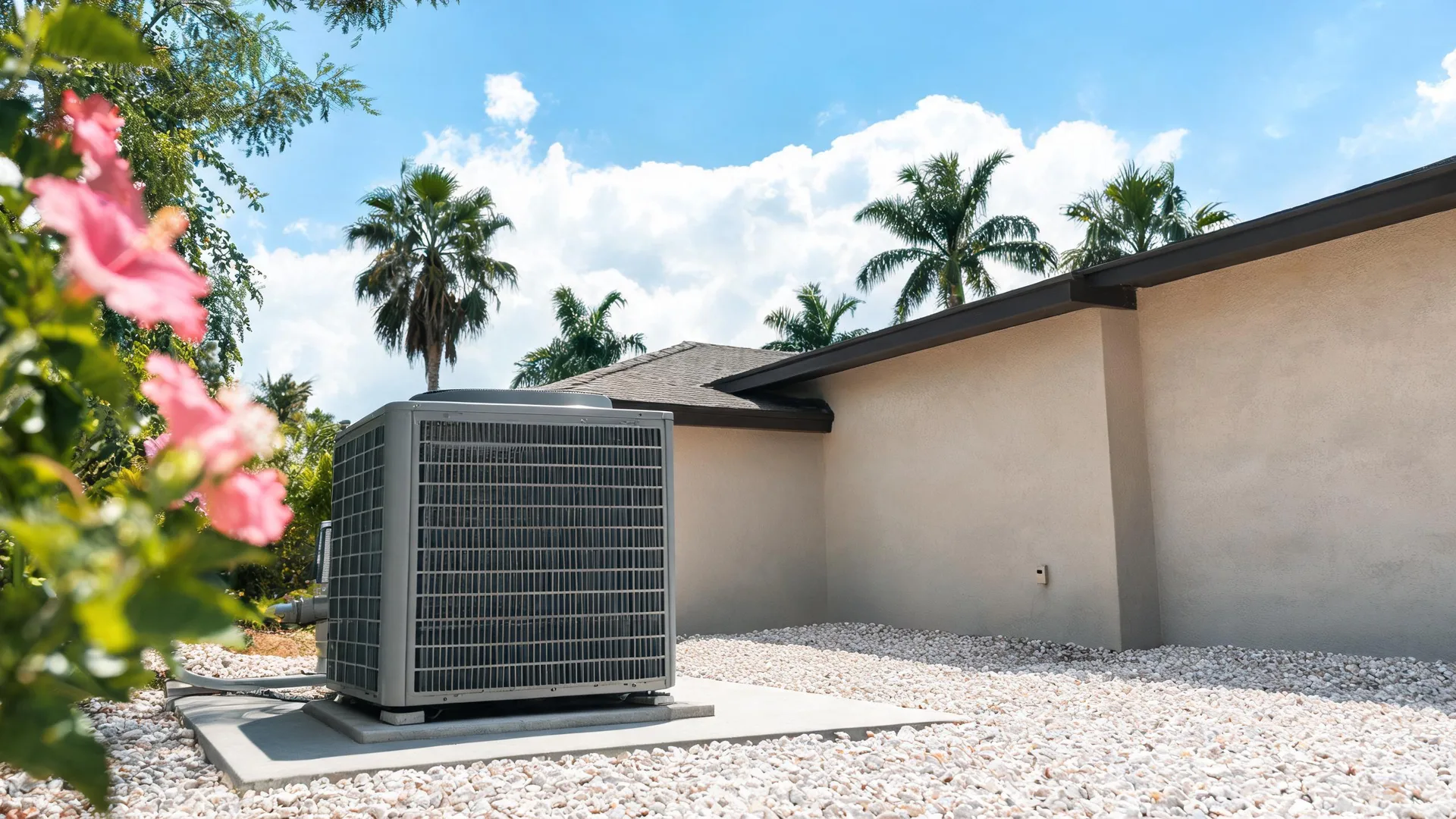
A tune-up checks the refrigerant charge, cleans the coils, tests the capacitor and tightens the electrical connections.
A tune-up checks the things that cause most summer breakdowns. The technician measures refrigerant charge against what the system calls for, since too little means the compressor runs long and the coil can ice over. The capacitor and contactor get tested under load, because a weak capacitor can start the compressor on a cool morning and fail outright once the heat sets in. The condenser coil outside gets cleaned of leaves and grass clippings, and the evaporator coil inside gets checked for the film that cuts how well it pulls heat from the air. The blower and its motor get inspected, since a motor losing strength moves less air across the coil and makes the whole system work harder to reach the same temperature. The drain line gets checked too, because a clogged one backs up and shuts the system down on its own before it ever causes real damage.