






White colonial houses with lit windows photographed at dusk along a tree-lined residential street.

AC Maintenance in Hagerstown, MD

Tell us about the job

Takes about a minute. No obligation.

Tune-up, service, or cleaningCentral ACWashington County, MD
Step 1 of 2

What ZIP code is the job in?

Electricity in Maryland ran 17.86 cents per kilowatthour in 2024. That is what a dirty coil or a low charge turns into on your bill. A system working harder to do the same job pulls more power every hour it runs. A tune-up catches the dirty coil, the weak capacitor, the refrigerant charge that has crept low, before any of it forces the system to work harder than it needs to. The waste costs more here than in most states, and that is the case for doing it.

3 months
June through August, your air conditioner is on duty
85°F
the average summer afternoon it cools against
31 hail events
in ten years, and hail bends the fins on outdoor coils
148 wind events
in ten years, and wind drives debris into outdoor units
Isometric illustration of a cutaway house showing interior ductwork, an indoor air handler and furniture, connected by lines to an outdoor condenser unit on a pad.
Your air conditioner works hardest from June through August.

NOAA nClimDiv, 1991–2020 normals

One tune-up a year is enough for most AC systems.

Whether yours was installed new or came with an older house, the yearly check is the same job either way.

Three months of summer is all this system has to earn its keep

Cooling runs June through August
Summer afternoons average 85°F
148 damaging wind events from 2015 to 2024

Book the tune-up before the first real hot stretch, so the coil gets cleaned and the charge gets checked before the system is running every day. A technician can catch a capacitor that is starting to go while it still costs a part, not a compressor. That one visit a year is what keeps the system from quietly pulling more power than it should. Skip it and any waste runs on your bill at Maryland's rate for as long as the system runs.

A tune-up pays for itself here

A neglected system uses more power, and power costs more here. A tune-up pays for itself.

Find a contractor
A man in a dark shirt and tan pants carries a waxed canvas tool bag up porch steps toward an orange front door, with a potted olive tree beside the entry.
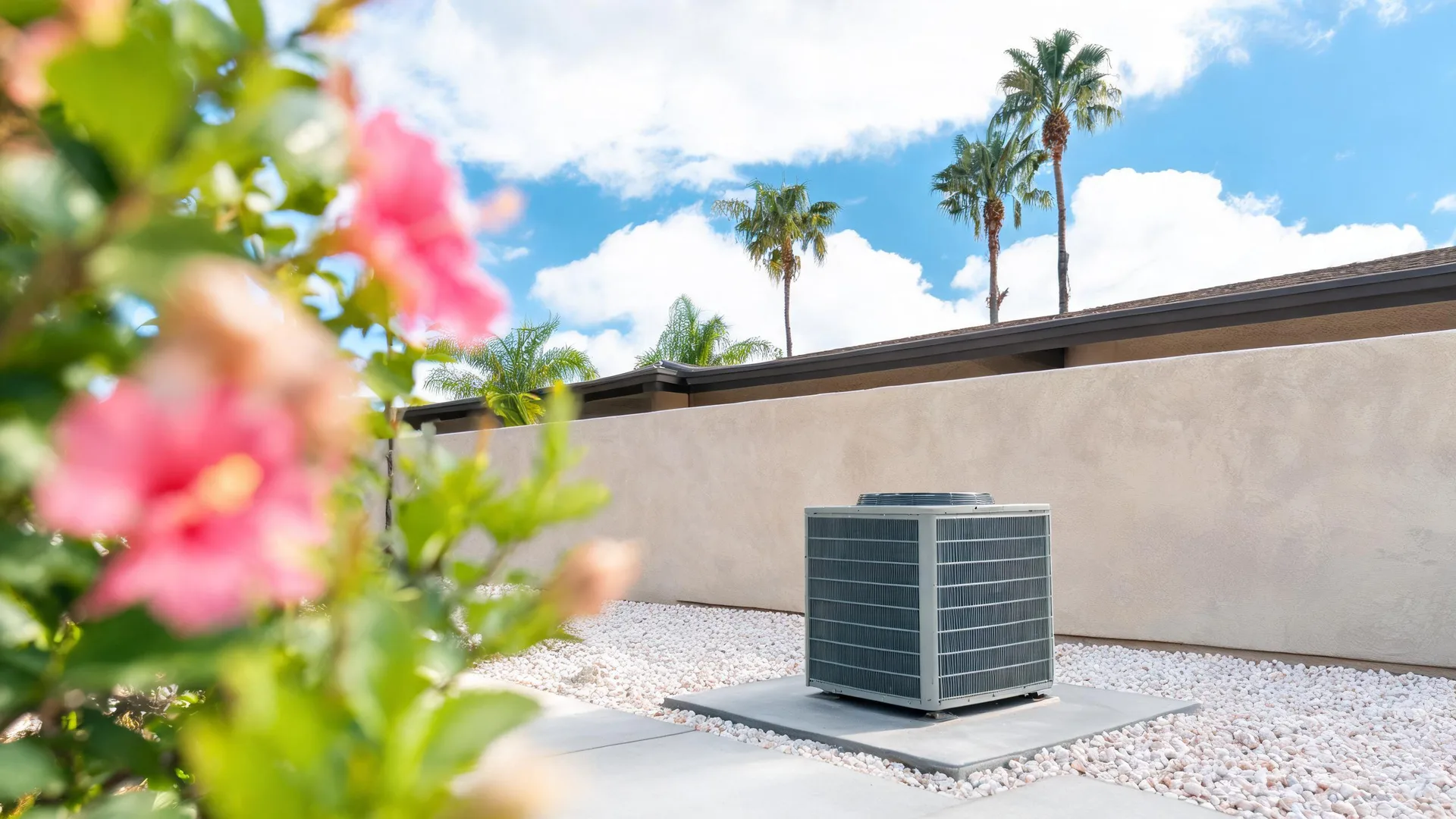
An outdoor air conditioning condenser unit mounted on a concrete pad surrounded by gravel, photographed against a partly cloudy blue sky.

Nothing fails all at once

A dirty coil does not fail. It just makes the system work harder, every hour it runs, for as long as nobody cleans it. A weak capacitor is the same story. It still starts the compressor, until one day it can't, and that day never gives warning. A low refrigerant charge creeps down slowly, usually from a small leak, and the system keeps running on it, just worse than before. None of this announces itself. The system does not shut off and tell you something is wrong. It just runs longer each cycle to move the same heat out of the house, and that goes unnoticed until the part that was already weak finally quits.

Opening the cabinet is the difference

A quick visit checks that the system turns on, cools, and reads a normal charge off the gauges. A thorough one pulls the panel, washes the condenser coil, checks the capacitor's output against what it should be, and looks at the contactor for pitting. Airflow across the indoor coil gets checked too, since a coil can be clean and still be starved for air. Most of what fails early is behind that panel, not in front of it.

Ask what gets written down

A thorough tune-up ends with numbers on paper. The refrigerant pressures, the temperature split between the air going in and coming out of the vents, the capacitor's reading against its rating. Those numbers are what let next year's visit catch a capacitor that has started to drift or a charge that has crept down. Without them, a tune-up only tells you the system is fine right now.

Aerial view of a residential air conditioning condenser unit mounted on a concrete pad next to a house with vinyl siding and a sliding glass door.

Book your AC tune-up in May, before homes here start needing cooling in June.

  1. Jan
  2. Feb
  3. Mar
  4. Apr
  5. May
  6. Jun
  7. Jul
  8. Aug
  9. Sep
  10. Oct
  11. Nov
  12. Dec

A tune-up checks the refrigerant charge, cleans the coils, tests the capacitor and tightens the electrical connections.

A tune-up starts outside at the condenser, the unit sitting outdoors. The fins get straightened if they're bent, since bent fins block airflow the same as dirt does. The fan motor gets checked for play in the bearing and listened to, because a bearing going bad makes noise before it seizes. Inside, the drain line gets checked for algae or a clog, since a blocked drain backs up and can shut the system down or leak into the house. The thermostat gets checked against a second thermometer, because a thermostat reading wrong makes every other number on the page meaningless. None of this takes long, but skipping any one piece leaves a failure sitting there waiting for its day.