






A row of white Colonial-style houses with glowing windows photographed at dusk along a road bordered by a stone wall.

AC Maintenance in La Plata, MD

Tell us about the job

Takes about a minute. No obligation.

Tune-up, service, or cleaningCentral ACCharles County, MD
Step 1 of 2

What ZIP code is the job in?

Electricity in Maryland ran 17.86 cents per kilowatthour in 2024, well above what a lot of states pay. A dirty coil or a weak capacitor makes the compressor work harder to move the same amount of heat, and that extra work shows up on the meter every single day the system runs. In La Plata that's a long stretch each year, so a system that's drifted out of tune doesn't just risk a breakdown. It costs more to run for months before anything actually fails.

4 months
June through September, your air conditioner is on duty
86°F
the average summer afternoon it cools against
26 hail events
in ten years, and hail bends the fins on outdoor coils
188 wind events
in ten years, and wind drives debris into outdoor units
Isometric line illustration of a cutaway house showing interior rooms with ductwork, an air handler and furnace, connected by lines to an outdoor condenser unit on the ground outside.
Your air conditioner works hardest from June through August.

NOAA nClimDiv, 1991–2020 normals

Your AC runs hard here from June through September, four months straight.

One visit before summer gets it tuned for the whole stretch.

Most of what breaks here is weather, not wear

230 severe weather events from 2015 to 2024
11% of homes statewide lost power a day or more in 2024
188 damaging wind events from 2015 to 2024
A newer county for AC systemsHalf the homes in Charles County were built in 1991 or later

May is the month to get this done in La Plata. Cooling starts in June and runs straight through September, four months with no real break in between. Once that first hot stretch hits, a weak capacitor or a dirty coil stops being a small problem and starts being the reason the house doesn't cool down. Getting it checked in May means any repair happens before the system has to run, not after it's already struggling.

A tuned system costs less to run

A tune-up catches a dirty coil or a weak capacitor before the meter pays for it, month after month at Maryland's rates. Get it checked before the system has to run.

Find a contractor
A gray residential air conditioner condenser unit mounted on a concrete pad in an open grass field.

A system this age is worth keeping tuned

If your system went in when the house was built, it's probably still well within its working life. A yearly check before summer keeps it running close to how it ran on day one, instead of losing a little capacity each season without you noticing. That's worth doing while the system is still young, catching a weak capacitor or a dirty coil before it has years of running hard ahead of it.

The charge gets checked, not just glanced at

A system can be low on refrigerant and still blow cold air at the vent. It just blows less of it, and the compressor runs longer to get there. The only way to catch that is gauges on the line, not a hand held up to the register.

The capacitor gets tested under load

A capacitor can look fine and still be weak, and a weak one makes the compressor pull harder every time it starts. Nobody sees that from the outside. A tune-up measures it against what it's supposed to put out, and swaps it before it strands the system on a hot day.

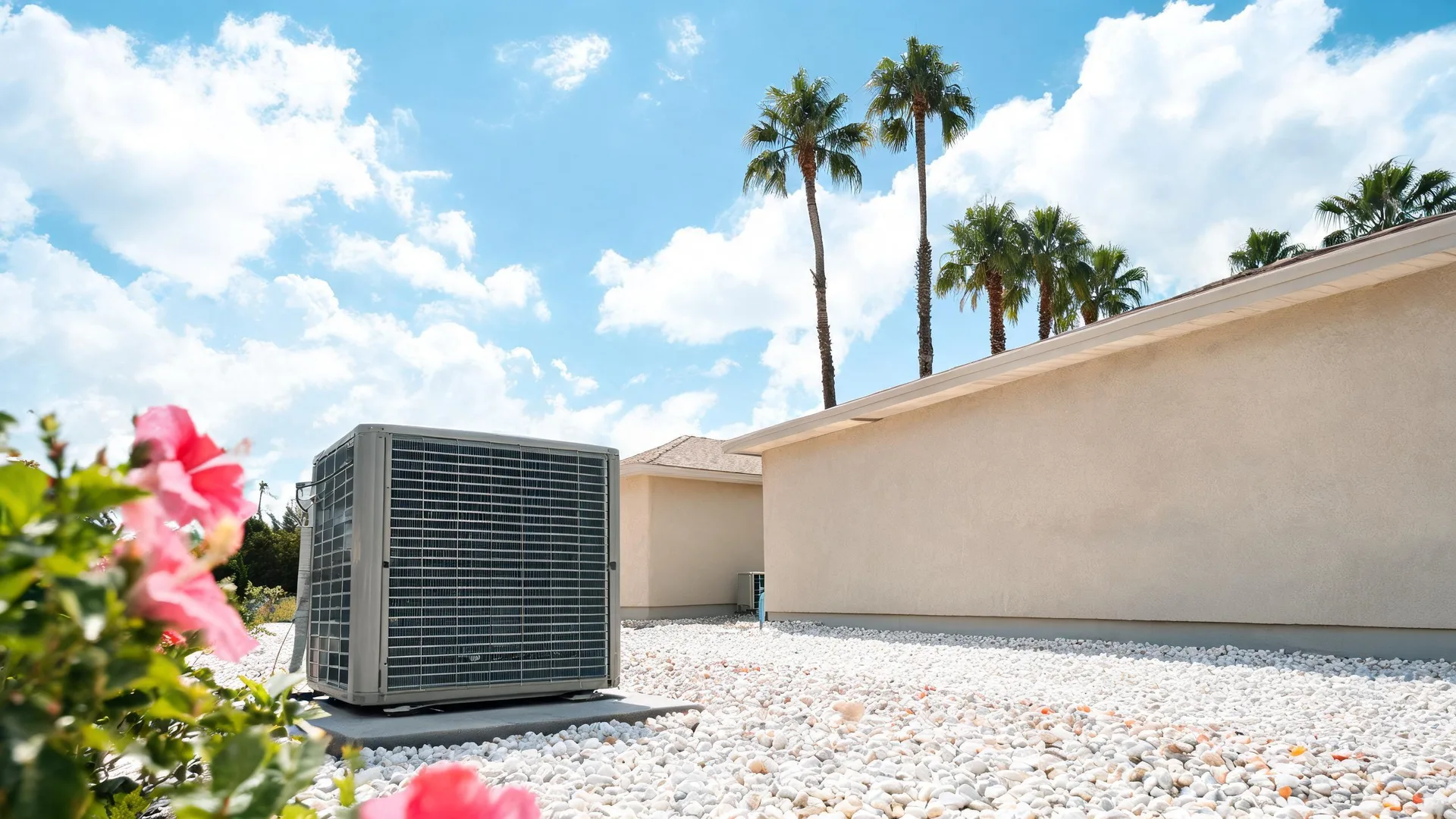
An outdoor air conditioning condenser unit positioned beside a blue-sided house at sunset.

Book your AC tune-up in May, before homes here start needing cooling in June.

  1. Jan
  2. Feb
  3. Mar
  4. Apr
  5. May
  6. Jun
  7. Jul
  8. Aug
  9. Sep
  10. Oct
  11. Nov
  12. Dec

A tune-up checks the refrigerant charge, cleans the coils, tests the capacitor and tightens the electrical connections.

A real tune-up starts outside, at the condenser. The coil gets cleaned, not just looked at, because dirt and grass clippings packed into the fins make the system work harder to dump heat no matter how strong the compressor is. Inside, the evaporator coil gets checked for the same buildup, plus a look for any oil residue around the fittings, since that's usually the first sign of a slow refrigerant leak. The blower wheel gets cleaned if it needs it, because a dirty wheel moves less air even when the motor is running exactly as it should. The drain line gets flushed too. A clogged one backs up, trips the float switch, and shuts the whole system down even though nothing mechanical is actually wrong with it. Electrical connections get tightened, since a loose one generates heat and heat shortens the life of whatever it's touching. None of this is guesswork. Each piece either passes or it doesn't.