







White colonial houses with lit windows and dark shutters line a tree-lined street at dusk, bordered by dry-stacked stone walls.

AC Maintenance in Leonardtown, MD

Tell us about the job

Takes about a minute. No obligation.

Tune-up, service, or cleaningCentral ACSt. Mary's County, MD
Step 1 of 2

What ZIP code is the job in?

Electricity in Maryland ran 17.86 cents per kilowatthour in 2024, well above what a lot of states pay. That number matters more once a system starts working harder than it should. A dirty coil or a low charge makes the compressor run longer to cool the same house, and every extra minute shows up on the meter. Skip maintenance for a couple of seasons and that drag adds up quietly, bill after bill, long before the unit actually fails. A tune-up catches the coil, the charge, the airflow, the things that make the compressor work harder than it needs to.

4 months
June through September, your air conditioner is on duty
86°F
the average summer afternoon it cools against
25 hail events
in ten years, and hail bends the fins on outdoor coils
146 wind events
in ten years, and wind drives debris into outdoor units
Isometric illustration of a cutaway house showing interior rooms, an attic furnace with large ducts, and an outdoor condenser unit connected by a line set, on a white background.
Your air conditioner works hardest from June through August.

NOAA nClimDiv, 1991–2020 normals

The filter is the one part of the system you can check yourself.

A clogged filter starves the coil of airflow, so look at it monthly and swap it when it's gray.

Cooling starts in June here. May is when to get it looked at.

Cooling runs June through September
Summer afternoons average 86°F
146 damaging wind events from 2015 to 2024
Weather here is hard on a system left uncheckedSt. Mary's County saw 146 damaging wind events between 2015 and 2024.

Half the homes in St. Mary's County were built in 1992 or later, so a lot of the AC units out there are still well within their working life. That's worth something. A system that young hasn't earned any sloppy habits yet, and a yearly check is what keeps it that way. Skip it for a few years and small things, a weak capacitor, a coil losing efficiency, go unnoticed until they turn into a bigger repair or a compressor that gives out early. Catching those small things every year is what gets a newer system to actually live out its years instead of falling short of them.

A tune-up pays for itself here

A neglected system uses more power, and power costs more here. A tune-up pays for itself.

Find a contractor
A man in a dark cap, gray T-shirt and brown work pants climbs porch steps toward an orange front door, carrying a worn canvas tool bag, with a potted shrub beside the entry.
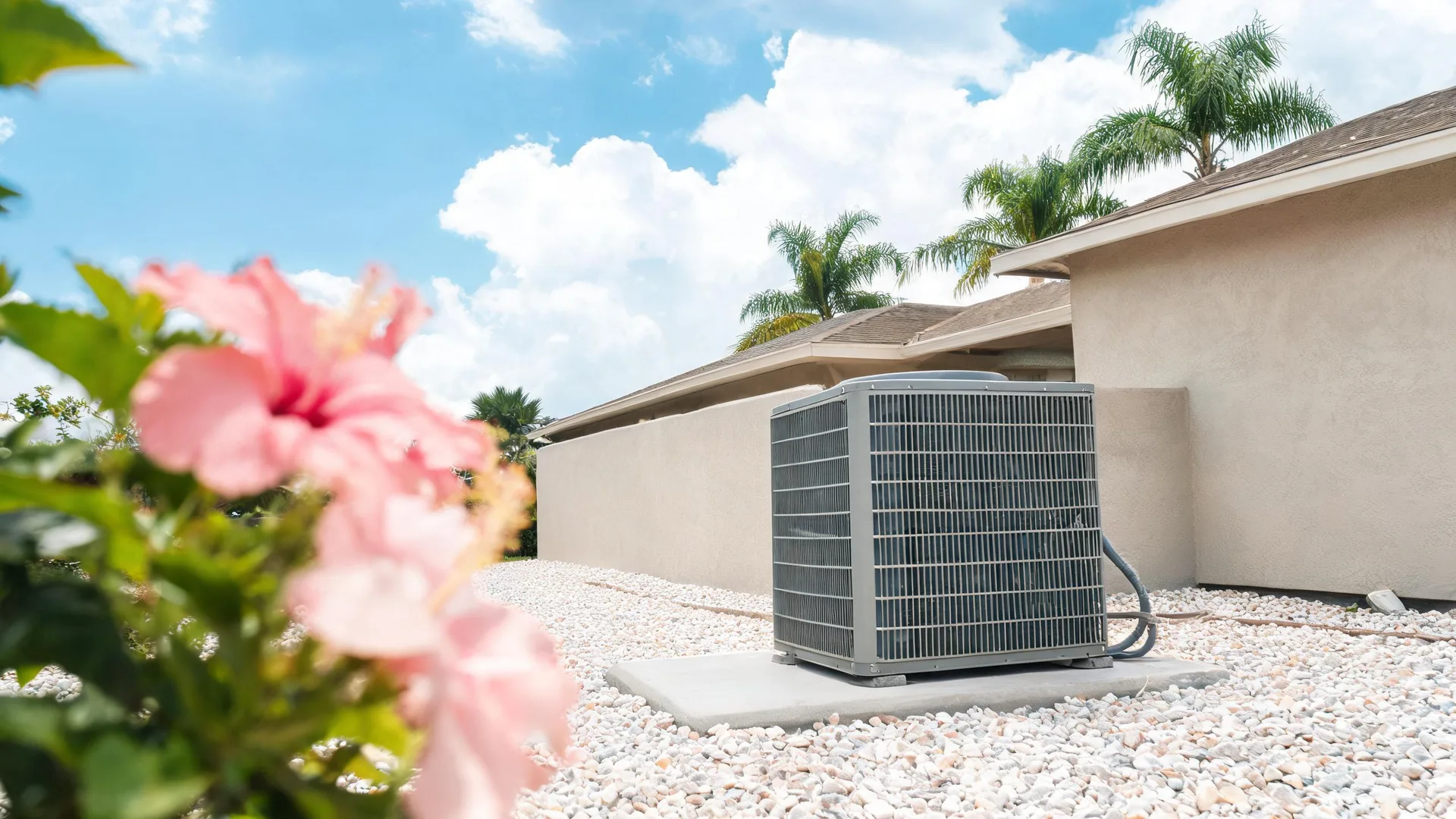
A gray cylindrical air conditioning condenser unit mounted on a concrete pad next to a light-colored vinyl-sided house exterior.

Put a newer system on a yearly schedule

A system still within its working life doesn't need a repair, it needs a yearly check, scheduled the same month every year so it never slips. Put this one on the calendar now instead of waiting for a warm day to remind you. That's what keeps a newer AC out of the repair column for as long as it's built to last.

The coil gets dirty slowly, then fails fast

Dust and pollen settle on the outdoor coil a little at a time, and the system still runs fine while it happens. Heat has a harder time leaving the refrigerant, so the compressor runs longer and hotter to get the same result. That extra heat is what wears a compressor down before its time, and a compressor is not a part that gets repaired. It gets replaced.

A refrigerant leak never announces itself

Refrigerant doesn't get used up. If the charge is low, it's because it's leaking out somewhere, and a system left to run on a low charge keeps cooling, just worse and worse, while the compressor strains to make up for it. Nobody notices until the house won't cool on a hot afternoon. A yearly check catches the charge before it gets low enough to matter.

An outdoor air conditioning condenser unit mounted on a concrete pad next to a blue-sided residential house at sunset.

Book your AC tune-up in May, before homes here start needing cooling in June.

  1. Jan
  2. Feb
  3. Mar
  4. Apr
  5. May
  6. Jun
  7. Jul
  8. Aug
  9. Sep
  10. Oct
  11. Nov
  12. Dec

A tune-up checks the refrigerant charge, cleans the coils, tests the capacitor and tightens the electrical connections.

A proper tune-up starts outside, at the condenser. The coil gets washed clean, not just rinsed, because caked-on dirt doesn't rinse off. The refrigerant charge gets checked against what the system is supposed to carry, not just topped off by feel. Electrical connections get tightened, since a loose connection is what burns out a contactor or a capacitor down the line. The capacitor itself gets tested under load, because a weak one can still start the compressor and still fail soon after. Inside, the blower wheel gets checked for dust buildup, which throws off airflow the same way a dirty filter does. None of this takes long when the system is healthy. It takes longer, and finds more, when it's been skipped.