





Two white colonial houses with lit windows and black shutters photographed at dusk along a tree-lined residential street.

AC Maintenance in Mountain Lake Park, MD

Tell us about the job

Takes about a minute. No obligation.

Tune-up, service, or cleaningCentral ACGarrett County, MD
Step 1 of 2

What ZIP code is the job in?

Skip a few years of maintenance and the first thing that goes is airflow. Dust builds up on the evaporator coil and acts like a blanket, so the coil can't pull heat out of the air the way it should. The system runs longer to hit the same temperature, and parts that were built to cycle on and off start running closer to the edge of what they can take. A dirty filter adds to the same problem, choking the air moving across that coil. The capacitor and the fan motor wear under that extra strain, and either one can fail without warning. None of this shows up as a strange noise or a smell until it's already a repair instead of a tune-up.

2 months
July through August, your air conditioner is on duty
78°F
the average summer afternoon it cools against
8 hail events
in ten years, and hail bends the fins on outdoor coils
63 wind events
in ten years, and wind drives debris into outdoor units
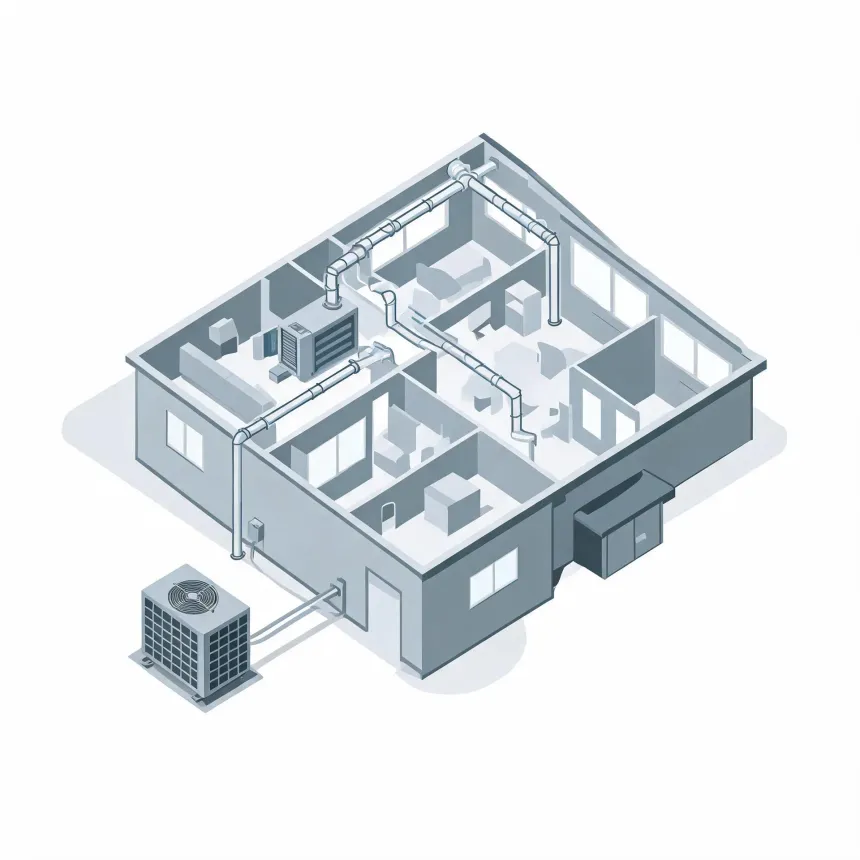
Isometric grayscale illustration of a cutaway house showing interior rooms, ceiling ductwork connected to an indoor air handler, and an outdoor condenser unit linked by lines along the exterior wall.
Your air conditioner works hardest from July through August.

NOAA nClimDiv, 1991–2020 normals

Half the homes in Garrett County were built in 1982 or later.

A system in a newer Garrett County home is usually still worth a yearly check, not a replacement.

Two months of real heat is a light workload for this system

Power costs 17.86 cents a kWh statewide
Cooling runs July through August
Summer afternoons average 78°F
Get it checked in JuneCooling runs July through August here.

Two months of cooling a year, with afternoons around 78, is not much strain on a condenser. The fan motor and compressor get a short season and a long rest. But a capacitor doesn't know the difference between an easy climate and a hard one. It weakens with age and with every start-up, same as it would anywhere else. Garrett County also sees its share of wind and hail, and a condenser sits outside through all of it, season after season. A yearly check catches a bent fin or a loose connection before the two months you actually need the system.

Keep a newer system running like one

A system that's only a few years old still needs its filter changed and its coil checked once a year to stay that way. Catching a loose wire or a weak capacitor now is a lot less than replacing the compressor it would have taken down.

Find a contractor
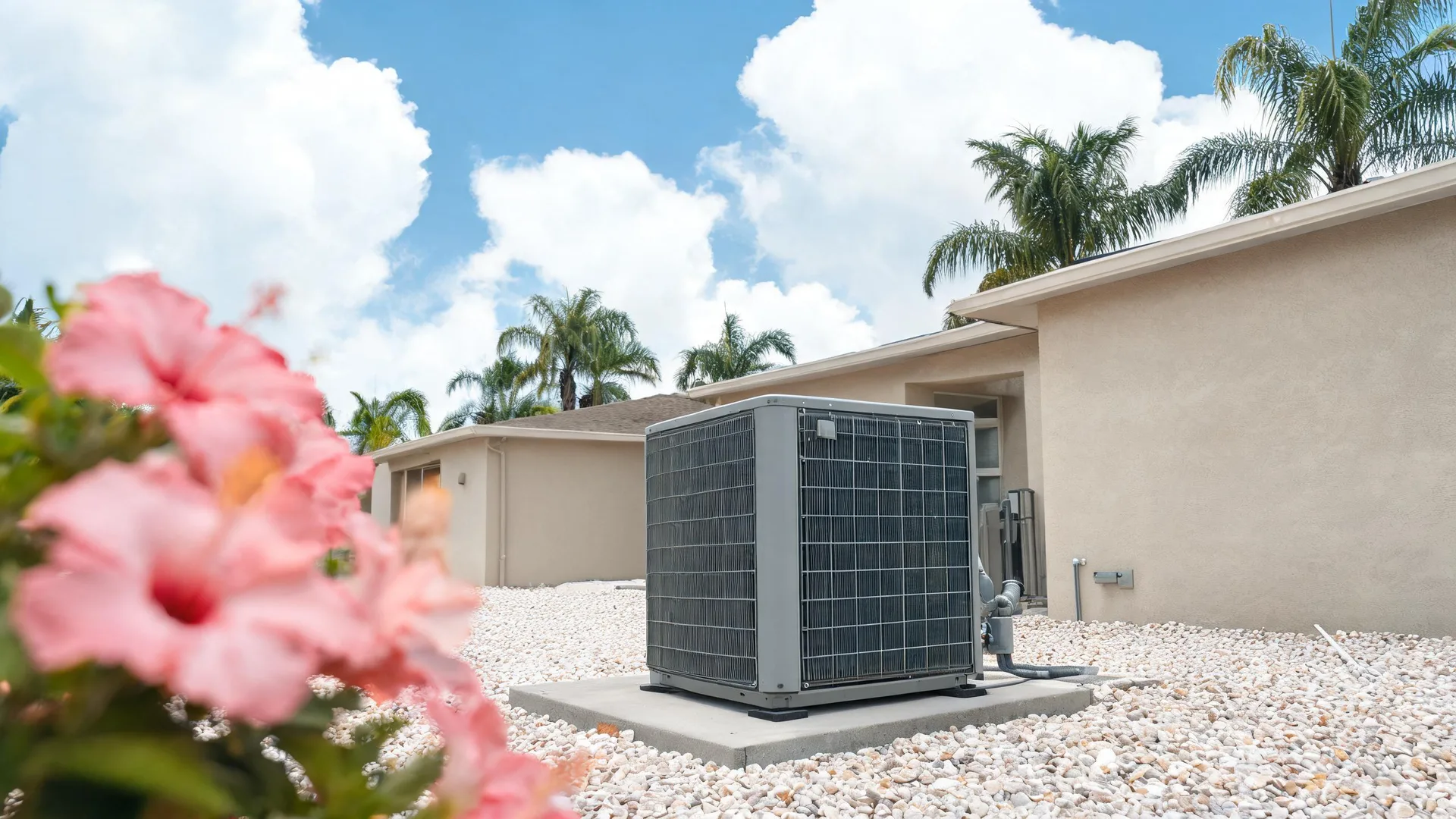
An outdoor air conditioning condenser unit mounted on a concrete pad beside a house, with electrical conduit running to a wall-mounted disconnect box.

What a gauge finds that your hand can't

A gauge set on the refrigerant lines tells a different story than the thermostat does. The system can still bring a room down to temperature while running on a charge that's too low, just slower and with the compressor working harder to get there. Static pressure across the blower is another one nobody feels by hand. A coil losing airflow to dust doesn't announce itself, the air coming out of the vents just gets a little less cold than it was last year, slowly enough that nobody notices until it's noticeably bad. Amp draw on the compressor compared against what it's rated for shows a motor wearing out before it ever trips a breaker or stops running.

Each part covers for the next

The filter keeps dust off the coil, the coil pulls heat out of the air, and the drain carries off the moisture that comes with it. Let one fall behind and the others start absorbing the damage instead of doing their own job.

The drain fails without warning

Algae and dust clog the condensate line over time, and when it blocks, water backs up into the drain pan instead of draining away. Most units shut themselves off once that pan fills, so the first sign is often a system that won't turn on, not a puddle you could have caught early.

An outdoor air conditioning condenser unit on a concrete pad next to the gray vinyl siding of a residential home.

Book your AC tune-up in June, before homes here start needing cooling in July.

  1. Jan
  2. Feb
  3. Mar
  4. Apr
  5. May
  6. Jun
  7. Jul
  8. Aug
  9. Sep
  10. Oct
  11. Nov
  12. Dec

A tune-up checks the refrigerant charge, cleans the coils, tests the capacitor and tightens the electrical connections.

A tune-up is the one time a year someone actually opens the cabinet and looks, instead of just listening for whether the system still runs. The refrigerant charge gets checked against what the system calls for, since too little and the compressor runs hot, too much and it runs just as hard the other way. Electrical connections get tightened, because a connection that's a little loose generates heat every time it's under load, and that's how wires and terminals burn. The condenser coil gets cleaned, not just the filter, since the outdoor coil collects dust and grass clippings the same way the indoor one collects household dust. The blower wheel gets looked at too, since it can carry a layer of grime that throws it out of balance without ever stopping it from turning. None of this is guesswork. It's checking the parts that fail quietly against the numbers they're supposed to hold.