White colonial houses with lit windows and dark shutters line a tree-lined street at dusk, bordered by dry-stacked stone walls.

AC Maintenance in Westminster, MD

Tell us about the job

Takes about a minute. No obligation.

Tune-up, service, or cleaningCentral ACCarroll County, MD
Step 1 of 2

What ZIP code is the job in?

The filter protects the coil

A dirty filter blocks airflow across the evaporator coil. Once that coil can't shed heat properly it can frost over, and a frozen coil stops cooling the air at all. Checking the filter on a regular basis is the one habit that keeps the rest of the system working the way it should.


The drain line needs a clear path

The coil pulls moisture out of the air as it cools it, and that water has to leave through the condensate drain. If the line clogs with algae or sludge, the water backs up into the pan and can overflow into the house. Clearing that line during a maintenance visit keeps the pan from ever reaching that point.

3 months
June through August, your air conditioner is on duty
84°F
the average summer afternoon it cools against
13 hail events
in ten years, and hail bends the fins on outdoor coils
173 wind events
in ten years, and wind drives debris into outdoor units
Isometric line illustration of a cutaway house showing interior rooms, ceiling ductwork connected to an indoor air handler, and an outdoor condenser unit linked by refrigerant lines.
Your air conditioner works hardest from June through August.

NOAA nClimDiv, 1991–2020 normals

Half the homes in Carroll County were built in 1983 or later.

A system that age still earns a yearly check instead of a replacement.

Three months of real work is still enough to earn one check a year

Cooling runs June through August
Summer afternoons average 84°F
173 damaging wind events from 2015 to 2024

A neglected AC costs more to run in Maryland

Maryland homes paid 17.86 cents per kilowatthour for electricity in 2024, more than most states pay. A system that has to work harder to cool the house runs up that bill every day it goes unchecked. A yearly check is what keeps it from working harder than it has to.

Find a contractor
A man in a gray T-shirt and tan work pants, carrying a canvas tool bag, climbs porch steps toward an orange front door beside a potted shrub.
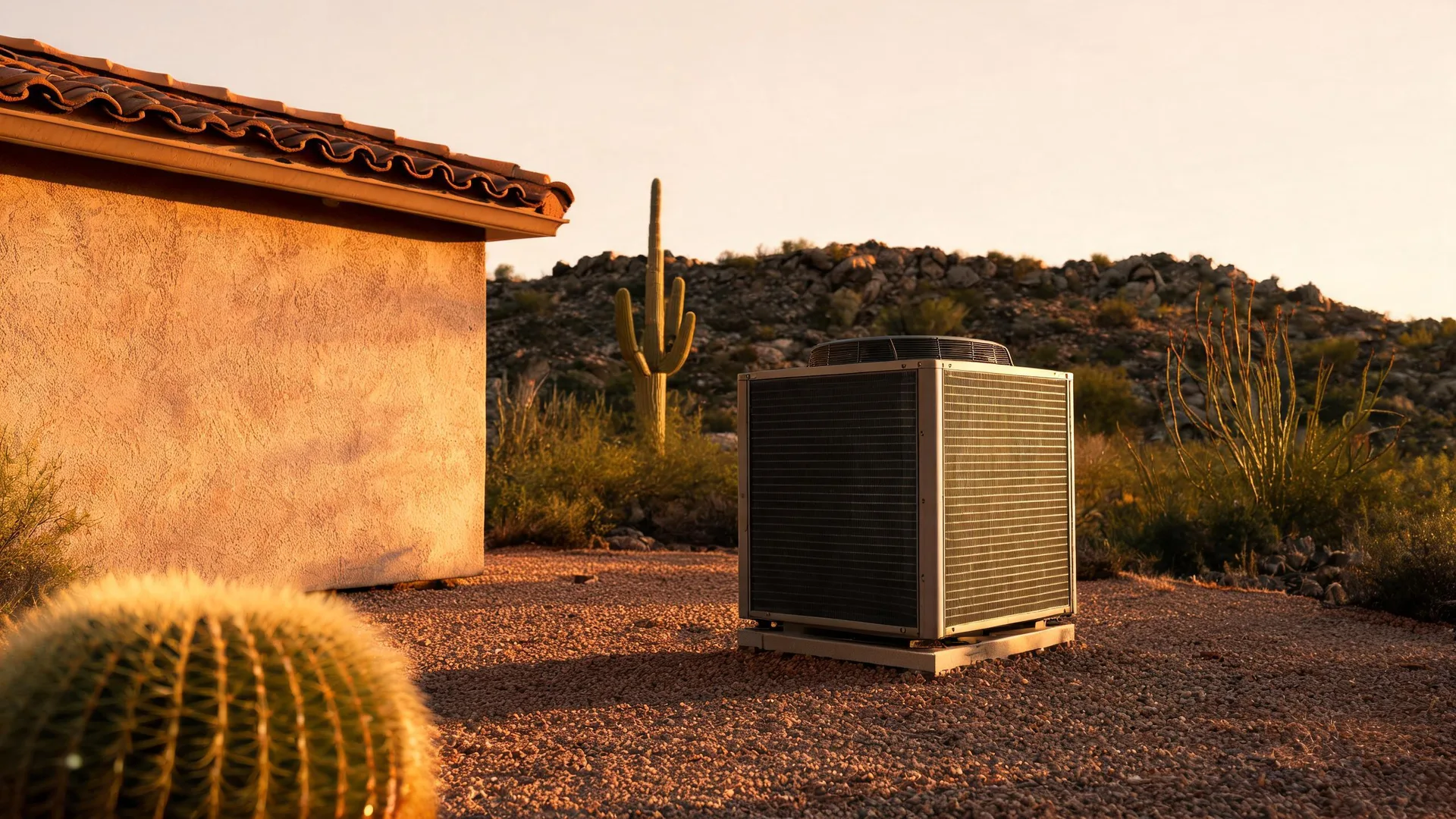
An outdoor residential air conditioning condenser unit mounted on a concrete pad, surrounded by gravel with a blue sky in the background.

A newer system still needs the same yearly check

If your system came with the house, it's worth putting on a yearly schedule now rather than waiting for a reason to call someone. A check at this age means looking at the charge, the capacitor, the coil, before any of it turns into a breakdown. Catching a weak part early keeps the system running the way it did when it was installed, instead of losing ground year over year.

The refrigerant charge drifts without any sign at the thermostat

A system that's low on refrigerant still blows air, so nothing at the vents tells you it's losing capacity. Checking the charge against what the system calls for is something only gauges show. Run it low too long and the compressor wears against a load it wasn't built to carry.

The capacitor weakens before it fails outright

The capacitor gives the compressor and fan motor the push they need to start. A weak one can still get the system running most days, so it hides until the morning it can't. Testing it during a visit catches the part on its way out instead of after it's already stopped the system cold.

An outdoor air conditioning condenser unit installed beside the exterior wall of a blue vinyl-sided house at sunset.

Book your AC tune-up in May, before homes here start needing cooling in June.

  1. Jan
  2. Feb
  3. Mar
  4. Apr
  5. May
  6. Jun
  7. Jul
  8. Aug
  9. Sep
  10. Oct
  11. Nov
  12. Dec

A tune-up checks the refrigerant charge, cleans the coils, tests the capacitor and tightens the electrical connections.

A real tune-up is more than a glance at the outdoor unit. A tech checks refrigerant pressure against what the system calls for, tests the capacitor and contactor, and looks at amp draw on the compressor and fan motor while they're running. The blower gets checked too, since a wheel caked with dust moves less air even when the motor itself is fine. Electrical connections get tightened, because a loose one builds resistance and heat right at the lug. The condensate line gets flushed and the coil gets inspected for the kind of buildup that cuts into airflow before anyone notices it from the thermostat. None of this takes apart the system. It just catches what's drifting before it turns into a call for a repair.