







AC making a loud noise in Dundalk, MD

RepairCentral ACBaltimore County, MD
Step 1 of 2

What ZIP code is the job in?

A loud noise from your AC usually points to something loose or something failing. A high-pitched squeal often means the blower motor bearings are worn or a belt-driven part is slipping. Banging or clanking means something inside the compressor has come loose, like a piston pin or connecting rod, which is serious. A rattle can be as simple as a loose panel or screw vibrating against the cabinet, or it can be the fan blade hitting something it shouldn't. Clicking at startup and shutdown is normal, but repeated or constant clicking points to a failing relay or capacitor. With Dundalk summers running hot and sticky for months, your AC runs long hours and the stress on these parts adds up fast. A noise that shows up now and gets louder over a few days is usually a part giving out, not something that fixes itself. Worth having someone look at it before it leaves you without cooling on a 90 degree afternoon.

A woman in a gray turtleneck sweater sits on a beige sofa in a living room, looking toward a curtained window with blurred greenery outside.
A woman in a brown knit sweater leans back on a sofa with her eyes closed and arms spread along the cushions, in a blurred indoor room with a window, potted plant and kitchen counter behind her.
A woman in a cream sweater sits on a gray sofa with textured cushions, smiling and looking off to the side, with a blurred living room, plants and a pendant lamp behind her.
A woman in a dark green sweater sits on a gray sofa in a living room with a large houseplant, a framed picture, a fireplace, and windows in the background.
A woman stands in the open front doorway of a gray house with wood porch posts and a shingled roof, facing a man in a dark jacket seen from behind in the foreground.

That noise will not fix itself

A squeal that starts quiet gets louder over days, not months. Once the bearings or the belt go, the blower can seize, and that leaves you without cool air on a sticky Dundalk afternoon with the house full of people who need it comfortable. Banging from the compressor is worse. Run it long enough and you're not looking at a repair anymore, you're looking at a new outdoor unit.

You don't have to figure out which it is yourself, or spend an evening calling shops around Baltimore County to find one that answers. Tell us what the noise sounds like and when it happens, and you'll be matched with a contractor who works on your kind of system and knows what that sound usually means. They'll call you to look at it, so you're not the one chasing quotes or repeating the same description to three different companies.

Interior corner of a dining room with a round wooden table, a ceramic vase holding olive branches, a dark spindle-back chair near a curtained window, and a sideboard with a lamp against beige walls.
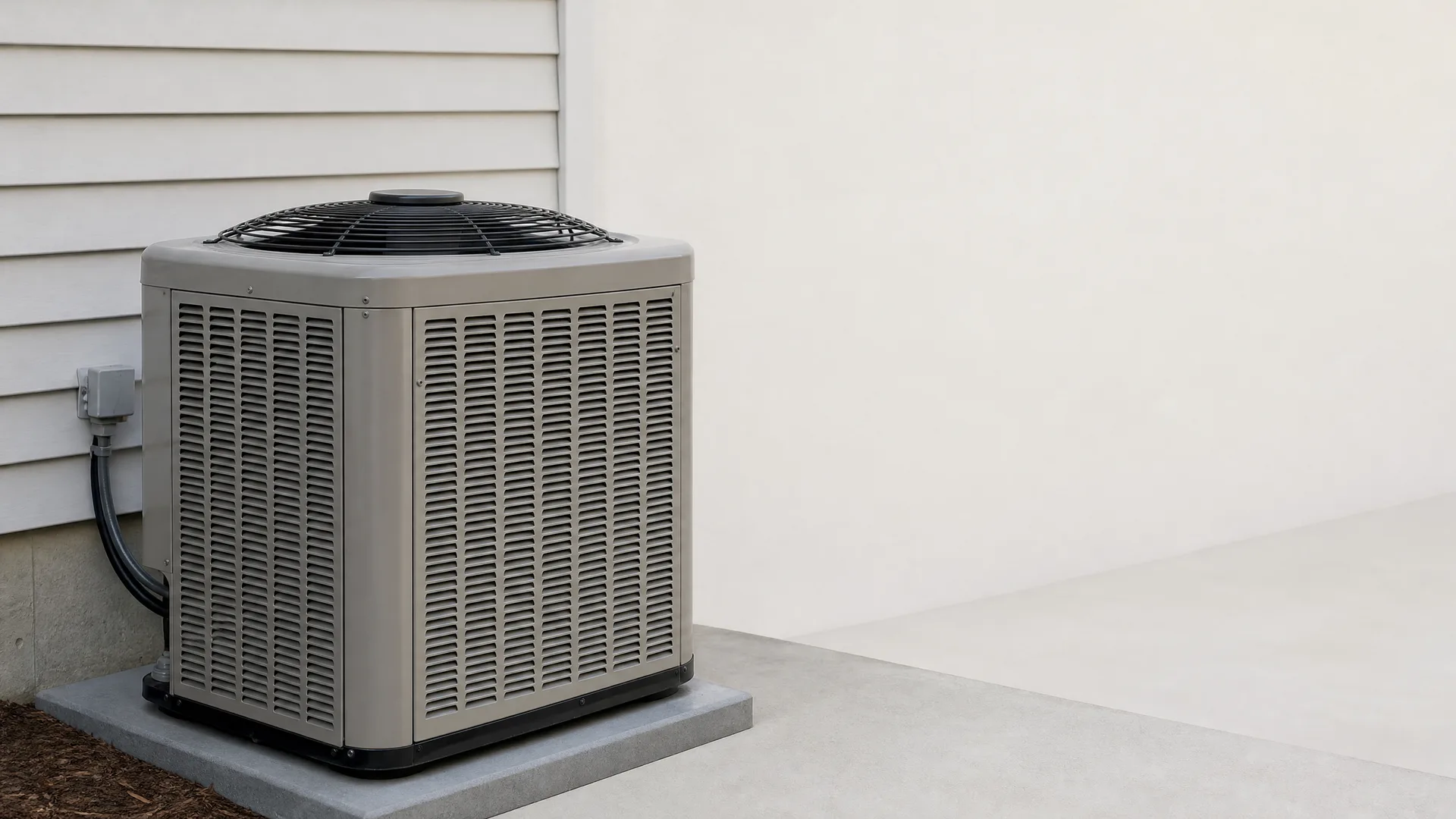
An outdoor air conditioner condenser unit on a concrete pad beside a house with horizontal lap siding, with an electrical disconnect box and conduit on the wall behind it.

What the sound tells a tech

A rattle that comes and goes with the fan speed usually traces back to a loose panel or a screw that worked itself out over time. A steady grinding noise is different. That points to the motor bearings themselves, and bearings don't loosen back up once they start wearing. A tech can often tell which one it is before the panel even comes off, just by where the sound sits in the cabinet.

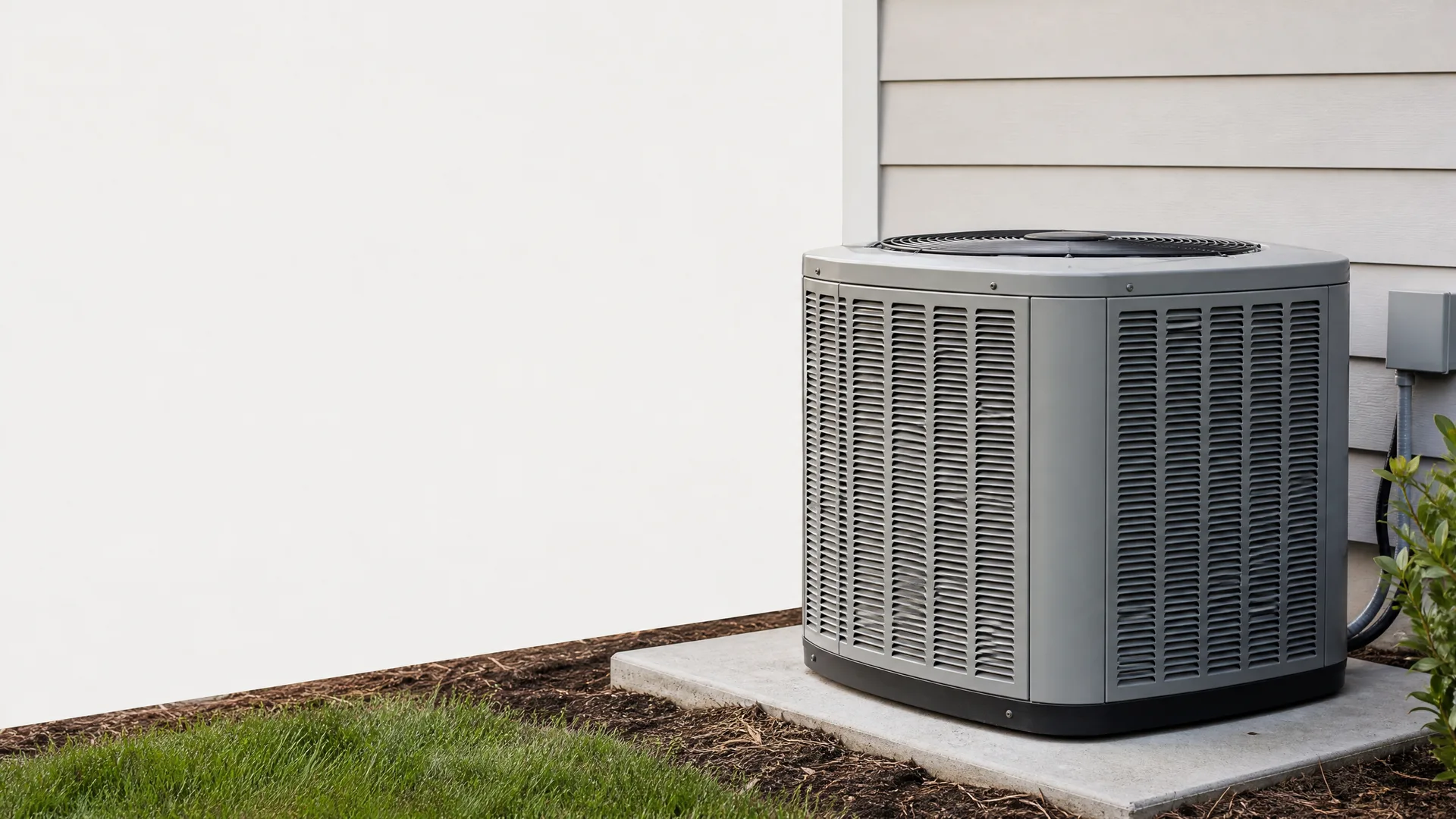
A gray outdoor air conditioner condenser unit sits on a concrete pad beside a house with light horizontal siding and a plain white wall, with mulch, grass, and a small shrub in the foreground.

Why the compressor matters most

The compressor sits outside and runs longer than any other part of the system on a hot day. If it's making noise, that's the most expensive part of your AC telling you something is wrong inside it. A failing compressor can take the whole outdoor unit with it if it keeps running under that strain, so a noise from the outdoor cabinet is worth a call sooner than one from the indoor blower.

What are you hearing when the AC kicks on

Walk past the outdoor unit or stand near a vent and pay attention to when the noise happens. A squeal right at startup usually fades if the system is fine, but one that holds steady or grows points to the blower motor. A bang when the compressor cycles on or off suggests a part has worked loose inside the cabinet. Rattling that matches the fan speed is often just a panel or screw, but a deep grinding sound means metal is wearing on metal. If the noise has been there more than a few days and nothing has changed, the part it's coming from is getting worse, not better, and ignoring it in a Dundalk summer can mean losing cool air on the day you need it most.

A gray outdoor air conditioning condenser unit on a concrete pad beside a house with horizontal lap siding, with a conduit and electrical disconnect box on the wall and a green shrub in mulch to the right.

Running quiet

This is what a condenser sounds like when nothing's wrong: a steady hum, the fan turning smooth, no metal-on-metal, no rattle in the grille. The line set runs clean up the wall to the disconnect, and nothing around the pad is loose or working itself free.


A weathered outdoor air conditioner condenser unit on a concrete pad beside a house with horizontal vinyl siding, with a conduit and disconnect box on the wall to the right.

Running rough

Dirt packed into the grille and leaves piled against the base change how the fan pulls air, and an older unit left like this will often groan or rattle where a clean one wouldn't. Weathering like this is also where loose panels and worn bearings tend to show up first.

Why does my AC make a loud bang when it shuts off?

A bang right as the AC shuts off is different from the hum and rattle you hear while it runs, and it tends to stick in your mind because it happens the same way every time, right at that one moment. You're not imagining a pattern. Something specific happens inside the system in the second the compressor stops, and depending on what it is, it can mean nothing or it can mean a part is close to failing.

It's usually the compressor losing pressure balance, or a duct popping as it cools

When the compressor shuts off, the refrigerant pressure on both sides of it tries to equalize fast, and in some systems that causes a single bang inside the outdoor unit as that happens. A bang from inside the house is usually different. Metal ductwork contracts as the air moving through it cools and stops, and a duct that flexed while running can snap back with a loud pop once the blower cuts out. One points to the compressor, the other to the ducts, and a tech can tell which by where the sound is loudest. Either way, a bang on shutoff is worth having looked at before it happens on every cycle through a Dundalk summer.

A gray outdoor air conditioner condenser unit on a concrete pad beside a house with horizontal lap siding, with a wall-mounted disconnect box and conduit at left and a green shrub and mulch bed at right.
This is what the unit looks like when it's not fighting you: steady hum, fan turning clean, nothing loose on the pad.
An outdoor air conditioner condenser unit on a concrete pad beside a house with horizontal lap siding, with a conduit running to a gray electrical disconnect box on the wall.
Same setup, same wall, but something here is off enough that it's working harder than it should be to keep the house cool.

Cooling runs June through September

Four months of real work a year is still enough for a loose part or a worn bearing to get worse fast. With your AC running steady from June through September, a noise you let ride won't get a quiet stretch to hide in, it'll just keep grinding through the next hot week.

NOAA nClimDiv 1991-2020

An outdoor air conditioning condenser unit on a concrete pad beside a house with horizontal siding and a concrete foundation, with dry brown leaves on the ground to either side.
Before you get your air conditioner repair
A gray outdoor air conditioning condenser unit on a concrete pad beside a house with horizontal lap siding, with a wall-mounted disconnect box and conduit, and shrubs to the left.
After you get your air conditioner repair

Get matched with an air conditioner pro in Baltimore County

You've narrowed down what the noise probably is, and that's worth something, but it doesn't tell you whether it's a loose screw or a bearing that's about to seize. That takes someone standing next to the unit with it running. Finding that person usually means searching around, calling a few places, describing the sound over the phone to each one, then doing it again when the first two don't have anyone free this week. With your AC working hard through a Dundalk summer, every day that rattle or squeal keeps running is a day it can get worse, and a seized blower means no cool air until someone gets out to fix it. Submit your address and what you're hearing once, and a licensed contractor who covers Dundalk takes it from there. You skip the round of calls and the repeated explaining, and you get someone who already knows what you're dealing with before they show up.

A two-story house with light beige siding and a gray shingled roof, fronted by a mowed lawn, shrubs, a large leafy tree at right, and a wet concrete walkway leading to the front door in low golden sunlight.

That heavy, sticky air in Baltimore County, the kind NOAA data puts at a 63°F dew point through June, July and August, makes your AC run longer to pull the same amount of moisture out of the house. A unit that runs longer has more hours for a loose part to rattle loose further or for worn bearings to wear more. A noise that might hold steady in a drier climate tends to progress faster here, because the system rarely gets a real break all summer to just sit still.

NASA POWER T2MDEW

Call now or watch it first

Call now

  • A grinding or screeching noise means metal is wearing on metal right now, and every hour you wait adds to what the bearings or belt lose.
  • If the noise shows up alongside warm air or the unit shutting off on its own, the compressor may already be under strain.
  • Waiting through a hot stretch gives a worn part more hours of load with no break to slow the damage down.
  • A loose part that's left alone tends to work itself looser, turning a tightening job into a motor or compressor replacement.
  • Getting someone out while the unit still runs gives a tech more to diagnose than waiting until it quits does.

Watch it first

  • A single rattle that shows up once in a storm or after yard work might just be debris in the grille, not a failing part.
  • If the noise is faint and only happens at startup, it's worth listening for a few more cycles before deciding it's serious.
  • A noise that stays the same volume and the same pitch over several days hasn't necessarily gotten worse yet.
  • Checking that the outdoor unit is sitting level and nothing is touching the fan blades takes a few minutes and rules out the simplest cause.
  • If the house is still cooling evenly and the air coming out of the vents feels normal, the system isn't failing yet even if it's loud.
An older woman with gray hair in a patterned knit sweater smiles while looking to the side in a dimly lit kitchen, with a round loaf of bread on a wooden counter in the foreground and a lit oil lamp and potted plant on a windowsill behind her.
A woman and a child wrapped in a knitted blanket on a couch indoors, with a lit table lamp and a potted plant in the background.

What the noise comes down to

  • A loud noise almost always traces back to something loose, something worn, or something slipping inside the unit.
  • Squealing points to the blower motor or a belt, grinding points to the bearings, and banging points to something loose inside the compressor.
  • None of these get quieter on their own, and most get worse the longer the AC keeps running through a Baltimore County summer.
  • A tech standing next to the running unit can tell you in minutes what the sound alone cannot.
  • Sorting through contractors, calling around, and explaining the same noise twice over takes time you don't have once the house starts warming up.
  • Getting matched with a contractor who already knows what these noises mean skips straight to someone looking at your unit.

A loud noise from your AC is information, not a mystery. Squealing, grinding, and banging each point somewhere different, and where they point decides whether you're looking at a belt, a motor bearing, or a part that's come loose inside the compressor. None of them improve with time. A summer in Baltimore County means your unit runs for hours at a stretch, and those hours are exactly when a loose screw turns into a rattle you can't ignore or a worn bearing finally seizes. The sound tells you roughly what's wrong. It takes someone standing next to the unit, listening to it run, to tell you exactly what's wrong and what it takes to fix it.

That's the part a homeowner can't do alone, and it's usually where the day gets eaten up. Looking up contractors, calling a few, explaining the squeal or the grinding to each one, then waiting to hear back and comparing what they say it might cost, that's hours you don't get back, and the noise doesn't wait for you to finish. Getting matched with a contractor who repairs AC units in Dundalk skips past all of that. You explain it once, to someone who already knows what a grinding noise usually means in a system like yours, and the next step is them looking at the unit itself. The noise doesn't go away on its own either way. The only question is how much gets lost in the house staying warm while you wait.

A living room corner with a beige upholstered sofa, cushion and knit throw, a potted green plant in a woven basket, a framed botanical print on a taupe wall, and a window with foliage outside.
Sunlit room corner with a paned window, sheer cream curtain, a leafy plant in a woven basket on a wood floor, and a textured jute rug.
Sunlit room corner with a white-framed window overlooking green foliage, a wicker basket holding a cream knit blanket on a wood floor, and a woven rug in the foreground.
A woven basket holding folded cream blankets sits in a corner on a wood floor beside a linen curtain and window, with window-frame shadows cast on the beige wall.
Sunlit room corner with a potted variegated plant in a woven basket on a wood floor, a linen curtain beside a multi-pane window showing green trees, a framed artwork at upper left, and a jute rug in the foreground.

Find an air conditioner repair pro in Baltimore County

Skip calling shops to ask who repairs air conditioners in Baltimore County.

Describe it once

No charge to send it. You decide if you hire them.