Why your AC is making a loud noise in Maryland
A loud noise from your AC usually points to something loose, worn, or hitting a part it shouldn't. A high-pitched squeal often means a belt or bearing in the blower motor is wearing out. A grinding sound usually means a motor bearing has failed and metal is now grinding on metal. Banging or clanking means something has broken loose inside, often a piece of the fan or a connecting rod, and is now striking the cabinet as it spins. A hissing sound can mean refrigerant escaping from the line, which is a different problem and needs a licensed hand quickly. In Maryland, your AC runs hard through the muggy summer months, and that steady workload is what wears these parts down and brings the noise on. None of these get quieter on their own, and running the unit while a part is grinding or loose usually turns a cheaper fix into a bigger one. Once you know what the sound is telling you, the next step is getting it looked at before it gets worse.


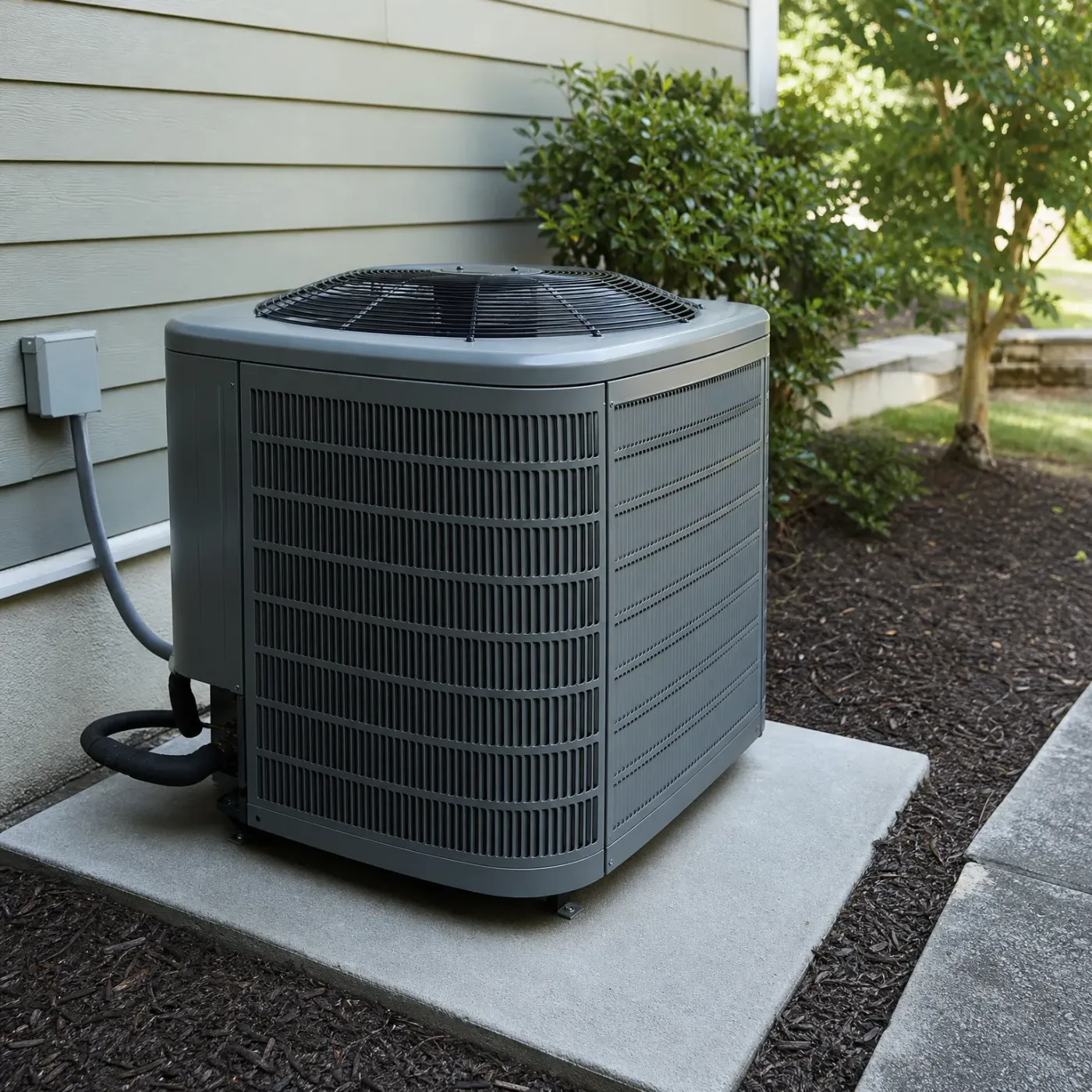
Where the sound comes from narrows down what's wrong before anyone opens the cabinet. The outdoor unit sits outside taking weather and vibration all summer, so loose panels and worn electrical parts show up there first. A rattle that changes with fan speed is usually just hardware working itself loose over time. Clanking when the compressor starts is more serious, since that's the part that actually moves refrigerant through the system, and broken parts inside it don't get cheaper to fix by waiting. Buzzing points to the contactor, a small switch that handles the power surge every time the compressor cycles on, and those contacts wear out with use. One click per cycle is that same contactor working the way it should. Inside the house, a hissing sound near the coil means refrigerant is leaking out through a gap in the line, which also means the system is losing its ability to cool. Ice or debris hitting the fan blade causes a bang right at startup, before the airflow clears it.
What the Noise Is Telling You
- A rattle that comes and goes with the fan speed often means a loose panel or screw on the outdoor unit vibrating against the cabinet.
- Clanking when the compressor kicks on can mean a connecting rod or piston pin inside it has broken loose.
- A hissing or bubbling noise near the indoor coil usually means refrigerant is escaping through a crack or loose fitting in the line.
- Buzzing from the outdoor unit is often a sign the contactor, the switch that sends power to the compressor, has pitted or worn contacts.
- A loud click at startup or shutdown that happens every single cycle is usually normal and comes from the contactor doing its job.
- Banging right when the system starts can mean a fan blade is hitting ice buildup or debris that got into the outdoor cabinet.


Let someone else find the pro
A noisy AC in Maryland is not something to sit on through July and August. You're already paying a lot to run it, since power here runs expensive, and a unit straining to cool a muggy house is burning more than it should while that sound gets worse. Grinding, squealing, clanking, whatever you're hearing, it tends to be a part working itself loose or wearing through, and that rarely fixes itself. The contractor who gets your request is local and works on systems like yours all summer, so they've heard this noise before and know what it usually turns out to be. Only one contractor sees what you send, not a handful, so you're not stuck fielding calls from companies you didn't choose while your house sits warm and loud. Send it and that search becomes someone else's job instead of yours.
Your outdoor unit's compressor runs under real pressure, and a motor bearing inside it will not quiet down on its own once it starts to fail.
Left alone, that noise usually ends with the compressor locking up, and a compressor is the most expensive part of the whole system to replace.
Power costs 19.53 cents per kilowatt-hour statewide
At 19.53 cents per kilowatt-hour, an AC that's straining to push air past a worn bearing or a loose part is costing you more every time it cycles on. The sooner that noise gets fixed, the sooner your unit stops wasting power to do its job.
EIA-861 2025 statewide residential average
What That Noise Means for You
- A loud noise from your AC almost always traces back to one worn or loose part, not a reason to replace the whole unit.
- Squealing, grinding, clanking, and hissing each point to a different part, and a technician who works on these units every summer knows which is which fast.
- Letting the noise continue usually costs more than fixing it early, especially with a compressor that can lock up for good.
- A local Maryland contractor licensed for this work gets matched to your repair, not a handful of companies competing for your call.
- Someone who services AC units all season in this climate has likely already seen your exact noise on another system nearby.
- Once you send the request, finding the right contractor is off your plate.
The sound your AC is making has a cause, and that cause has a name. A squeal, a grind, a clank, a hiss, each one points somewhere specific inside the unit, and that's the part that needs attention, not the whole system. Most of what gets diagnosed as a loud noise turns out to be one worn bearing, one loose panel, one failing component doing exactly what a failing component does before it quits.
What matters now is getting someone to look at it who already knows what that sound usually is. A contractor who services air conditioners across Maryland all summer has heard your noise before, probably on a unit a few streets over, and knows what to check first instead of guessing through a list of parts. That's not a small thing when the compressor is on the line. Once it locks up, the repair stops being a repair.
The match you get through this page is one licensed Maryland contractor, not a stack of companies calling you back one after another. That's the person who shows up, looks at the unit, and tells you straight what's wearing out and what it'll take to quiet it down. From there, the noise stops being your problem to solve. You send the request, and finding the right person for it is no longer something you have to manage on top of everything else this summer.