





A two-story red brick house with black shutters and a dark roof stands behind a mowed lawn framed by large deciduous trees, viewed over a dry-stacked stone wall in the foreground under an overcast sky.

AC Repair in Cambridge, MD

Tell us about the job

Takes about a minute. No obligation.

RepairCentral ACDorchester County, MD
Step 1 of 2

What ZIP code is the job in?

Cambridge air conditioners run June through September. May is worth a look before that starts, because a system that limped through last summer often fails outright in the first hot stretch rather than easing into it. A capacitor on its way out, a contactor with pitted contacts, a low refrigerant charge from a slow leak, these don't get better sitting idle all winter. They show up the first time the compressor has to work hard, which in Dorchester County is usually June. If your AC struggled last year or is already making noise, get it looked at before that first real heat wave rather than after.

4 months
June through September, your air conditioner is on duty
86°F
the average summer afternoon it cools against
8 hail events
in ten years, and hail bends the fins on outdoor coils
58 wind events
in ten years, and wind drives debris into outdoor units
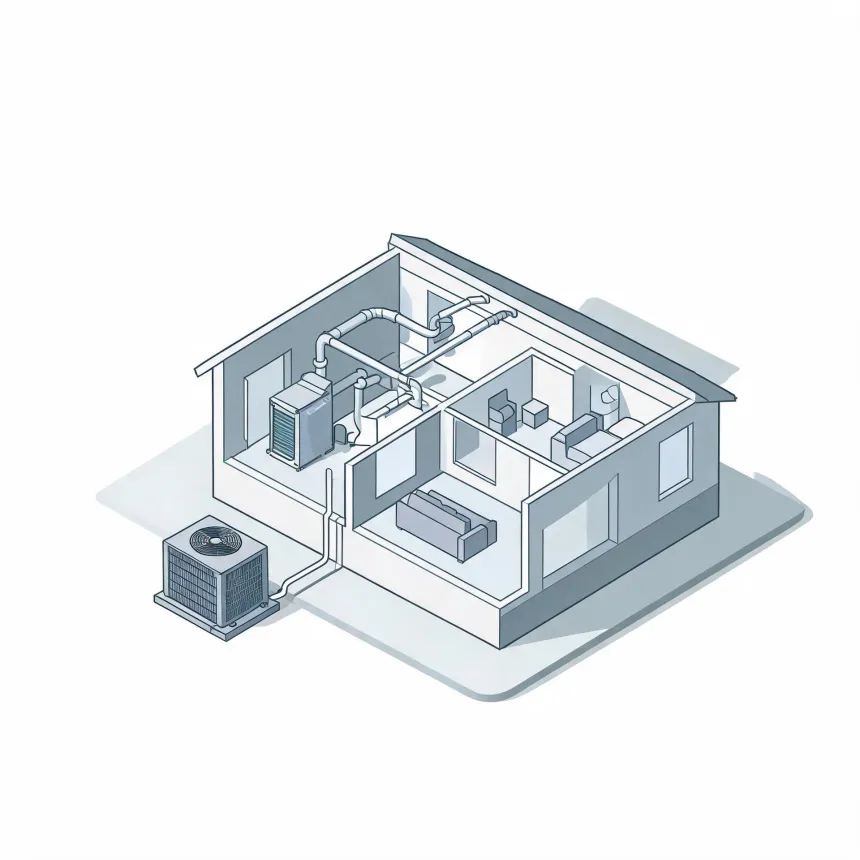
Isometric line illustration of a cutaway house showing interior rooms, a furnace or air handler with ductwork, and an outdoor condenser unit beside the building.
Your air conditioner works hardest from June through August.

NOAA nClimDiv, 1991–2020 normals

Cambridge summers run June through September, with afternoon highs averaging 86.

Four months of steady compressor work is enough to turn a weak capacitor into a dead AC.

Half these homes predate central air by decades, and the AC still fails the same way

Half the homes here were built by 1975
Cooling runs June through September
Summer afternoons average 86°F

Maryland electricity ran 17.86 cents per kilowatt-hour in 2024, among the higher rates in the region. A struggling AC doesn't fail quietly. It pulls more power trying to do the same job, so the cost of a bad capacitor or a low charge shows up on the electric bill weeks before the unit quits outright. That's money going out every month the problem sits there. Get it checked now instead of waiting for the breakdown that was already being paid for.

The longer it runs rough, the more it costs you

A system that's struggling pulls more power every day it keeps running that way. At Maryland's electric rates, that's an extra cost on every bill between now and whenever it finally gets fixed. Have it looked at this month.

Find a contractor
A man in a dark cap and jacket and tan work pants, seen from behind, climbs porch steps toward an orange-brown front door while carrying a worn canvas tool bag.
A gray cylindrical air conditioning condenser unit mounted on a concrete pad next to a light-colored vinyl-sided house exterior.

Running rough isn't the same as running fine

A failing part rarely stays at one level of bad. A capacitor that's weak still starts the compressor, so the system keeps running. But every cycle asks more of a part that's already worn. Low refrigerant works the same way. The compressor pushes harder to make up for the missing charge. It runs hotter doing it, and that heat is what eventually takes the compressor out with it. A clogged condenser coil or a dying fan motor forces the same bad trade. The system either runs longer to move the same heat, or it runs hot doing less of it. Neither one gets better by running more. The parts worth catching early are the ones that mask themselves this way, doing the job badly instead of refusing to do it at all.

What you can check yourself

Shut off power at the breaker before touching anything, then look at the outdoor unit. Clear leaves and grass clippings off the sides so air can pass through the coil. Make sure nothing is stacked against it. Inside, swap the air filter if it's gray or clogged. Check that the thermostat is set to cool and the temperature is actually below room temperature. If you have a condensate line near the indoor unit, look for water pooling around it, since a clog there will shut some systems down on purpose.

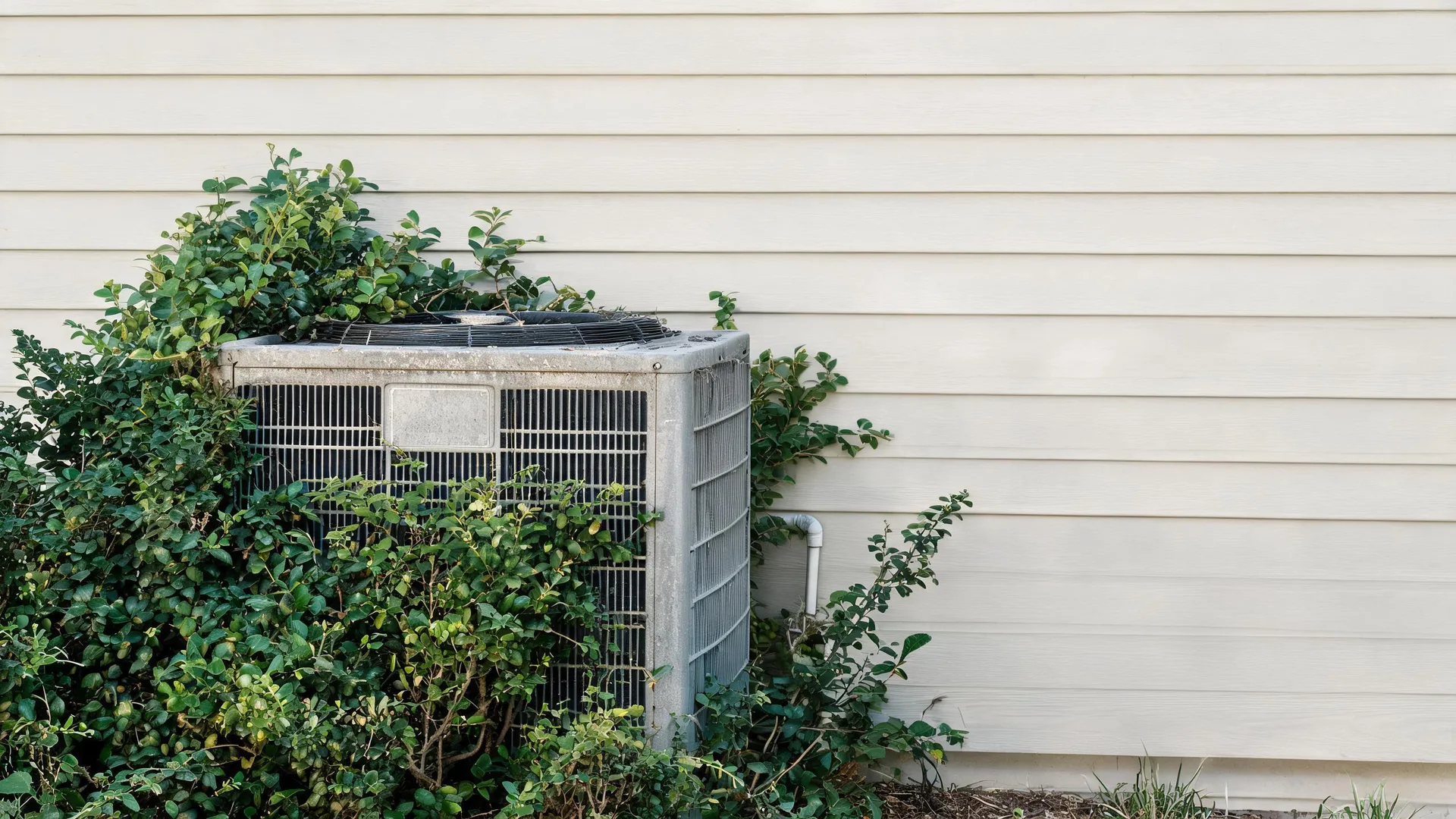
What those checks rule out

A dirty filter or a blocked outdoor coil makes the system work harder without fixing the real problem underneath, but clearing them tells you something. If the AC runs fine once air can move freely again, you've saved a service call. If it still blows warm air, cycles on and off fast, or won't start at all, the problem is electrical or mechanical, a capacitor, a contactor, or the refrigerant charge, and none of those are something to open up yourself.

An outdoor central air conditioning unit mounted on a concrete pad beside a blue-sided house at sunset.

A new air conditioner would cut about $50 a year off cooling for a typical Dorchester County home.

  • A new one at the federal minimum, 14.3 SEER2$340 a year
  • An older air conditioner$390 a year

Estimates for a typical Dorchester County home, compared with an older unit built to the previous federal minimum, from EIA household energy data, Maryland fuel prices and NOAA climate normals. Your home will differ.

Repair makes sense when a part like a capacitor or contactor has failed.

Replacement makes sense when the compressor has failed or the system uses R-22 refrigerant, which is no longer made.

A repair makes sense when one part failed and the rest of the system is sound. A capacitor, a contactor, a fan motor, these are replaceable on their own without touching anything else, and a compressor that's been running on a weak capacitor for a short time usually hasn't taken damage yet. Replacement starts to make more sense when the failing part is the compressor itself, since that's most of the system's cost sitting inside the cabinet, or when whoever looks at it finds more than one thing going wrong at once. Age matters too, not because a number says so, but because a system old enough to need a second or third repair is usually old enough that other parts are close behind it. The other sign worth weighing is refrigerant. Older systems use a refrigerant that's being phased out, and a leak that needs a recharge can cost more in refrigerant than the repair itself is worth. None of this is a decision to make from the outside. It takes someone actually looking at the unit to say which side of that line it's on.