







A two-story red brick house with black shutters and a covered porch sits behind a wide green lawn, framed by large leafy trees, with a dry-stacked stone retaining wall in the foreground.

AC Repair in Chestertown, MD

Tell us about the job

Takes about a minute. No obligation.

RepairCentral ACKent County, MD
Step 1 of 2

What ZIP code is the job in?

Before you call, check a few things yourself. Look at the thermostat and make sure it's set to cool, not just on, and that the set temperature is actually below room temperature. Go to the breaker panel and see if the AC breaker has tripped. Check the air filter, because one packed with dust can choke airflow enough to make the system struggle or freeze up. If you can get to the outdoor unit, look for leaves, grass clippings or anything blocking the sides of the cabinet. If the system has been running without cooling for a while, switch it off at the thermostat so any ice on the coil has a chance to melt before a tech looks at it. None of this fixes a bad capacitor or a refrigerant leak, but it rules out the simple stuff first.

4 months
June through September, your air conditioner is on duty
86°F
the average summer afternoon it cools against
3 hail events
in ten years, and hail bends the fins on outdoor coils
98 wind events
in ten years, and wind drives debris into outdoor units
Isometric cutaway illustration of a house interior showing ducted air handling equipment, ceiling ducts, furniture in two rooms, and an outdoor condenser unit connected by lines outside the wall.
Your air conditioner works hardest from June through August.

NOAA nClimDiv, 1991–2020 normals

AC in Chestertown starts its season in June.

The first hot stretch is when a part that was already failing finally gives out.

At 17.86 cents a kWh with afternoons near 86°F, a struggling AC runs up a bigger bill every day it's not fixed

Power costs 17.86 cents a kWh statewide
Cooling runs June through September
Summer afternoons average 86°F
Your AC's age isn't the problemHalf the homes in Kent County were built in 1978 or earlier, half later. Either way, the usual parts fail the same way.

A system that's short on refrigerant or losing airflow has to run longer to hit the same temperature, and at 17.86 cents a kWh that extra runtime shows up fast. Waiting a billing cycle to see if it's really a problem just means paying for the bad run while you decide. A tech can check the charge and airflow in one visit and tell you whether it's a quick fix or something bigger. Either way, the bill keeps climbing until someone does.

Get it looked at early

Problems tend to show up in the first weeks of the season, when the load hits a part that was already weak.

Find a contractor
A man in a dark sweatshirt and tan work pants, seen from behind, climbs porch steps toward a red-orange door while carrying a worn canvas duffel bag.
A gray residential air conditioner condenser unit mounted on a concrete pad in an open grass field.

What the system is telling you before it quits

An AC that runs for hours without shutting off is losing the fight somewhere. It could be a weak capacitor, a low charge, or a coil caked with dirt. Short cycling is the other pattern worth noticing. The unit kicks on, runs a few minutes, shuts off, then starts again soon after. That wears on the compressor more than steady running ever does. Warm air coming out of the vents while the outdoor unit hums along usually points to the refrigerant side or a failing compressor, not something a filter change will fix. A hissing or bubbling sound near the lines is worth mentioning to a tech. That's often refrigerant escaping, not just a noisy fan. None of these signs get better by waiting through another hot afternoon. The part struggling now is the same part that quits later, usually on the day the system gets pushed hardest.

Capacitors wear down, they don't just snap

The capacitor gives the compressor and fan motor the kick they need to start. It weakens slowly, so the unit may start fine on a cool morning and fail to start once the afternoon load hits it. By the time it fails outright, it's usually been giving out warning signs for a while, like a slow start or a fan that spins a little before catching.

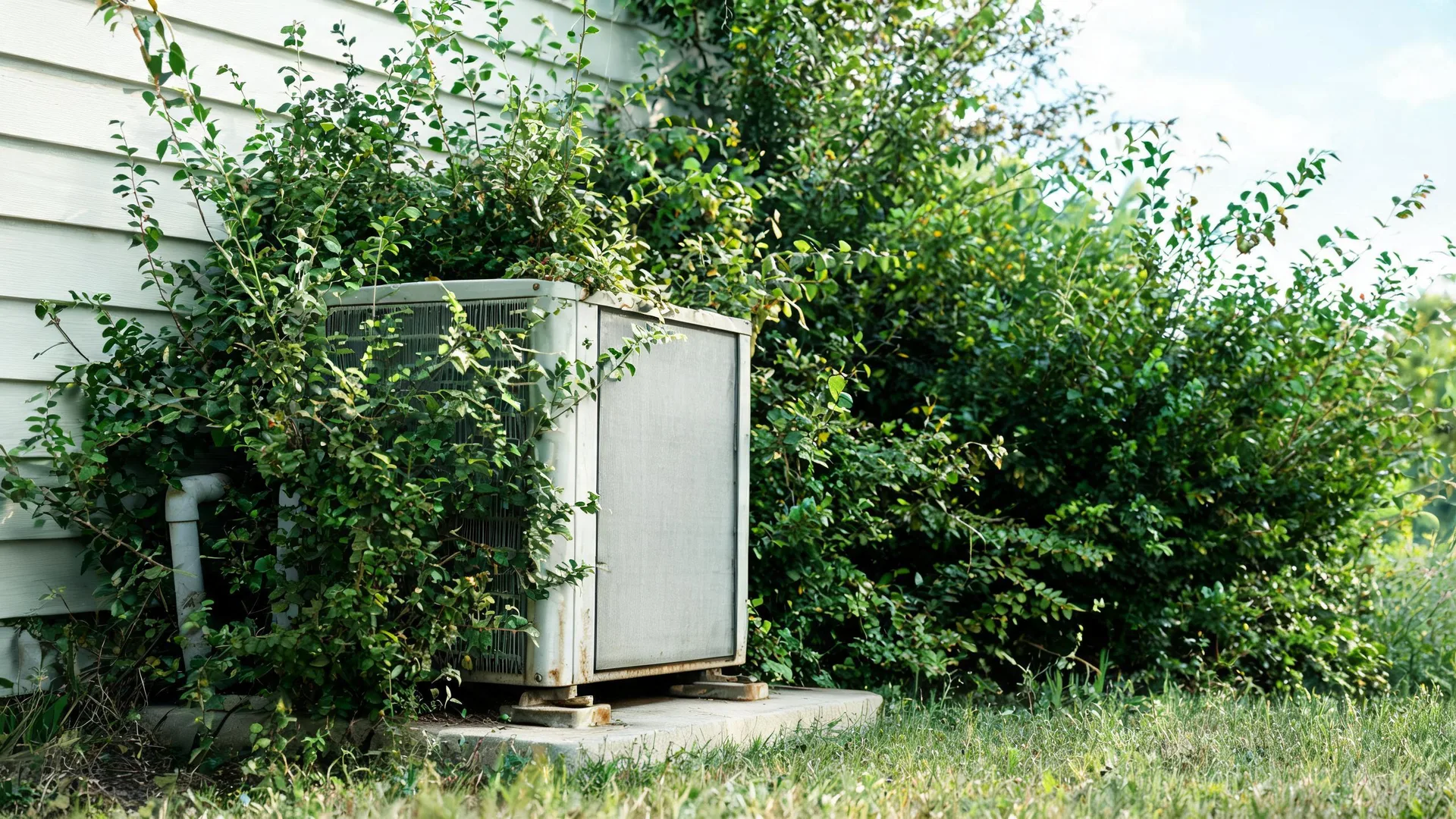
A dirty coil makes everything else work harder

The outdoor coil has to shed heat for the system to cool the house, and the indoor coil has to stay clear for the same reason. Dust and grime on either one force the compressor to run longer and hotter to do the same job. Left alone, that extra strain is what pushes a marginal capacitor or a tired compressor over the edge.

An outdoor air conditioning condenser unit on a concrete pad next to the gray vinyl siding of a residential home.

A new air conditioner would cut about $40 a year off cooling for a typical Kent County home.

  • A new one at the federal minimum, 14.3 SEER2$320 a year
  • An older air conditioner$360 a year

Estimates for a typical Kent County home, compared with an older unit built to the previous federal minimum, from EIA household energy data, Maryland fuel prices and NOAA climate normals. Your home will differ.

Repair makes sense when a part like a capacitor or contactor has failed.

Replacement makes sense when the compressor has failed or the system uses R-22 refrigerant, which is no longer made.

A diagnostic visit starts before any panel comes off. A tech asks what the system was doing, whether it quit outright or just stopped cooling well, and when it started. Then comes the gauges, checking refrigerant pressure on both the high and low side, because that number alone rules a lot in or out. The capacitor gets tested under load, not just looked at, since a weak one can still show voltage sitting still. Electrical connections get checked for corrosion or a loose lug, a common reason a unit stops responding even when the breaker is fine. The condenser fan and compressor get watched running together, listening for the hum of a motor trying to start and failing. Airflow gets checked too, at the filter, the coil, and the return, since restricted air can mimic a refrigerant problem. By the end, the tech can usually point to the one part behind the symptom, not just the symptom itself.