May is when to get ahead of it
Cooling in Cumberland doesn't start until June and only runs through August. May is the slow month, the one where a contractor can look at your system before it has to work.
Takes about a minute. No obligation.
Cooling in Cumberland doesn't start until June and only runs through August. May is the slow month, the one where a contractor can look at your system before it has to work.
A capacitor or contactor that was already weak tends to fail in the first hot stretch, not partway through summer. If your AC is struggling now, that's usually a part that was already on its way out, not something the heat caused.
NOAA nClimDiv, 1991–2020 normals
Summer afternoons in Cumberland average 84 degrees, nothing extreme for an AC to meet.
So when a system can't keep up, the heat usually isn't the reason. A weak part is.




Maryland electricity ran 17.86 cents a kilowatthour in 2024, more than most states pay. A unit working harder than it should burns through that rate every day it sits unfixed. A weak capacitor makes the compressor pull extra current to do the same job. A low charge makes the system run longer to reach the same temperature. Either way the meter moves faster than it needs to. Getting it looked at now costs less than letting it run wrong all summer.
If your AC came with the house, ask the contractor how old the system actually is before they quote a repair. On a unit that's already near the end of its life, that's worth knowing before you spend money on it.
Find a contractor
An AC that's starting to fail usually tells you before it quits outright. Warm air out of the vents while the compressor still runs outside points to a refrigerant leak or a failing compressor. Short cycling, where the system shuts off soon after it starts, is often a dirty coil or a bad sensor. A unit that runs constantly and never quite reaches the temperature on the thermostat is losing the fight, usually a weak capacitor or a coil caked with dirt. Grinding, squealing or a hard metallic bang when it kicks on means a motor bearing or a loose part inside the cabinet. Water pooling near the indoor unit means the condensate line is clogged, and left alone that backs up into the house. None of these get better on their own. A system struggling on the first hot day will struggle more as the summer goes on.
A clogged filter chokes the airflow a coil needs to shed heat. The coil can ice over, and once it does the system blows warm air no matter what else is right with it. Pull the filter and look at it in the light. If you can't see through it, that alone could be the whole problem.
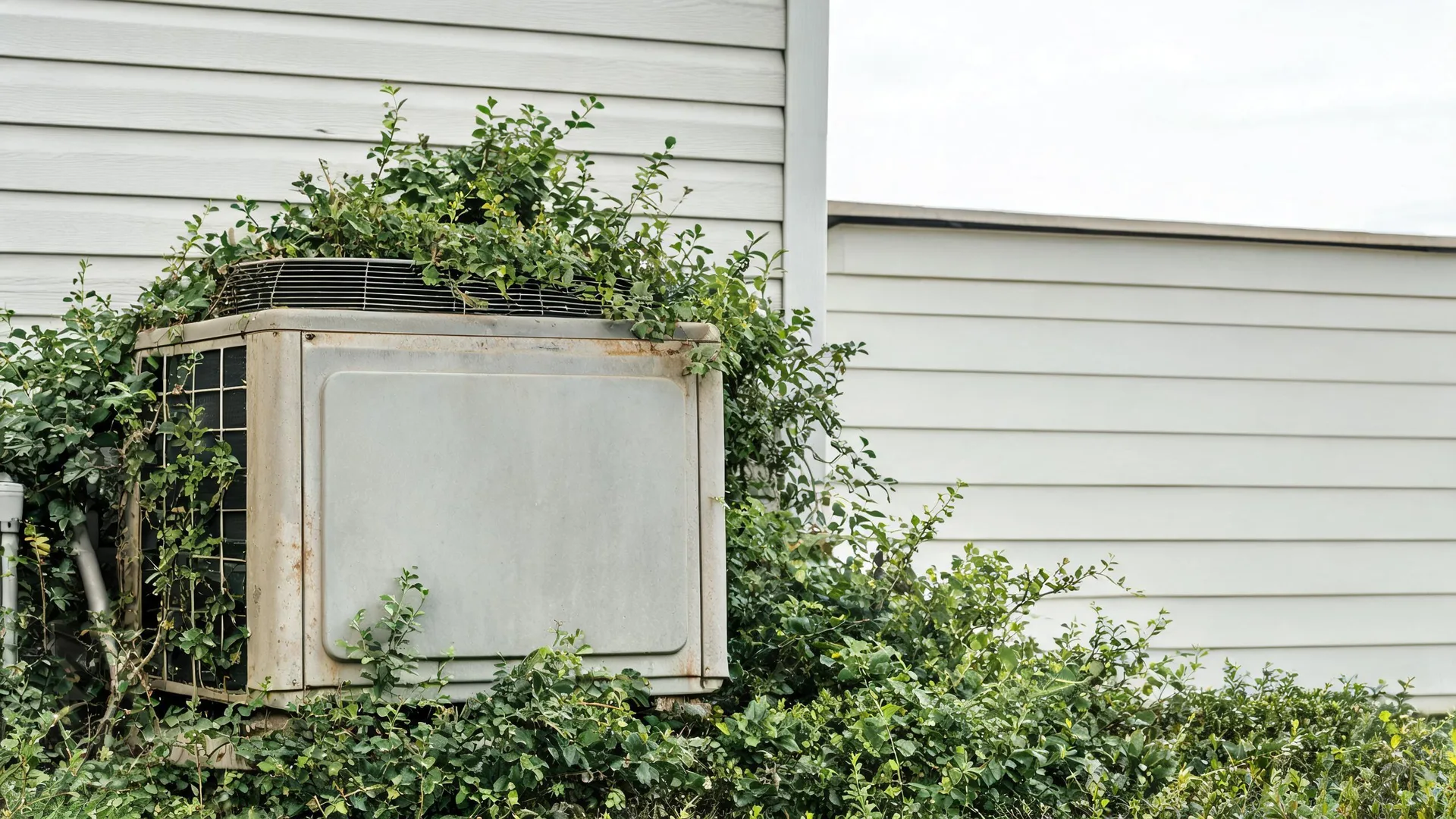
Walk outside and check the condenser. Leaves, grass clippings or a fence line pressed too close block the airflow it needs to release heat. Clear anything within a couple feet of it. Also check that the breaker for it hasn't tripped, since that will stop the outdoor unit while the indoor blower keeps running like nothing's wrong.
Estimates for a typical Allegany County home, compared with an older unit built to the previous federal minimum, from EIA household energy data, Maryland fuel prices and NOAA climate normals. Your home will differ.
Repair makes sense when a part like a capacitor or contactor has failed.
Replacement makes sense when the compressor has failed or the system uses R-22 refrigerant, which is no longer made.
Age matters more than the symptom when you're deciding whether to fix or replace. A compressor or a coil leak on a system near the end of its life is a different decision than a bad capacitor on a system with years left. Most contractors weigh a repair against what the unit has left in it, not just what today's fix costs. A system that's needed a few repairs in the past couple years is telling you something, even if each one was small on its own. One that's run clean until now and just tripped a breaker or blew a capacitor is usually worth fixing without a second thought. If the compressor itself has failed, that's often the point where replacing the outdoor unit makes more sense than replacing just that part.