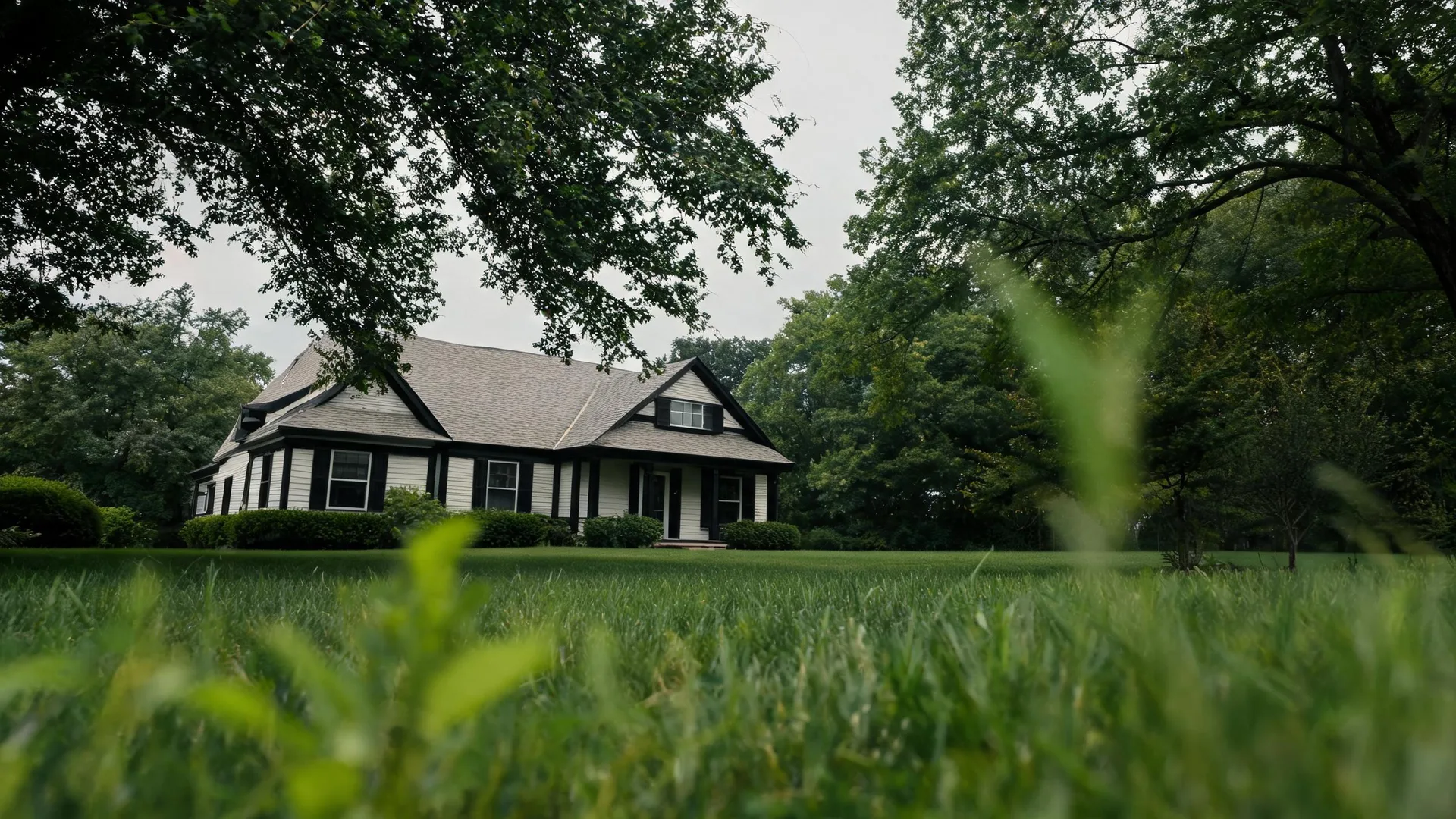






A single-story white house with dark trim and a shingled roof stands among leafy trees, photographed from low in a green lawn with blurred grass blades in the foreground.

AC Repair in Denton, MD

Tell us about the job

Takes about a minute. No obligation.

RepairCentral ACCaroline County, MD
Step 1 of 2

What ZIP code is the job in?

May is the month to get a weak AC looked at here, not June. Cooling runs June through September in Denton, and the first hot stretch is when a system shows what was already wrong with it. A capacitor that was marginal last fall won't make it through the first real heat load. A compressor that's been running on a low charge all year tends to fail the same way. Wait until the house is already warm and the repair gets done anyway, just after a few uncomfortable days and behind everyone else whose AC quit that same week.

4 months
June through September, your air conditioner is on duty
86°F
the average summer afternoon it cools against
2 hail events
in ten years, and hail bends the fins on outdoor coils
75 wind events
in ten years, and wind drives debris into outdoor units
Isometric cutaway illustration of a single-story house with a dark shingled roof, showing interior rooms with ductwork and an indoor air handler connected to an outdoor condenser unit beside the building.
Your air conditioner works hardest from June through August.

NOAA nClimDiv, 1991–2020 normals

Denton summers run four months, June through September, with afternoon highs averaging 86.

A system struggling with a load like that has a normal problem, not a climate working against it.

A broken AC costs more to run here than almost anywhere else

Power costs 17.86 cents a kWh statewide
Cooling runs June through September
Summer afternoons average 86°F
Most of Denton's AC units aren't old enough to give upHalf the homes in Caroline County were built in 1981 or later

At 17.86 cents a kilowatt-hour, a struggling AC in Denton runs up a bigger number every month it's left alone. A weak capacitor makes the compressor draw more to do the same job. A low charge does the same thing. Neither gets better on its own, and both keep pulling that extra power until someone finds the actual cause. Get it looked at now, while it's a diagnosis and not a guess made once the house is already hot.

Your AC is young enough to fix

A system that came with a newer house still has the parts to be fixed, not replaced. If your AC is acting up, get the actual cause found before it fails outright.

Find a contractor
A gray residential air conditioning condenser unit mounted on a concrete pad outdoors, surrounded by green grass under a partly cloudy blue sky.

What to check before you call

Start with the thermostat. Make sure it is set to cool and set below room temperature, and swap the batteries if it runs on them. Walk outside and look at the condenser. If the fan isn't turning and you don't hear a hum, that's worth noting. Check the breaker panel. A tripped breaker on the AC circuit shuts the whole system down, and flipping it back is simple if that's all it is. Go back inside and pull the air filter. If it's packed with dust, air can't move across the indoor coil, and a coil starved for air will ice over. If you see ice on that coil or on the copper line outside, shut the system off and let it thaw before anyone tries to figure out what's wrong underneath it. Walk the house and feel the vents. Weak air at every vent points to something upstream. Good air at some vents and weak air at others points to a block somewhere along the way to the weak ones. Last thing, listen. A hum with no fan movement outside, a click that repeats without the compressor catching, a hiss near the lines. Whatever you hear, mention it on the phone. It tells the tech what they're walking into before they're standing in front of the unit.

A warm house doesn't mean a system is finished

A weak capacitor can still start the compressor most of the time, just with more strain each time it does. A low charge still produces cold air, just less of it. The system keeps running because the parts that are failing haven't failed completely yet, and nothing in how it sounds or feels tells you how close they are.

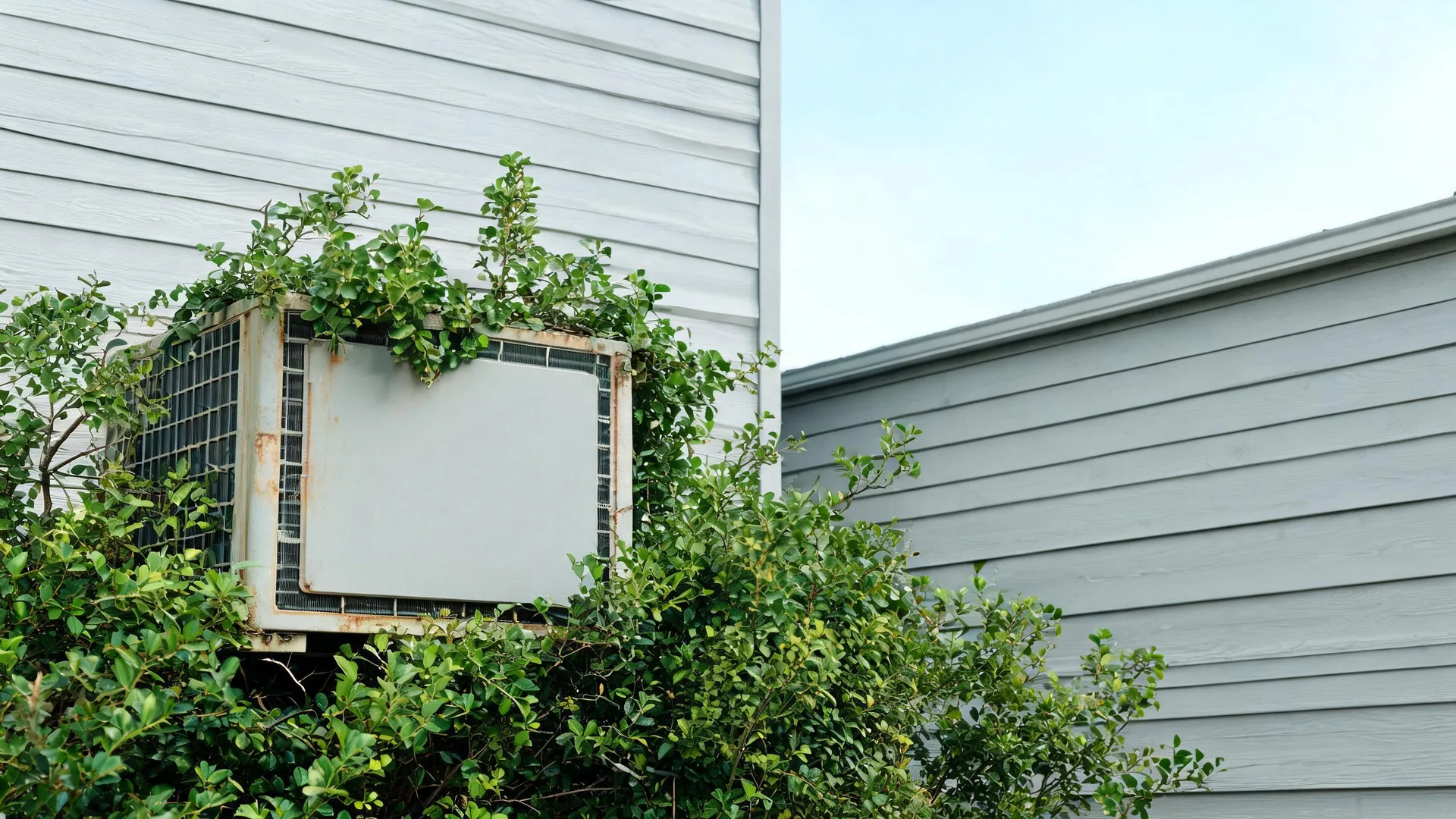
Every cycle after that asks more of what's already weak

The compressor draws harder to make up for the low charge. The motor runs hotter trying to spin against a capacitor that can't hold its charge. None of that shows up as a bigger problem right away. It shows up as the same problem, over and over, until the part it's been asking too much of stops answering.

Overhead view of a gray outdoor AC condenser unit on a concrete pad beside a mulched garden bed and a house with vinyl siding.

A new air conditioner would cut about $50 a year off cooling for a typical Caroline County home.

  • A new one at the federal minimum, 14.3 SEER2$310 a year
  • An older air conditioner$360 a year

Estimates for a typical Caroline County home, compared with an older unit built to the previous federal minimum, from EIA household energy data, Maryland fuel prices and NOAA climate normals. Your home will differ.

Repair makes sense when a part like a capacitor or contactor has failed.

Replacement makes sense when the compressor has failed or the system uses R-22 refrigerant, which is no longer made.

A diagnostic visit starts before the panels come off. A tech checks the thermostat call, the breaker, the capacitor, and the refrigerant charge, because a system can fail from any one of those and look the same from the thermostat. Gauges go on the lines to read the charge against what the system is supposed to carry. The capacitor gets tested under load, not just looked at, since a capacitor can read fine sitting still and still fail to start the compressor. The condenser fan motor and the contactor get checked too, since a fan that spins slow or a contactor with burnt points can mimic a charge problem. Whatever gets found gets explained before anything is opened up further, so the repair makes sense before it starts.