





Two white colonial houses with lit windows and black shutters photographed at dusk along a tree-lined residential street.

AC Repair in Princess Anne, MD

Tell us about the job

Takes about a minute. No obligation.

RepairCentral ACSomerset County, MD
Step 1 of 2

What ZIP code is the job in?

Cooling runs about four months here, June through September, with afternoon highs averaging 86 through the summer stretch. That is real work for an AC unit. It is not unusual work. Summers in Princess Anne don't push a system any harder than summers in any other humid climate. So when a unit starts short cycling, or blows warm air, or trips its breaker, the cause is almost always something a tech sees all the time. A weak capacitor. A dirty coil. A low charge. A clogged filter choking airflow. Finding which one it is matters more than guessing, because the fix is different for each.

4 months
June through September, your air conditioner is on duty
86°F
the average summer afternoon it cools against
2 hail events
in ten years, and hail bends the fins on outdoor coils
29 wind events
in ten years, and wind drives debris into outdoor units
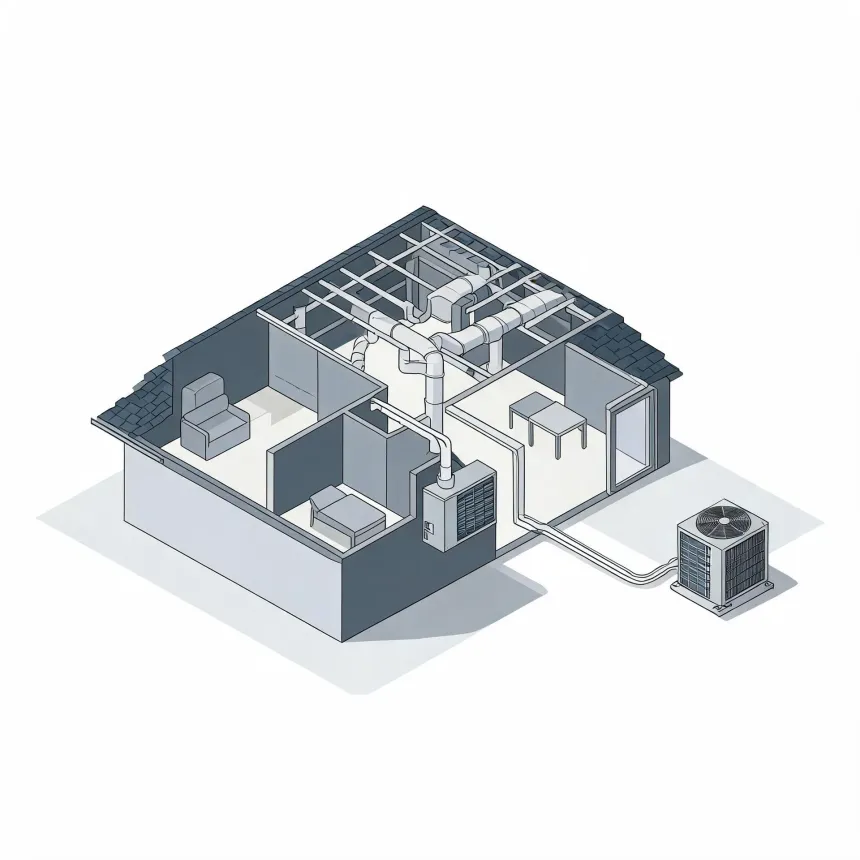
Isometric cutaway illustration of a house showing attic ductwork, an indoor air handler, and an outdoor condenser unit connected by lines.
Your air conditioner works hardest from June through August.

NOAA nClimDiv, 1991–2020 normals

May is the last quiet month before cooling starts in June.

A capacitor that is already weak often fails in the first hot week, not the last.

A struggling unit still runs on the same 17.86 cent rate

Power costs 17.86 cents a kWh statewide
Cooling runs June through September
Summer afternoons average 86°F

Maryland electricity ran 17.86 cents per kilowatthour in 2024. That's the rate whether the system is running clean or struggling. A weak capacitor makes the compressor work harder to start. A low charge makes it run longer to cool the same house. A dirty coil does the same. None of that shows up as a separate line on the bill, it just raises the one number you already pay every month. A unit that's been acting up for a few weeks has likely been costing more the whole time, not just on the day it finally quits.

Built in 1986 or later, your AC is likely worth repairing

A system in a newer home usually hasn't hit the end of its life. Get the real cause fixed instead of planning around a replacement.

Find a contractor
A man in a dark long-sleeved shirt and brown work pants, seen from behind, climbs porch steps toward an orange front door while carrying a canvas tool bag.
An outdoor air conditioning condenser unit mounted on a concrete pad beside a house, with electrical conduit running to a wall-mounted disconnect box.

Running it longer doesn't buy time, it spends it

A capacitor that's starting to go doesn't just quit one day. It weakens, and every cycle after that asks the compressor to start under more strain than it should. Keep running it and you're not giving the part a chance to rest, you're pushing it toward a hard lockout, sometimes taking the compressor with it. A low charge works the same way in reverse. The system can't reach the temperature it's asking for, so it just keeps running, and that long runtime pulls liquid refrigerant back toward the compressor instead of letting it do its job in the coil. A dirty coil traps heat that's supposed to release outside, so the compressor runs hotter than it was built to. None of these fail cleanly. They wear on the one part that's hardest to replace, which is why a system that's acting up is worth looking at before it stops instead of after.

Most failures start outside the unit

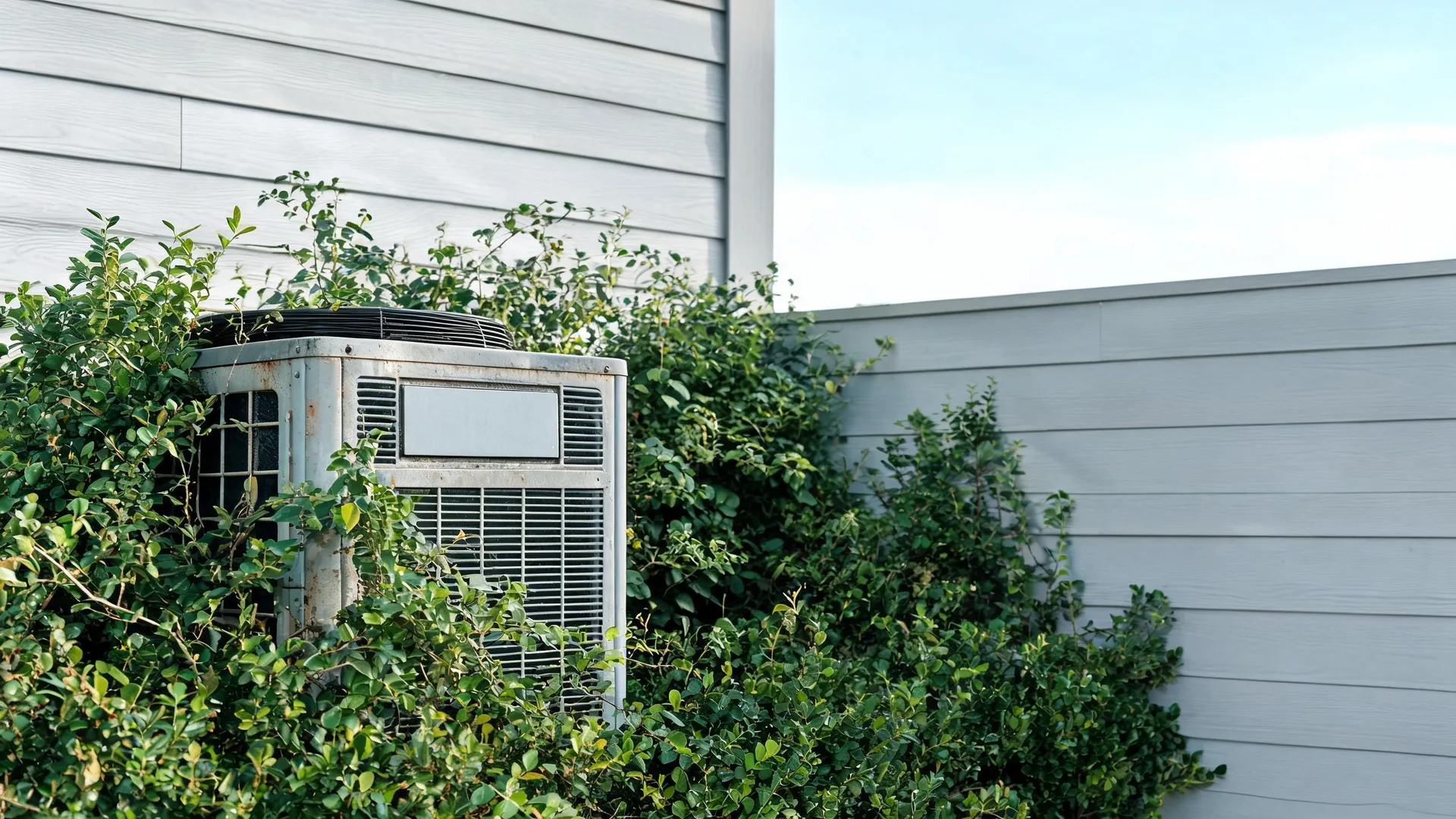
A dirty outdoor coil, a filter clogged with dust, or a fence or bush crowding the outdoor unit all cause the same problem. Heat that's supposed to release outside doesn't, so the compressor runs harder and hotter than it was built to. Over time that heat is what kills compressors and capacitors, not age by itself.

The electrical side wears on its own schedule

A capacitor doesn't last forever even in a system that's otherwise fine. It weakens a little every time the compressor starts, and once it's too weak to deliver that first jolt, the compressor hums or won't start at all. A contactor wears the same way, from the arcing of normal daily cycling, until the points pit and stop making good contact.

An outdoor air conditioning condenser unit positioned on a concrete pad next to a blue-sided house, surrounded by green shrubs and flowering hydrangeas at sunset.

A new air conditioner would cut about $50 a year off cooling for a typical Somerset County home.

  • A new one at the federal minimum, 14.3 SEER2$350 a year
  • An older air conditioner$400 a year

Estimates for a typical Somerset County home, compared with an older unit built to the previous federal minimum, from EIA household energy data, Maryland fuel prices and NOAA climate normals. Your home will differ.

Repair makes sense when a part like a capacitor or contactor has failed.

Replacement makes sense when the compressor has failed or the system uses R-22 refrigerant, which is no longer made.

A diagnostic visit starts outside, at the condenser, before anyone touches a wire. A tech checks the capacitor's output against what it's rated for, since a weak one is the most common reason a unit hums or won't start. From there it's the refrigerant charge, checked with gauges, not guessed at. Airflow gets checked too, at the filter and at the coil, because a system can have good electrical readings and still run poorly if it isn't moving enough air. Each of these points to a different fix, so the visit is mostly about ruling things out in order until the readings explain what the homeowner is seeing.