






Two white colonial houses with lit windows and black shutters photographed at dusk along a tree-lined residential street.

Heat Pump Repair in Baltimore, MD

Tell us about the job

Takes about a minute. No obligation.

RepairHeat PumpBaltimore city, MD
Step 1 of 2

What ZIP code is the job in?

Baltimore sits in zone 4A, a mixed climate, so your heat pump has to put in real work both summers and winters. It still isn't the hardest climate a heat pump can face. There's no stretch of extreme heat or extreme cold that runs for months on end, so the system gets some real rest each year instead of running flat out season after season. That matters when something goes wrong, because it means age and wear are the more likely cause, not a unit that's been pushed past what it can handle. A heat pump in decent shape mechanically is usually worth repairing rather than replacing.

7 months
October through April, your system heats
4 months
June through September, it cools
28°F
the average winter night it heats against
87°F
the average summer afternoon it cools against
Isometric cutaway illustration of a single-story house with a dark gabled roof, showing interior rooms with ductwork leading to an indoor air handler and an outdoor condenser unit connected by lines on the ground outside.
Your system heats October through April and cools June through September.

NOAA nClimDiv, 1991–2020 normals

Heat pump season here runs long, October through April, with cooling picked back up again come June.

September is when a part that barely made it through last winter gets tested first by the season's first real cold.

At 17.86 cents a kilowatt-hour, a heat pump that's struggling costs you every month it runs

Power costs 17.86 cents a kWh statewide
13 winter storms from 2015 to 2024
Climate zone 4A

Half the houses in Baltimore were built in 1947 or earlier. If your heat pump came with a house that old, it's not the house that's the problem, it's whatever's inside it. Ductwork, electrical, the line set, all of it may be original or replaced at some point, and there's no way to know which without someone looking. A heat pump that's old itself, on top of that, is worth asking about directly. Before paying for a major repair, it's worth finding out how many years the unit has left in it.

Most of what's wrong is fixable

Your heat pump gets a real break here, not full-tilt heat or cold for months straight. That's on your side when something breaks. Get it looked at and fixed rather than replaced.

Find a contractor
A man in a dark long-sleeved shirt and brown work pants, seen from behind, climbs porch steps toward an orange front door while carrying a canvas tool bag.
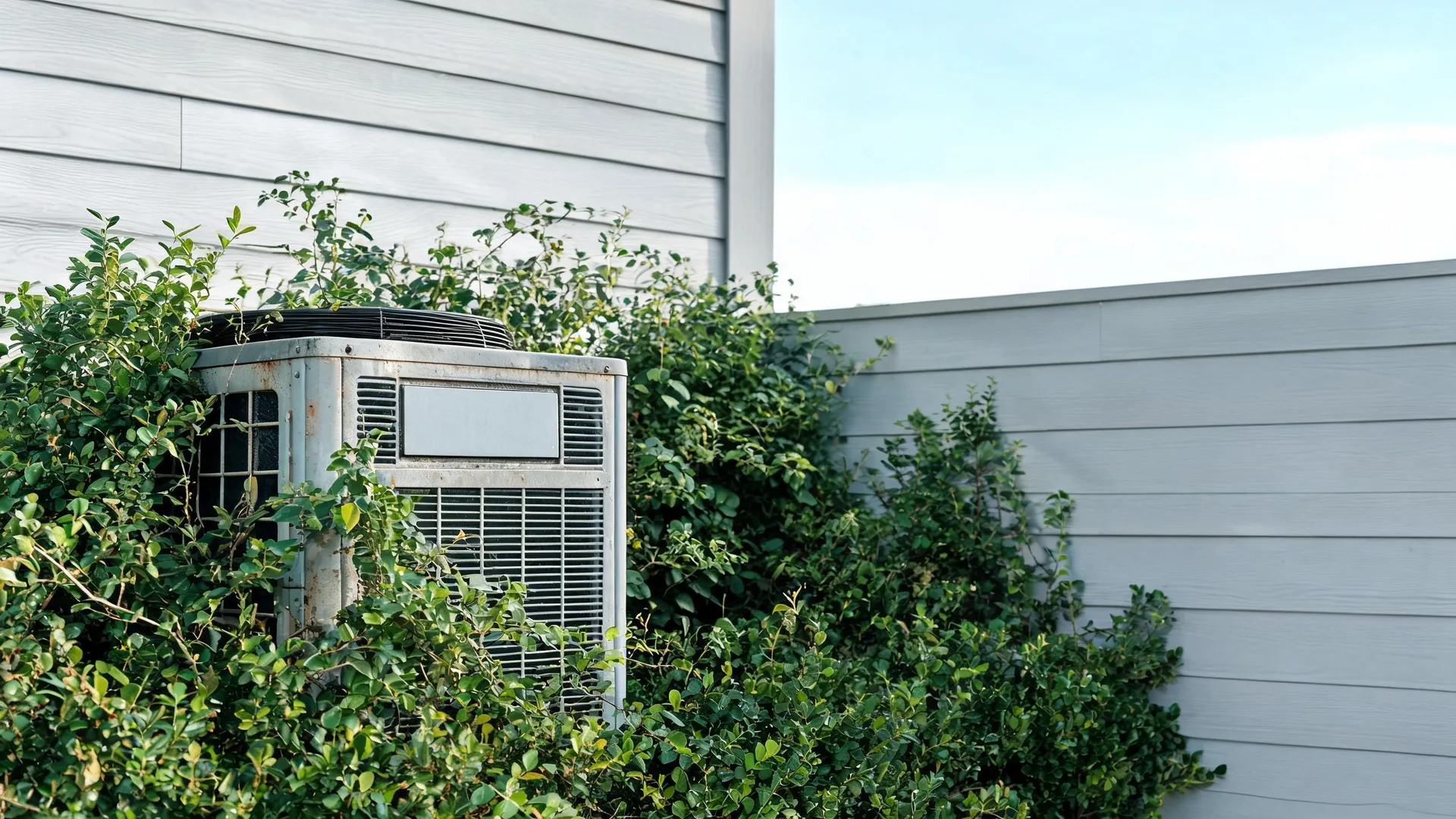
A gray heat pump condenser unit mounted on a concrete pad against the gray lap-siding exterior wall of a house.

Ask how much life is left before you commit to the repair

Ask the contractor who comes out how many years are left in this unit before you pay for anything major. A straight repair estimate won't tell you that on its own, but a tech looking at the coil and compressor can give you a real sense of it. If the news is bad, that's worth knowing before the money's spent, not after.

A refrigerant leak doesn't stay small

A heat pump low on refrigerant will still run, but the compressor has to work harder to move heat with less of it. Keep running it that way and the compressor can overheat or wear out early, turning a leak repair into a compressor replacement.
A frozen coil needs the system off, not running longer

If the outdoor coil ices over, running the system more won't clear it and can make it worse. Ice blocks airflow across the coil, the compressor keeps trying to push through it, and that strain is how a simple defrost problem turns into a failed compressor.

A few things are worth checking before anyone comes out. Look at the outdoor unit. If it's caked in ice or packed with leaves and debris, airflow is blocked and that alone can cause the symptoms you're seeing. Check the thermostat is set to heat or cool as needed and the batteries aren't dead. Pull the air filter and hold it up to a light. If you can't see through it, swap it, because a clogged filter starves the system of airflow and can cause icing or short cycling that looks like a bigger problem than it is. Check the breaker box too. A heat pump can trip a breaker with no other warning, and that looks exactly like a dead system when the fix is just resetting it. If the outdoor unit is running but the air from the vents is cold when it should be warm, don't keep adjusting the thermostat hoping it catches up. That's a sign to call, not a setting to fight with.

A compressor failure is the one that usually ends the conversation. It's the most expensive part in the system and the labor to replace it isn't small either, so once that's the diagnosis, most homeowners put the money toward a new unit instead. Almost everything else is a smaller decision. A bad capacitor, a failed contactor, a blower motor, a control board, these get swapped out and the heat pump runs like normal again. The reversing valve is the other part worth asking about by name, since that's what lets the system switch between heat and cooling. If it's stuck, you'll notice the system blowing the wrong temperature for the mode it's set to. None of that means replacement. It means someone needs to find which part failed and replace that one part.