A row of white Colonial-style houses with glowing windows photographed at dusk along a road bordered by a stone wall.

Heat Pump Repair in Bowie, MD

Tell us about the job

Takes about a minute. No obligation.

RepairHeat PumpPrince George's County, MD
Step 1 of 2

What ZIP code is the job in?

A small fault turns into a big one

A heat pump low on refrigerant will keep running, and the compressor keeps trying to pump a charge that isn't there. That wears the compressor down well before the leak itself would have caused any harm. A failing capacitor works the same way. The system still starts most times you ask it to, but every hard start stresses the motor it feeds until that motor gives out too.


Struggling still means running

A heat pump that's icing up, short cycling, or blowing air that's barely warm is still drawing power the whole time it fails to do its job. Letting it keep going doesn't buy time, it just lets a bad coil or a weak start capacitor take the rest of the system down with it. Shutting it off and calling for a diagnosis is what actually stops the damage from spreading.

7 months
October through April, your system heats
4 months
June through September, it cools
28°F
the average winter night it heats against
86°F
the average summer afternoon it cools against
Isometric grayscale illustration of a cutaway single-story house showing interior rooms, ductwork and an air handler, an exterior condenser unit connected by lines, and dark solar panels on the roof.
Your system heats October through April and cools June through September.

NOAA nClimDiv, 1991–2020 normals

Heat pumps in Bowie run heat from October through April, about seven months straight.

September is the month a weak part is most likely to fail once the system has to work every day.

Bowie sees its share of storms. The usual heat pump problems still come from wear, not weather.

251 severe weather events from 2015 to 2024
11% of homes statewide lost power a day or more in 2024
222 damaging wind events from 2015 to 2024
Running bad costs you every monthMaryland electricity ran 17.86 cents per kilowatt-hour in 2024, and a struggling heat pump still draws full power.

Half the homes in Prince George's County were built in 1977 or earlier, half in 1977 or later. That split doesn't point to one likely cause over another. An older house doesn't mean a tired heat pump, and a newer one doesn't rule out a bad capacitor or a dirty coil. The age of the house and the age of the system it runs rarely match anyway, especially if yours came with the place rather than going in new. So the diagnosis has to start with the unit itself, not with when the house was built.

Your heat pump's problem probably isn't the climate. That makes it worth repairing.

Winters here average 28°F, cold but not brutal, and wind events outnumber winter storms by a wide margin in the county's weather history. A heat pump built for this climate isn't fighting extreme cold most days. When one stops working right, the cause is usually something gone wrong in the unit, not the weather beating it down. That's a fault worth finding and fixing.

Find a contractor
A man in a cap, long-sleeved shirt and work pants carries a canvas tool bag up concrete steps toward a wooden front door of a gray-sided house, with a shrub in a terracotta pot to the right.
A dark gray heat pump unit mounted on a concrete pad next to a house with gray siding and a stone veneer wall.

It runs year round, so trouble shows up as a change, not a shutdown

A heat pump does not get a season off. It runs in winter to heat the house and reverses to cool it in summer, so the compressor rarely gets more than a short rest between cycles. That constant duty is exactly why the signs of trouble show up as changes you can feel. Air coming from the vents that used to feel warm now feels lukewarm. Cycles that used to run for a while now kick on and off every few minutes. Frost that should melt off the outdoor coil during the defrost cycle stays put and builds into a solid layer of ice. None of these show up out of nowhere. They are what a part already failing looks like while the system keeps trying to run anyway.

What you can check from inside

Go to the thermostat and look at the mode and the setting. Make sure it is set to heat, not cool or fan only, and that the setpoint is actually above room temperature. Check the batteries if it uses them. Then find the breaker for the air handler and the one for the outdoor unit and make sure both are on. A tripped breaker or a thermostat set wrong looks exactly like a failed heat pump, and ruling it out takes a minute.

What you can check from outside

Walk out to the outdoor unit and look at the coil and the fan. Clear away leaves, mulch, or anything stacked against the cabinet, since the coil needs open air moving through it to work at all. Look for ice covering the coil or the fan blades not spinning when the system is calling. A thin layer of frost in cold weather is normal, a thick solid sheet is not. Also check that the filter inside isn't packed with dust, since a blocked filter starves the whole system of airflow and can cause the same icing and warm-air complaints from the other end of the duct.

Most heat pump failures start with a handful of parts that do the most work. The compressor is the heart of the system, and it fails either from age or from being run low on refrigerant for too long, which forces it to work without the charge it needs. The reversing valve is what switches the system between heat and cool, and when it sticks, the unit gets stuck in one mode or stops responding to the thermostat's call. Capacitors wear out from the constant start and stop cycling, and once one weakens, the compressor or fan motor it feeds has to push harder to start every single time. The defrost control board and its sensor tell the outdoor coil when to shed frost, and when that sensor drifts or the board fails, ice builds up and never clears. Outdoor fan motors fail from age and from running in weather, and when the fan stops turning, the whole coil loses the airflow it depends on.

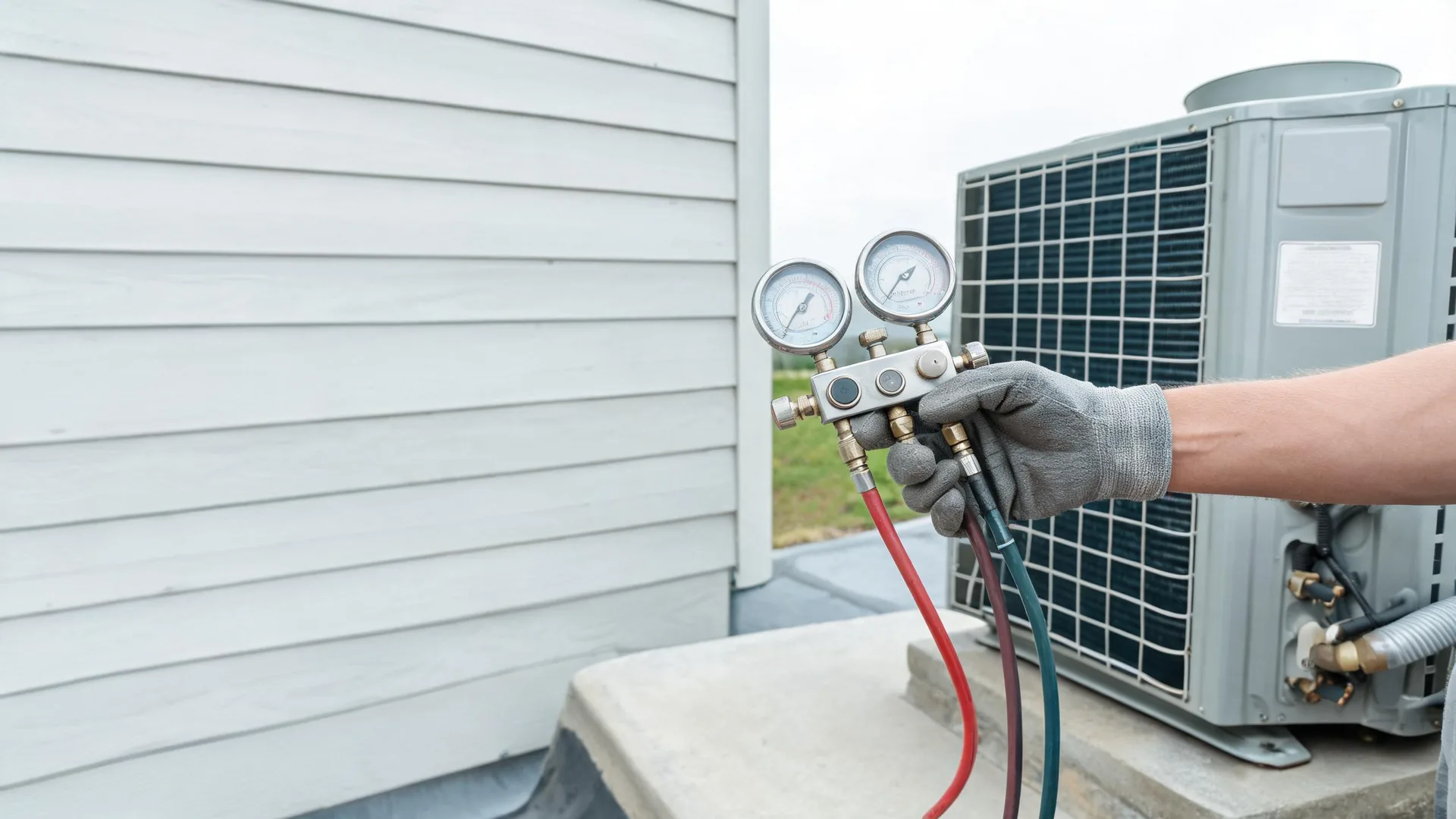
A diagnostic visit starts with questions. When did it start, does it happen in heat mode or when the system defrosts, has the air stopped feeling warm or stopped moving at all. Then the tech checks the easy things first, the filter, the thermostat call, the breakers, before touching a gauge. Refrigerant pressures get checked at the service ports, since too little charge or too much both show up there and both point to a different problem. Electrical readings come next, the capacitor's rating against what it actually holds, the contactor for pitting, the wiring for anything scorched or loose. Outside, the tech watches a full cycle if needed, since some faults like a stuck reversing valve or a bad defrost sensor only show themselves while the system is running, not while it sits still.