

How often to clean a mini split in Maryland
How often should I clean my mini split in Maryland?
You've got a mini split running hard through a Maryland summer, and you're wondering if it needs attention before it gets neglected. Between the humidity in July and August and the cost of running it on electric, you'd rather stay ahead of a problem than pay for one in a service call or a higher bill. You're thinking about what this winter and next summer need, not just today.
Clean the filters every two to four weeks and have the full system serviced once a year
The filters catch dust and whatever else is in the air, and in a Maryland summer, with the unit running most days from June through September, they load up fast. A dirty filter makes the unit work harder to move the same air, which costs you on a system that's already running on electric. Beyond the filters, the coil and the condensate drain need a look once a year, ideally before summer starts, since a clogged drain in a humid climate can mean water where you don't want it. If the mini split also carries your heat through winter, it's working close to year round here, which makes that annual check worth doing on schedule rather than skipping a year.
Why the filter clogs so fast
A mini split pulls humid air across a filter that's inches from where it drops moisture onto the coil behind it. In Maryland's thick summer air, that filter picks up dust and traps it in the dampness instead of letting it blow through. Once it's coated, the unit has to pull harder to push air past it, and the coil behind it stays wetter longer. Checking it monthly from June through September catches that before it costs you on the electric bill.
What a dirty coil does to output
The indoor coil is where the heat exchange actually happens, and dust or mildew buildup on it acts like a blanket. The unit still runs, the compressor still cycles, but less heat moves out of your air each pass. You end up with a system working the same hours and delivering less cooling for it. Since most homes here heat with electric in the winter too, a coil left dirty through summer carries that inefficiency into the months you're leaning on the system hardest.
DIY Filter Care vs. Professional Cleaning
Clean it yourself
- You can pull the front cover off and rinse the filters every few weeks through the summer without calling anyone.
- A filter that's just dusty, not clogged with mold, usually comes clean with water and a soft brush.
- This keeps the airflow up between visits from a contractor, which matters when the unit runs most of the day.
- It costs you nothing but a few minutes, and most mini splits are built so the filters slide out without tools.
- It won't touch the coil or the blower wheel behind the filter, where mold and grime build up out of reach.
- Skipping this step entirely between professional cleanings is what lets dust turn into a thick mat on the coil.
Professional cleaning
- A contractor can open the unit up and clean the coil and blower wheel, not just the filter you can reach.
- Someone who services mini splits in Maryland every summer knows which models trap moisture behind the filter and mildew fastest.
- This is the only way to get at the drain line, which clogs with algae in humid weather and backs up into the house.
- A local contractor licensed to work on your system can catch a coil that's already fouled before it cuts into how well the unit cools.
- Once you're matched, it's one contractor reaching out, not several, so you're not fielding a round of calls to sort through.
- This matters most on a system that runs nearly nonstop through a Maryland summer, since that's when buildup happens fastest.
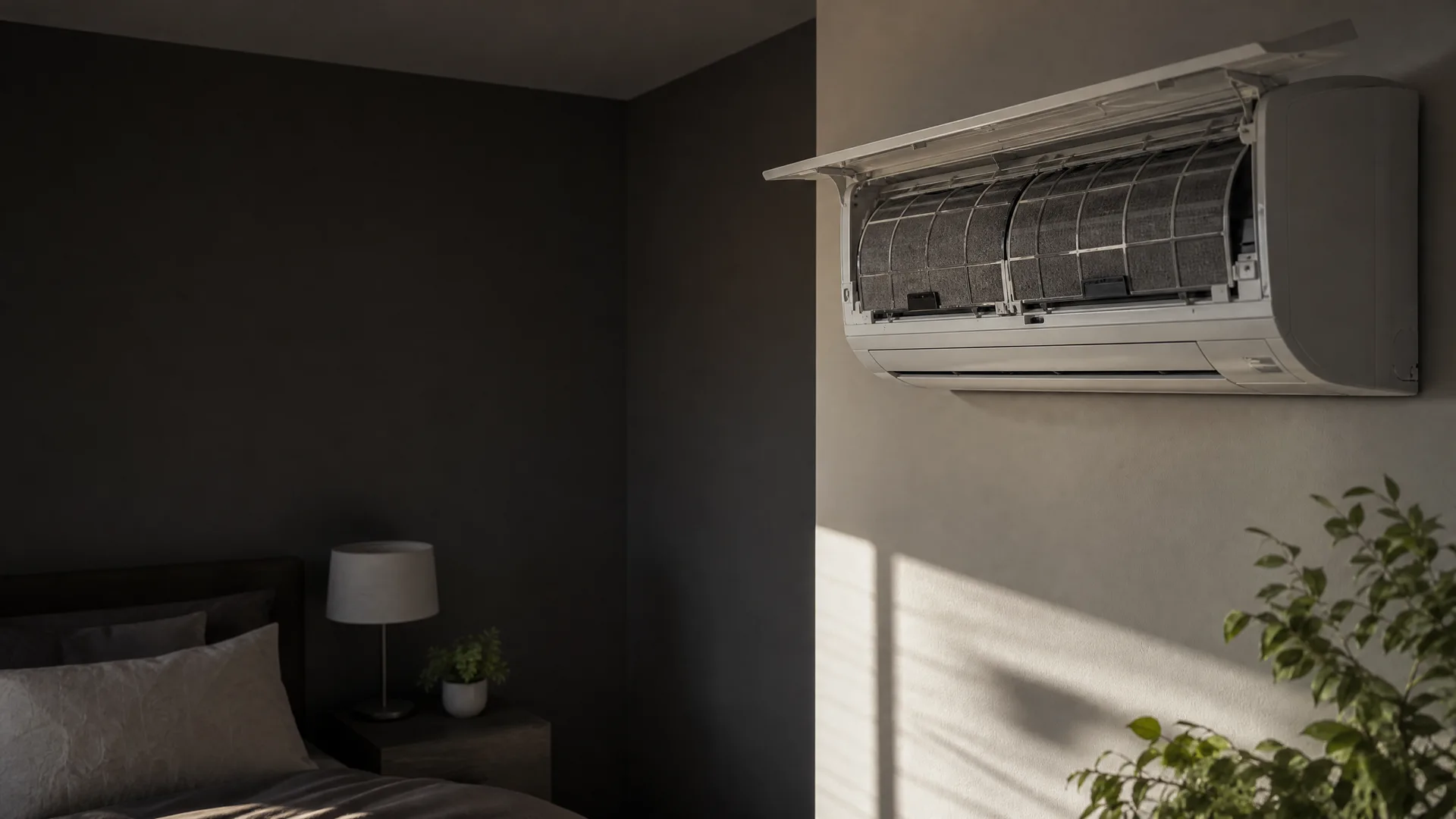
Spring sun is coming through the blinds, early enough that the room is still cool. You've got the front cover of the bedroom unit popped open, checking it before summer really hits, and the filter screen is already grey with dust. Not clogged yet, but you can see where it's headed if you leave it. You run a finger across it and it leaves a streak. Maryland pollen season did this in a few weeks. You set the cover down and think about whether you want to be doing this yourself every month once the humidity sets in, or whether it's worth having someone local who knows this unit look at the coil behind that filter while they're at it.
A pro who works on mini splits
You can keep up with the filters yourself, but the coil behind them is a different job. That's the part that actually pulls the moisture out of Maryland's summer air, and once it's coated in mold or packed with dust, rinsing a filter won't touch it. A unit working against a dirty coil pulls more power to do the same job, and with electric heat carrying you through winter here too, that cost doesn't let up once summer ends. A tech who services mini splits around here all season knows what that coil looks like at six months versus two years, and what else tends to go with it, the drain line, the blower wheel, the refrigerant charge. Finding one you trust before the unit is struggling is worth more than finding one after. If you'd rather hand this off than keep checking it yourself, that's what the request above is for.
What a real cleaning covers
- The blower wheel sits behind the coil and throws moisture off it as mold spores into the room air if it never gets cleaned.
- A tech checks the condensate drain line first, since a clogged one backs up and drips through the ceiling or wall before anything else shows a problem.
- Refrigerant lines get checked for frost or oil residue, either of which points to a slow leak that won't show up on the thermostat for months.
- The outdoor condenser coil gets rinsed free of pollen and grass clippings so heat can actually leave the refrigerant instead of staying trapped in the line.
- Electrical connections at the outdoor unit get tightened, since Maryland's humidity corrodes contacts faster than it does in a dry climate.
- A tech checks refrigerant pressure against the manufacturer's spec rather than guessing, because too little or too much both wear down the compressor the same way.
A filter rinse is the part you can see. A full cleaning goes past it, into places you can't reach without taking the unit apart. The blower wheel sits right behind the indoor coil, and once that coil's been collecting mold in Maryland's humidity, the wheel throws spores straight into the air every time it spins. A tech pulls the cover and checks that wheel along with the coil, not just the filter in front of it.
Before any of that, the drain line gets checked, because a clogged line doesn't announce itself. It backs up quietly and shows up as a stain on the ceiling or a damp patch on the wall, usually after the damage is already done. The refrigerant lines get a look too, for frost or an oily residue, since either one means a slow leak that won't trip the thermostat or change how the room feels for months.
Outside, the condenser coil collects pollen and grass clippings all summer, and once it's coated, the unit can't push heat out of the refrigerant the way it's built to. That coil gets rinsed clean. The electrical connections at the outdoor unit get checked and tightened, since humidity here corrodes contacts faster than it would somewhere dry. Last, refrigerant pressure gets measured against what the manufacturer specs for that unit. Too little or too much, and the compressor wears down either way.


Power costs 19.53 cents per kilowatt-hour statewide
At 19.53 cents a kilowatt-hour, a mini split working to wring moisture out of the air all summer shows up fast on your bill. A dirty coil or clogged filter makes it run longer to do the same job, and in Maryland you're paying for every one of those extra minutes.
EIA-861 2025 statewide residential average




Rinse your filters every few weeks through the summer, and get the coil, blower wheel, and drain line looked at once a year before the humidity sets in. That's what keeps a Maryland mini split from working harder than it should on a system you're already paying a lot to run. The filters are yours to handle. The rest is worth having someone local look at, someone who works on these units all season and knows the drain line clogs before the coil shows mold, or that a blower wheel throwing moisture into the room means it's been put off too long. You'll be matched with one contractor for this, licensed and local, not a handful of companies calling about the same job. Get that done before July and August put real demand on the system, and you've done what a mini split in this state actually needs. Nothing more to it than that.

Get your mini split to the right pro
Your request goes to one pro, not a list of companies.
There's no charge for the request.