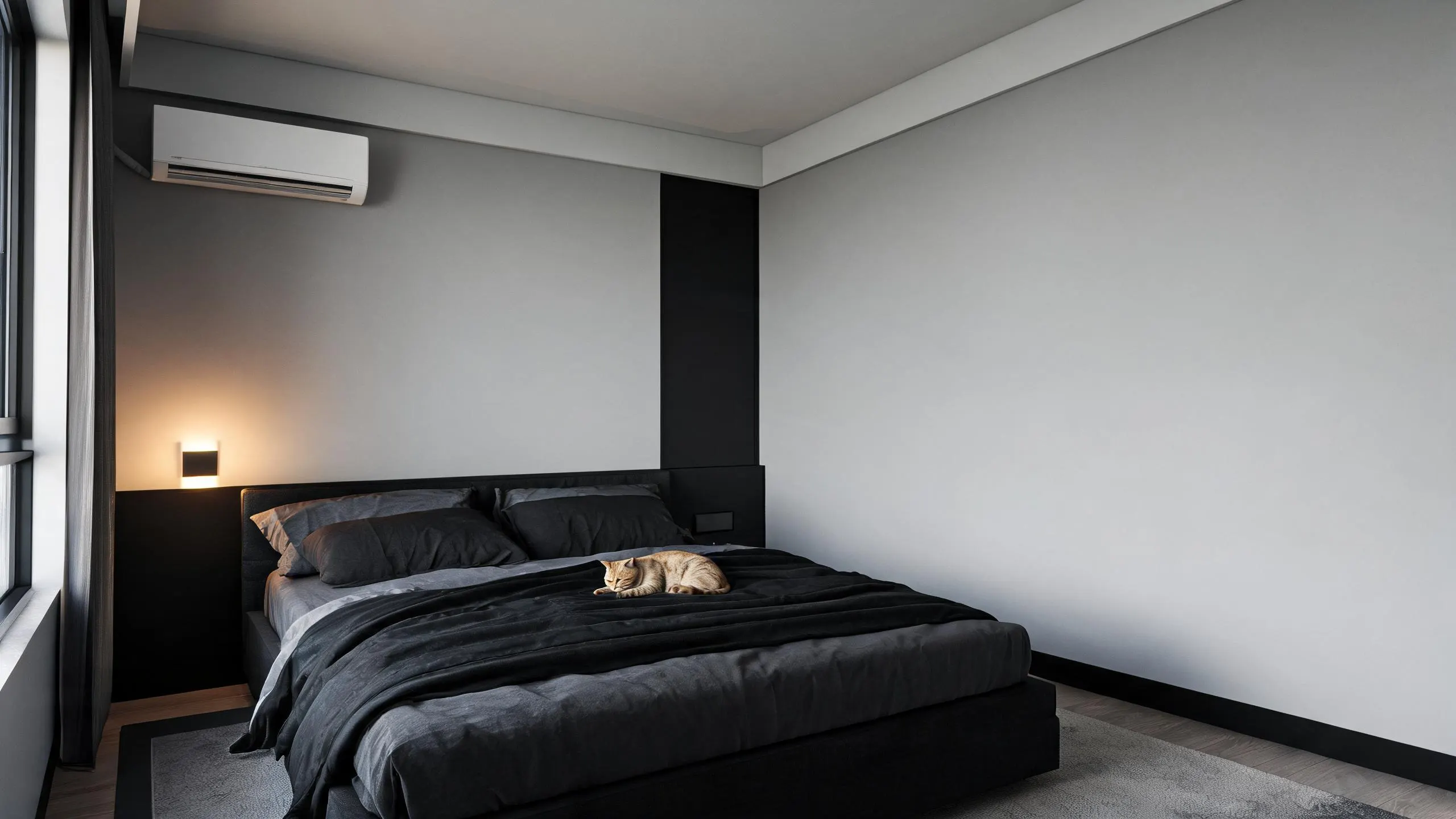





An orange cat rests on a dark grey bed in a minimalist monochrome bedroom.

Mini Split Installation in Cambridge, MD

Tell us about the job

Takes about a minute. No obligation.

New system or replacementMini-splitDorchester County, MD
Step 1 of 2

What ZIP code is the job in?

Maryland electricity ran 17.86 cents per kilowatthour in 2024. A mini split moves heat instead of burning fuel or running resistance coils, so it draws less power to do the same job. In a state where electricity costs this much, that difference shows up on every bill, not just the first one. Look at the SEER2 and HSPF2 numbers on the unit you're considering, not just the price to install it. A higher rated unit costs more up front, but it is also the one working against this electric rate for as long as it runs.

7 months
October through April, your system heats
4 months
June through September, it cools
29°F
the average winter night it heats against
86°F
the average summer afternoon it cools against
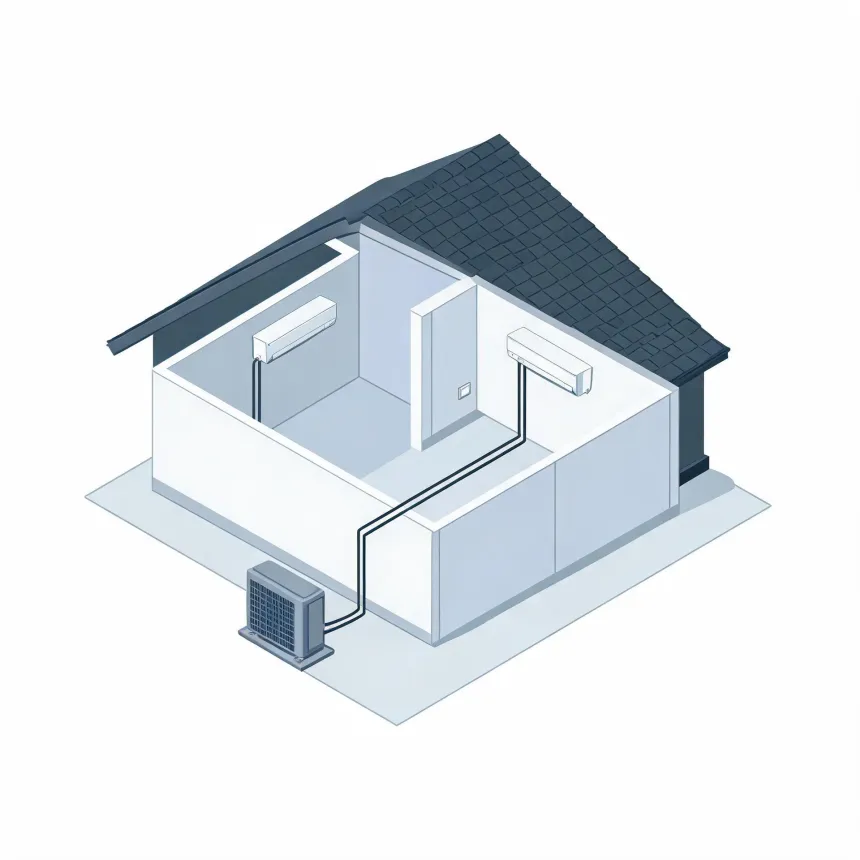
Isometric cutaway illustration of a small house with a dark shingled roof, showing two wall-mounted indoor air conditioning units in separate rooms connected by lines to an outdoor condenser unit on the ground outside.
Your system heats October through April and cools June through September.

NOAA nClimDiv, 1991–2020 normals

A mini split sized by square footage alone almost always ends up wrong.

Load depends on windows, ceiling height, and how many walls face outside, so a contractor has to work it room by room.

May gets you ready before June turns the heat on

Cooling runs June through September
Summer afternoons average 86°F
58 damaging wind events from 2015 to 2024

Half the homes in Dorchester County were built in 1975 or earlier, and half in 1975 or later. That split doesn't point you toward a bigger unit or a smaller one. A mini split sized to the room it's heating and cooling works the same whether the house is older or newer. What matters is the load in that specific room, not the age of the house around it. A standard capacity and a mid range SEER2 rating cover most installs here without any reason to pay for more.

Most homes here already run on electric heat

More than half the homes in Dorchester County heat with electricity already. A mini split fits right into that, since it runs on the same power the rest of the house uses, no gas line or oil tank to add. If you're replacing an electric system, this is the straightforward swap.

Find a contractor
A man in a gray T-shirt and tan work pants, carrying a canvas tool bag, climbs porch steps toward an orange front door beside a potted shrub.
A beige split-system air conditioner outdoor condenser unit mounted on metal wall brackets atop a stucco wall.

The rating on the label is a season, not a moment

The SEER2 number on the label is a ratio, not a fixed draw. It compares the heat moved against the power put in over a full season of starting, running, and cycling off, not at one test condition. A unit works at that ratio for as long as the parts behind it stay clean and intact. A dirty coil, a filter that never gets changed, or a refrigerant charge that's drifted low all pull the real number below what's printed on the label. HSPF2 works the same way on the heating side, and it matters just as much, since a mini split is heating and cooling on the same refrigerant loop all year, not just running through summer. Neither number tells you what the unit will do in a single hour. They tell you what it does averaged over a full season of uneven demand, which is the only way to compare one unit against another honestly.

How many zones, and what each one is doing

A mini split system can run one indoor head or several off the same outdoor unit, and each head answers for one zone. Ask whether a single zone covers the space you need or whether the job calls for multiple heads tied to one compressor. Running several zones off one outdoor unit costs less to install than separate systems, but it also means that outdoor unit has to be sized right for all of them running at once, not just the biggest room.
What happens when it gets coldest or hottest out

Every mini split has a capacity rating, but that number can fall off at the extremes. Ask for the capacity at the lowest temperature your winters actually reach, not just the rating at a mild test condition. A unit that looks sized right on paper can struggle on the coldest night if its real output at low temperature was never checked against what the room needs.

Whoever handles the install still has to deal with what's already on the wall or sitting outside. A window unit or a through wall sleeve usually just gets pulled and the opening patched. An old central system is more work, since the ductwork either gets capped off or stays in place if part of the house still uses it. The outdoor condenser and the indoor coil get disconnected and hauled off, and any refrigerant left in the lines has to be recovered properly rather than let out into the air. None of that is the homeowner's job to sort out beforehand. It just helps to know the old equipment doesn't need to be cleared away before anyone shows up to install the new one.

The outdoor unit goes up first, usually on brackets or a pad, set away from the wall enough for air to move through it. Then comes the line set, the copper tubing that carries refrigerant between outdoor and indoor units, run through a hole drilled in the wall behind where the indoor head will hang. That hole is small, just big enough for the lines, a drain tube, and a power cable, which is why a mini split can go where ductwork never could. Once the indoor head is mounted and everything is connected, the line set gets pressure tested to make sure there are no leaks before any refrigerant goes in. After that it's vacuumed down to pull out moisture and air, since either one left in the lines will wreck how the system runs. Only then does the system get charged and switched on, and whoever did the work should check airflow and temperature at the head before calling it done.