





R-22 phase-out and older AC units in Maryland

Get in touch with a local installer about a new air conditioner.

Find my pro

Can I still use my R-22 air conditioner in Maryland?

You've still got an older AC unit running on R-22, and it's working fine, so the question isn't really about the unit. It's about whether you're allowed to keep it going, and what happens the day it isn't. Maryland summers get sticky, this system has probably earned its keep, and you're not looking to replace something that still runs. You just want to know where you stand.

Yes, but you can't buy new R-22 to service it

Nothing in Maryland law stops you from running an R-22 system as long as it keeps working. The problem is the refrigerant itself. Production of new R-22 stopped nationwide in 2020, so any left in the supply chain is reclaimed or stockpiled, and it costs far more than it used to. If your unit develops a leak or the compressor fails, a repair that once meant topping off refrigerant can turn into a much bigger job, because there's no more of it being made and a contractor has to work with what's available. A unit that's holding its charge and cooling the house is fine to leave alone. One that needs refrigerant added is telling you something about what comes next.

A gray-haired, bearded man in a dark coat dusted with snow stands smiling in a dimly lit room with a lamp, mirror, framed art, and a sofa in the background.
An older man with white hair and a beard, wearing a dark snow-dusted coat and scarf, stands in a warmly lit interior hallway with a framed landscape picture, a table lamp and a potted plant behind him, and a snowy view through a window at left.
An older man in a dark snow-flecked overcoat and scarf stands smiling in a warmly lit home entryway, with a glass-paned door showing darkness outside and a lamp-lit room visible through a doorway behind him.
An older man with gray hair and a beard, wearing a dark snow-dusted jacket and scarf, stands smiling in a warmly lit interior hallway with a lit table lamp, a vase of dried branches, and a framed picture in the background.

Keep It Going or Replace It

Keep Running It

  • R-22 itself is not illegal to own or use, so an older unit that still cools your house can stay in service.
  • The supply left in the country is fixed since production and import both stopped, so the price per pound has no ceiling tied to a factory making more.
  • A small leak that gets found and sealed early can sometimes be recharged, if a contractor can still source the refrigerant.
  • Every summer the unit runs is another summer without the cost of a new system, which matters if money is tight right now.
  • A compressor failure on an R-22 unit usually means the whole outdoor unit is done, since replacing just that part with old refrigerant rarely makes sense.

Replace With New System

  • New systems run on R-410A or newer refrigerants, so a leak years from now does not turn into a search for a discontinued chemical.
  • Maryland summers get sticky, and a system sized and charged correctly from the start runs more predictably through the worst months.
  • Since most homes here heat with electricity, a new system can often be matched to work efficiently for cooling and heating both.
  • Power is expensive in Maryland, and a new unit's efficiency rating is set at install, not worn down by years of small leaks and recharges.
  • Once it's in, there's no yearly question of whether this is the summer the old unit finally can't be recharged again.
  • Installation costs are known up front, instead of an open-ended bill that comes with chasing leaks in a system running on a refrigerant no one makes anymore.
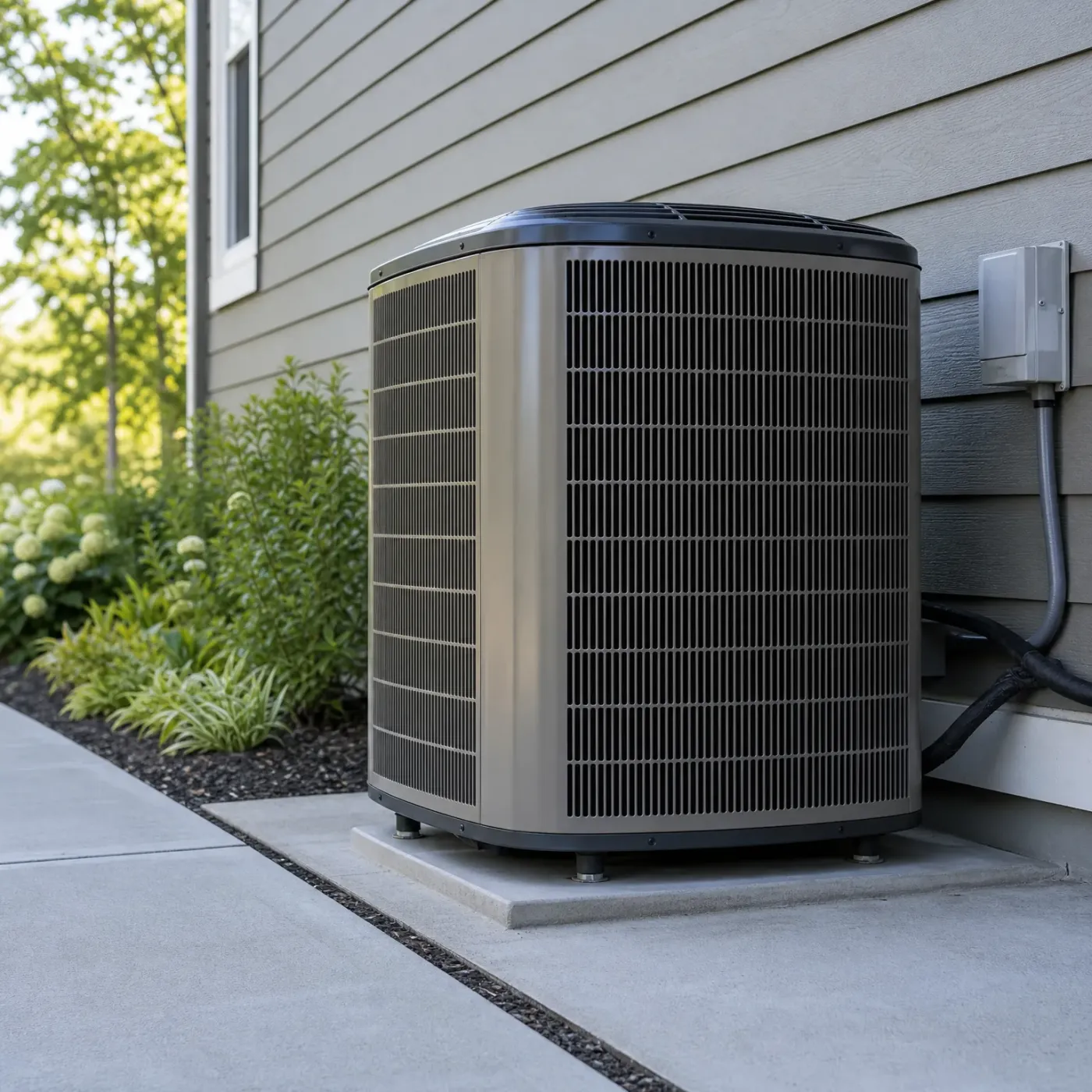
A gray outdoor air conditioner condenser unit on a concrete pad beside a house with horizontal siding and a stucco foundation, with a disconnect box and conduit on the wall, decorative gravel, mulch, and a shrub nearby.

Running Normally

If your unit still cools the house and the coil outside is clean, there's no reason to touch it. R-22 only becomes a problem when something breaks and the system needs a recharge. Until then, it's just an old air conditioner doing its job through another Maryland summer.


An outdoor air conditioning condenser unit on a concrete pad beside a house with horizontal lap siding, with an electrical disconnect box and conduit on the wall, mulch and a green shrub to the right, and a concrete walkway in the foreground.

Low on Refrigerant

A dirty coil like this makes the compressor work harder and can point to a leak, which is how most R-22 systems lose their charge. Once that happens, you're paying whatever R-22 costs that week, if a technician can source it at all. That's the point where replacing the unit usually makes more sense than repairing it.

Is my old AC quietly costing me more each summer?

If your system is old enough to run on R-22, it was built to a lower efficiency standard than anything sold today, and Maryland's humid summers keep it working hard from June through September. Electric rates here aren't cheap, so a unit that cycles longer to reach the same temperature shows up on the bill every month it runs. Watch for the system struggling to keep up on the hottest, stickiest days, or running longer than it used to for the same result. None of that means it's about to fail. It means it's working harder than a newer system would to do the same job, and that difference gets paid for every summer the old unit stays in the house.

An outdoor air conditioner condenser unit on a concrete pad beside a house with light horizontal siding, with a small electrical disconnect box on the wall, mulch and shrubs at left, and a plain white wall and concrete slab at right.

Why the refrigerant can't be made

R-22 breaks down ozone high in the atmosphere, which is why the EPA phased it out under the Montgomery Protocol schedule. The ban covers production and import, not the gas already in the country. Every pound in a Maryland contractor's tank right now is either recycled from old systems or was set aside before the cutoff. That's a fixed pool that only shrinks, which is the whole reason a recharge costs what it costs.

A dark gray outdoor air conditioner condenser unit on a concrete pad beside a house with horizontal siding and a plain light wall, with mulch and grass in the foreground and a conduit and electrical box on the wall.

What a leak means for the coil

R-22 doesn't burn off or wear out sitting in a sealed system. If your unit is low, it's low because it's leaking, usually from a pinhole in the copper coil. A technician can patch a leak and recharge it, but the same coil can open up again somewhere else next summer. Some homeowners recharge an old unit once and never have trouble again. Others are back out there by August.

A woman stands in the open doorway of a white stucco house holding the dark door, facing a man in a black cap and shirt seen from behind in the blurred foreground, with a potted flowering plant beside the entry.

How a leak actually ends an R-22 system

A sealed system doesn't use up refrigerant. The R-22 in your lines today is the same charge it had on day one, and it stays that way unless a coil or a fitting opens up and lets it out. That's why a unit can run for years with no trouble and then fail fast. A compressor needs a certain pressure to move refrigerant through the system. Once a leak drops that pressure, the compressor starts working against itself, and that's usually what fails first, not the leak itself.

When a contractor opens up a system like this, the leak has to be found and sealed before anything else happens. Then there's a decision about where the refrigerant to recharge it comes from, and what that costs. It's not a one-size answer, because it depends on the coil, the leak, and how old the rest of the unit is. A contractor who actually looks at your system can tell you which repairs make sense and which don't, matched to what you've got and what you're trying to get out of it.

Interior corner of a dining room with a round wooden table, a ceramic vase holding olive branches, a dark spindle-back chair near a curtained window, and a sideboard with a lamp against beige walls.
A gray outdoor air conditioner condenser unit on a concrete pad beside a house with horizontal lap siding, with a flowering shrub at left and a disconnect box with conduit on the wall at right.

No reason to touch it

A clean disconnect box, a tight conduit run, a condenser sitting level on its pad. If yours looks like this and the house cools down fine on a ninety degree day, the R-22 inside it is doing exactly what it did the day it was installed.

An outdoor air conditioner condenser unit on a concrete pad beside a house with light horizontal vinyl siding, surrounded by bare dirt, gravel and dry leaves, with refrigerant lines and conduit running along the wall.

Leaves and dirt at the base

Debris piled against the cabinet blocks airflow across the coil, and refrigerant lines left exposed along the wall take more weathering than ones that are wrapped or shaded. A unit that looks like this is closer to the leak that ends it than one that's clean.

A woman wrapped in a thick cream knit blanket sits in an armchair beside a lit table lamp, with an open book in the foreground and a frost-covered window behind her.
A bearded man in a plaid flannel shirt stands indoors looking out a frost-covered window, with a steaming dark blue mug on the wooden sill and snow-covered trees outside.
An outdoor air conditioning condenser unit on a concrete pad beside a house with horizontal lap siding, with a gray electrical disconnect box and conduit on the wall and green shrubs and trees to the left.

A local pro for your air conditioner installation

Send the form and the search for an installer is over.

A local installer who puts in air conditioners gets your project.

Get an air conditioner pro

Asking costs nothing, and the choice to hire stays yours.

A gray outdoor air conditioner condenser unit on a concrete pad beside a house with dark horizontal siding and a stone base, surrounded by gravel, with a flowering shrub at left and a concrete walkway in front.
A unit like this, clean fins and a level pad, just needs to keep running until something actually fails.
An outdoor air conditioner condenser unit sits on a concrete pad beside a stucco wall, with refrigerant lines and conduit running to the wall and a shrub to the left.
Grime packed into the fins makes the compressor work harder, and the lines running into the wall are where a slow leak will show up first.
A two-story house with light beige horizontal siding, a gabled roof, a small covered front porch with dark door, and shrubs along the foundation, set behind a mown lawn and wet sidewalk with large leafy trees on both sides.

Maryland summers carry a dew point around 64°F on average across June, July and August, according to NOAA climate data. That's heavy, sticky air, and it changes how an R-22 system spends its day. A unit built to an older efficiency standard has to pull more moisture out of that air to cool the house down, which means longer run times and a compressor that doesn't get much of a break between cycles. You'll notice it as a house that feels cool but still damp, or a system that seems to run most of the afternoon without shutting off. None of that means the unit is failing. It just means thick air makes an old compressor work harder than a new one would to do the same job.

NASA POWER T2MDEW county cells weighted by homes

An outdoor air conditioner condenser unit sits on a gray pad beside a light vinyl-sided wall, on a concrete slab next to a gravel bed.
Before you get your air conditioner installation
A gray outdoor air conditioner condenser unit on a concrete pad beside a house with horizontal lap siding, with a wall-mounted disconnect box and conduit, mulch bed, shrub, and lawn nearby.
After you get your air conditioner installation

What a swap to new refrigerant involves

  • A technician checks the system's nameplate and the suction line pressure before ever hooking up recovery equipment.
  • Recovering the old charge into a tank comes first, since R-22 can't be vented to atmosphere under federal rules.
  • The coil or line that failed gets found and repaired, not just patched, because a recharge into a known leak wastes the refrigerant.
  • A system switching refrigerants needs a new coil and compressor, since R-22 and its replacements aren't interchangeable in the same equipment.
  • Pressure testing the repaired lines with nitrogen happens before any refrigerant goes back in, to confirm the fix actually held.
  • A full changeover gets sized to the house square footage and duct layout, not just swapped in at the old unit's tonnage.

Replacing an R-22 system is not a matter of draining the old gas and filling it with something new. The compressor and coil were built around R-22's pressure and oil, and the replacement refrigerants on the market today run at different pressures entirely. Put one in old equipment and the compressor is working outside the range it was built for. That is why a real changeover means a new outdoor unit and usually a new coil to match it, sized to the house rather than copied from the nameplate on the unit coming out. A contractor doing this right starts with recovery, since federal rules bar venting R-22 into the air, and that recovered gas gets weighed and tanked, not lost. If a leak is what brought the system down, that line or coil gets found and fixed before anything new goes in, because installing a new system on top of an undiagnosed problem just moves the failure point. Once the new coil and lines are in place, nitrogen goes in first to pressure test the joints, and only after that holds does refrigerant go in. Square footage and duct layout drive the sizing from there, since a house that has added rooms or finished a basement since the old unit went in may need more or less capacity than the tonnage it is replacing. None of this is a same-day swap, and skipping steps to shorten it is how new equipment ends up with the same short life the old one had.

Power costs 19.53 cents per kilowatt-hour statewide

An old R-22 unit runs less efficiently than a new one, and at 19.53 cents per kilowatt-hour, every hour it runs through a Maryland summer shows up on the bill. A unit built to today's standard would cool the same house for less.

EIA-861 2025 statewide residential average

  1. A technician confirms the leak and quotes the repair against replacement cost.

  2. The old R-22 charge gets recovered into a tank, never vented.

  3. The indoor coil, outdoor unit and lines get disconnected and removed.

  4. The new system gets set in place and connected to your ductwork.

An R-22 unit that still cools your house isn't a problem to solve today. A failed coil or compressor on one is a different question, because the repair means paying recovery and R-22 prices for a system that was already working at yesterday's efficiency, through a Maryland summer, on electric rates that don't wait for you to decide. That's the point where most people in Maryland choose a new system over another repair. If you're at that point, or close to it, the next step is simple. Send the form and a contractor who installs these systems will reach out to you. You won't be the one calling around, checking licenses, or waiting on hold to get a quote. That part is done once you ask. What's left is deciding, with someone who knows the equipment, whether your old unit is worth patching one more time or worth replacing with something built for how your house actually runs today.

An outdoor air conditioner condenser unit sits on a concrete pad beside a house with horizontal siding and stone veneer, next to mulch, shrubs, and grass.

Get the right pro for your air conditioner

New system or replacementCentral ACMaryland
Step 1 of 2

What ZIP code is the job in?