
Auxiliary heat costs more to run
Electric resistance heat draws more power than the heat pump alone. If the light stays on for hours instead of minutes, something may be keeping the heat pump from carrying the load.
You glance at the thermostat on a cold morning and it says "aux heat" instead of the usual setting. The house still feels warm enough, so nothing seems broken, but you have not seen that light before, or you have, and it bothers you that it comes on more than it used to. With electric heat already costing what it does in Maryland, you want to know if this is normal or if it means the system is struggling.
A heat pump moves heat from outside air into your house. When it's cold enough outside, usually in the 30s and below, the heat pump can't pull in heat as fast as the house loses it, so the system switches on electric resistance strips to make up the difference. That's what "aux heat" means. Seeing it during a cold snap is normal. Seeing it run for hours when it's only in the 40s outside is not, and it usually points to low refrigerant, a failing part, or a thermostat set wrong. Since the strips run on straight electricity instead of moving heat the way the pump does, aux heat raises your bill fast when it runs more than it should.




Electric resistance heat draws more power than the heat pump alone. If the light stays on for hours instead of minutes, something may be keeping the heat pump from carrying the load.
Auxiliary heat should come and go with the temperature outside. A thermostat or heat pump problem can keep it running when it shouldn't be.

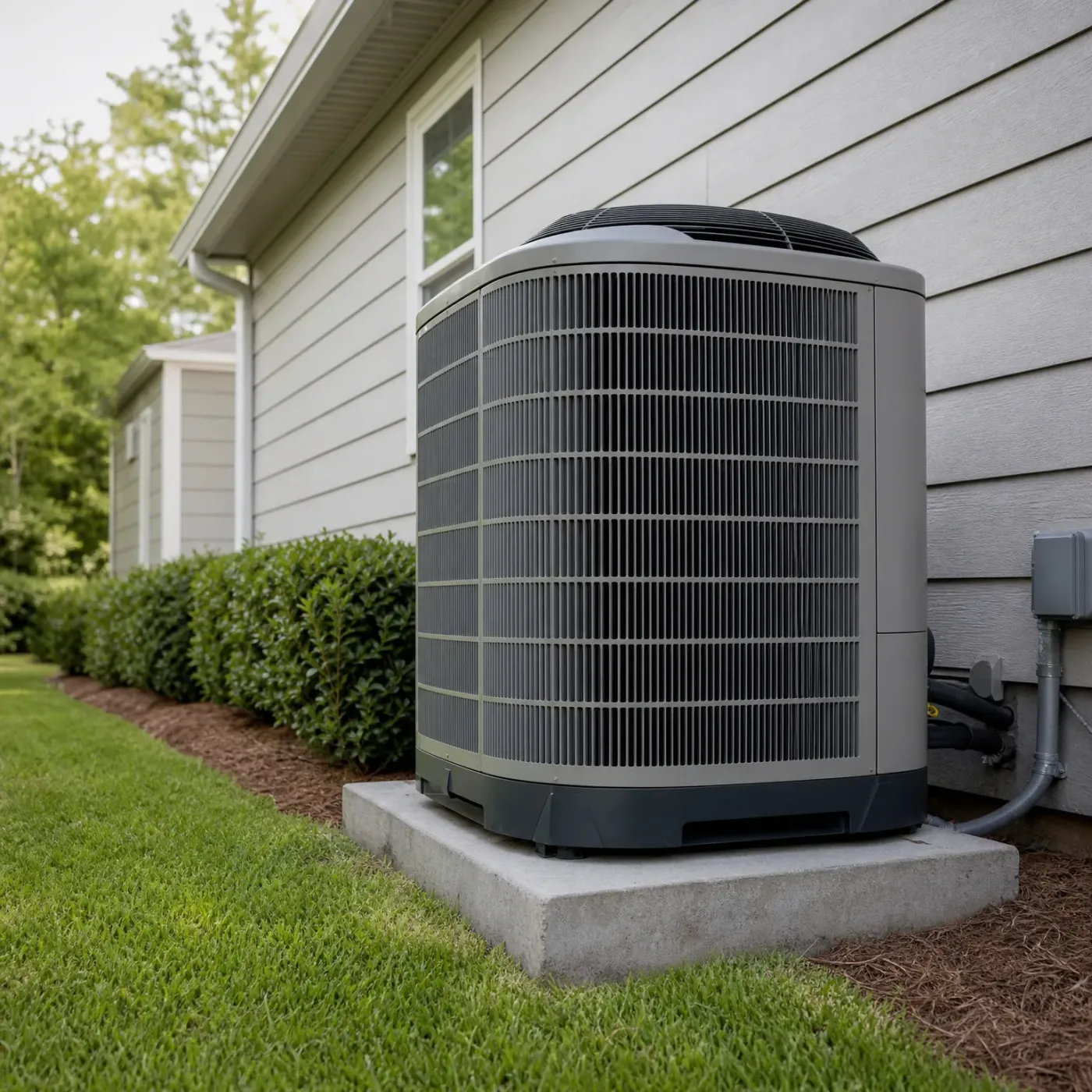
This is what it looks like when the heat pump is carrying the load by itself. Air moves freely through the fins, the unit cycles normally, and aux heat stays off except during a defrost or a real cold snap.

Dirt and plant matter have packed into the grille and fins, and the unit can't pull in enough air to work right. When a heat pump struggles like this, the thermostat leans on aux heat to make up the difference, and the electric bill shows it.


If aux heat is running most of the day instead of kicking on for a cold snap or a defrost cycle, you will see it on your electric bill before you see it anywhere else. Electric resistance heat draws a lot more power than the heat pump compressor does on its own, and Maryland power rates make that difference hard to miss. A bill that jumps well past what you paid last winter, with no change in how you run the thermostat, usually means the heat pump stopped doing its share of the work and the backup heat has been covering for it for days or weeks.
A heat pump that has quietly handed its job to the backup heat strips is a heat pump that is not fixing itself. Left alone, whatever is keeping it from carrying the load, a low charge, a failing defrost control, a blocked outdoor coil, stays a problem and the aux heat keeps compensating until something else gives out. Instead of tracking down a contractor, explaining the thermostat and the bill and the weather all over again to three different companies, you send the details once and the search for someone qualified is no longer something you have to do yourself.


One form replaces the calls you'd make to find a heat pump pro.
Send it once and finding someone is no longer on you.
You're not committing to anything by asking.


Thermostat calls for more heat than the outdoor unit can supply alone.
Thermostat energizes the electric resistance coils in the air handler.
Coils heat up and blow warmer air through the same ducts.
Thermostat drops the aux call once the house reaches set temperature.
At that rate, every hour aux heat runs costs you real money, since the coils draw so much more power than the heat pump alone. A light that stays on through a mild afternoon is worth a call, not a shrug.
EIA-861 2025 statewide residential average

You let the light run because the house is warm and nothing looks wrong. Some days that's fine. But if the heat pump can't carry the load, aux heat quietly picks up the difference every time the thermostat calls for heat. You won't see a fault code for that. You'll see the number on your electric bill in January, after a month of coils doing work the heat pump should have done.

A contractor can tell you in one visit whether aux heat is coming on for the right reasons or covering for something failing in the outdoor unit. If it's low refrigerant, a weak compressor, or airflow blocked at the coil, that gets fixed instead of paid around. You stop guessing at what the light means every time you see it, and the heat pump goes back to doing the job it's sized for.
You haven't changed the thermostat, you haven't added rooms, but the bill from the electric company is higher than last month, maybe higher than it's been. The house feels the same, so you chalk it up to the weather. But a heat pump leaning on aux heat runs up a bill fast, and the thermostat won't tell you why, only that it's warm. If the outdoor unit looks fine from where you're standing and the vents still blow warm air, you have no reason to suspect the equipment. The bill is often the first real sign something under the hood needs a look before it costs you another month.

The outdoor unit sits on its pad, conduit and lines running straight to the house. Grilles are clear, so air moves through the coil the way it should. The heat pump carries the load on its own, and aux heat stays off outside of a defrost cycle or a real cold snap.

Dust and grime cake the grilles, and the conduit still runs down to a unit that can't breathe. Airflow drops across the coil, and the heat pump struggles to pull enough heat from the outside air. The thermostat calls on aux heat to make up the difference, and the bill shows it.

Maryland winters put real cold snaps into the mix, the kind where the heat pump alone can't keep the air coming out warm enough. Aux heat is supposed to step in for those mornings, then step back. If it's running more than that, you're heating your house with electric resistance coils most of the day, and since most homes around here already heat with electricity, that shows up fast on a bill from a power company that doesn't charge little.
What's at risk isn't just the money. A heat pump leaning on aux heat all the time is usually telling you something else is wrong with it, low refrigerant, a failing part outside, ice that isn't clearing. Left alone, that tends to get worse, not better. You don't have to figure out which it is yourself, or spend an afternoon calling contractors and explaining the same thing three times to get a quote. Send the form once and that search is off your plate.


Summer here isn't just hot, it's heavy. Averaged across Maryland homes, the summer dew point runs 64°F through June, July and August, based on NOAA climate data. That kind of moisture doesn't touch your aux heat directly, but it tells you something about the same system working the other direction. A heat pump that spends summer fighting humidity, running long cycles to wring water out of the air, carries that wear into winter. If the coil or the airflow was already strained by August, that's less heat pump capacity left for January, and more hours spent leaning on aux heat to make up the difference.
NASA POWER T2MDEW county cells weighted by homes
Aux heat on a Maryland heat pump means the electric coils are carrying weight the heat pump should be carrying itself, or weight nobody's system can carry on the coldest mornings. The difference is how long that light stays lit. Short stretches during a cold snap or a defrost cycle are normal. Hours of it, or a light that comes on when it's not even that cold, means something in the outdoor unit isn't keeping up, and the coils are making up the difference at a much higher cost on your bill. You don't have to sort out which it is yourself, and you don't have to find out by calling around, explaining the thermostat and the light and the bill to one contractor after another, then stacking up quotes to see who sounds right. Send the form once and that search is off your plate. A contractor can look at the outdoor unit, the airflow, and the thermostat settings, and tell you whether aux heat is doing its normal job or covering for a repair you need now.

Describe what your heat pump is doing once, in one form.
It costs nothing to send, and you don't have to hire anyone.