





A row of illuminated white colonial houses along a road photographed at dusk.

AC Installation in Dundalk, MD

Tell us about the job

Takes about a minute. No obligation.

New system or replacementCentral ACBaltimore County, MD
Step 1 of 2

What ZIP code is the job in?

Maryland homes paid 17.86 cents per kilowatthour in 2024, well above what a lot of the country pays. At that rate, a system that wastes power shows up on every bill it touches. The SEER2 rating on a new unit tells you how much cooling you get for the electricity it draws. In a state with rates like these, that number is worth comparing as closely as the price to install it.

4 months
June through September, your air conditioner is on duty
85°F
the average summer afternoon it cools against
45 hail events
in ten years, and hail bends the fins on outdoor coils
13.4 SEER2
the federal minimum any new unit must meet
Isometric cutaway illustration of a house showing interior ductwork, an air handler and furnace unit, and an outdoor condenser connected by lines outside the wall.
Your air conditioner works hardest from June through August.

NOAA nClimDiv, 1991–2020 normals

AC season starts in June in Baltimore County.

Install in May and the system has already been run and checked before it has to work.

Four months of real heat, nothing this system needs to be oversized for

Cooling runs June through September
Summer afternoons average 85°F
314 damaging wind events from 2015 to 2024

Half the homes in Baltimore County were built in 1973 or earlier. A house that age wasn't built with central air in mind, and whatever ductwork or electrical setup is in there now reflects however that got added over the years. A new AC system has to work with what's actually there, not with a blank slate. If your place is one of the older ones, a load calculation on the house itself matters more than it would in a newer subdivision where every home came with the same ducts and panel from day one.

A standard system, sized right, is what this job calls for

Baltimore County sees its share of wind and winter storms, and plenty of Maryland homes have lost power for a day or more. None of that calls for a bigger system or a pricier one. A standard size, matched correctly to your house, with a standard efficiency rating, holds up fine here. What matters more is a contractor who sizes it to your place and installs it right.

Find a contractor
An outdoor air conditioning condenser unit mounted on a concrete pad beside a house, with electrical conduit running to a wall-mounted disconnect box.

Get the system sized to your house, not the one it's replacing

A load calculation looks at the square footage, the windows, the insulation, the ductwork, whatever is actually in your house, and sizes the system to that. Skip it and go by the old unit's size or a rule of thumb, and an older home is exactly where that guess tends to miss. Ask the contractor for the calculation itself, not just a number they settled on.

The old refrigerant gets recovered, not vented

A licensed contractor has to pull the refrigerant out of the old system with a recovery machine before any cutting or disconnecting starts. It's against the law to let it vent into the air. That recovered refrigerant gets weighed, logged, and taken off site for reclaim or disposal.

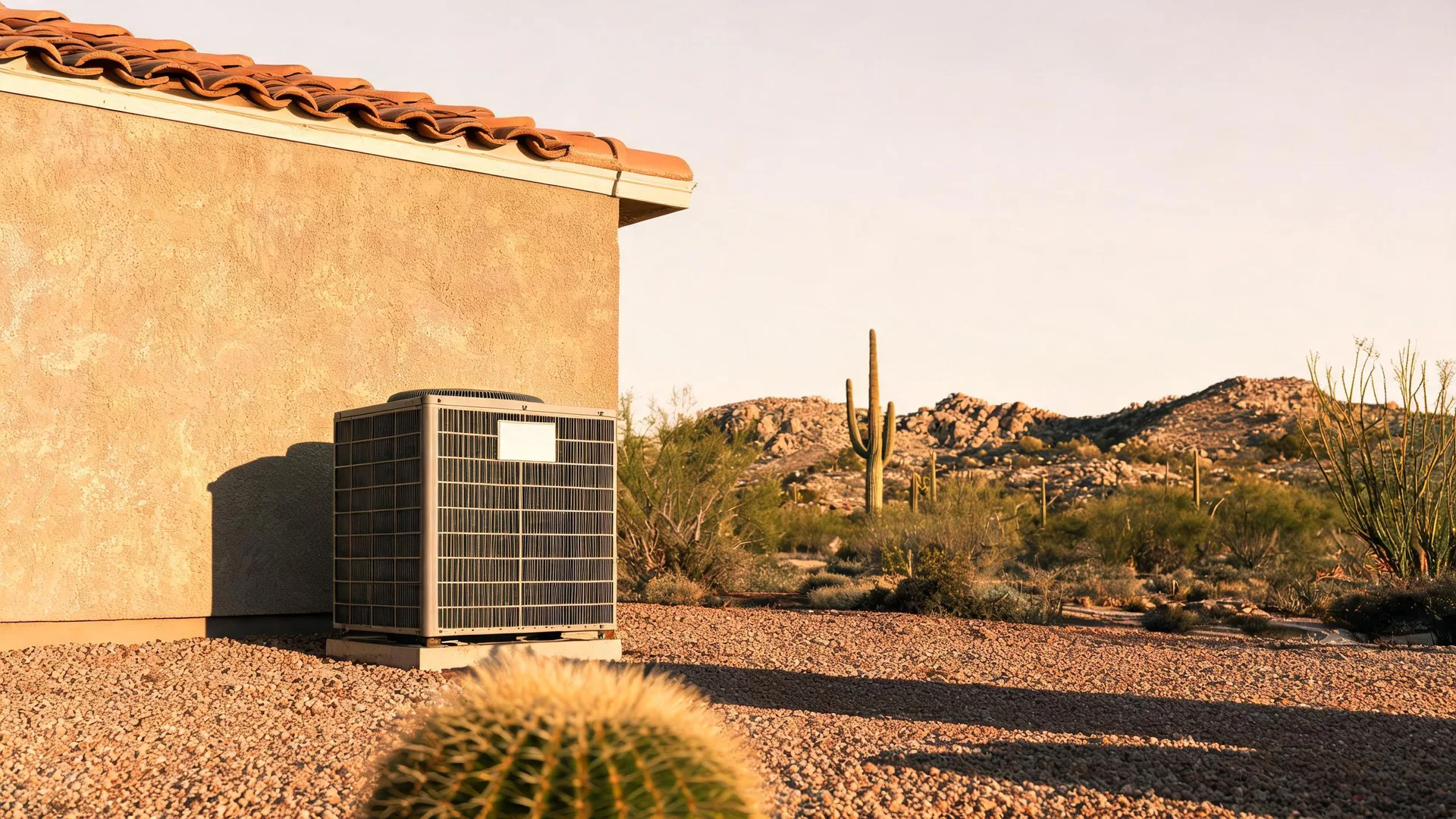
The pad, the lines, and the disconnect might carry over

The outdoor pad, the line set running to the house, and the electrical disconnect box are sometimes still good. A contractor will check each one rather than replace on principle. Reusing what's sound keeps the new install simpler, but a line set sized for the old system has to match what the new one needs.

Aerial view of a residential air conditioning condenser unit mounted on a concrete pad next to a house with vinyl siding and a sliding glass door.

Going above the federal minimum saves little here, about $10 a year.

  • A higher-efficiency unit$260 a year
  • A new unit at the federal minimum, 14.3 SEER2$270 a year

Estimates for a typical Baltimore County home, from EIA household energy data, Maryland fuel prices and NOAA climate normals. Your home will differ.

The SEER2 number on the label is a ratio, cooling output over the electricity it takes to produce it. A higher number means the compressor and coil are doing more with less power, not that the unit cools a bigger house or cools it faster. Systems with the same rating can still behave differently once they're hooked into your ductwork, because that number comes from a lab test under set conditions, not from your attic or your crawlspace. It's one piece of what you're buying, alongside the warranty, the sound level, and whether the unit is sized to the house. Weigh it the way you'd weigh the price, but don't let it stand in for a load calculation.