






A tabby cat sleeps curled up on a dark grey bed in a modern bedroom equipped with a wall-mounted air conditioning unit.

Mini Split Installation in Baltimore, MD

Tell us about the job

Takes about a minute. No obligation.

New system or replacementMini-splitBaltimore city, MD
Step 1 of 2

What ZIP code is the job in?

Maryland households paid 17.86 cents per kilowatt-hour in 2024, above what most of the country pays. A mini split runs on electricity, so that rate applies to every hour it's heating or cooling your home. The efficiency of the unit you install decides how much of that rate turns into comfort and how much just gets spent. A unit sized and installed correctly will hold a set temperature using less power than one that's oversized, undersized, or mounted with poor airflow to its outdoor compressor. At Baltimore's rate, that difference shows up on the bill month after month, not just once.

7 months
October through April, your system heats
4 months
June through September, it cools
28°F
the average winter night it heats against
87°F
the average summer afternoon it cools against
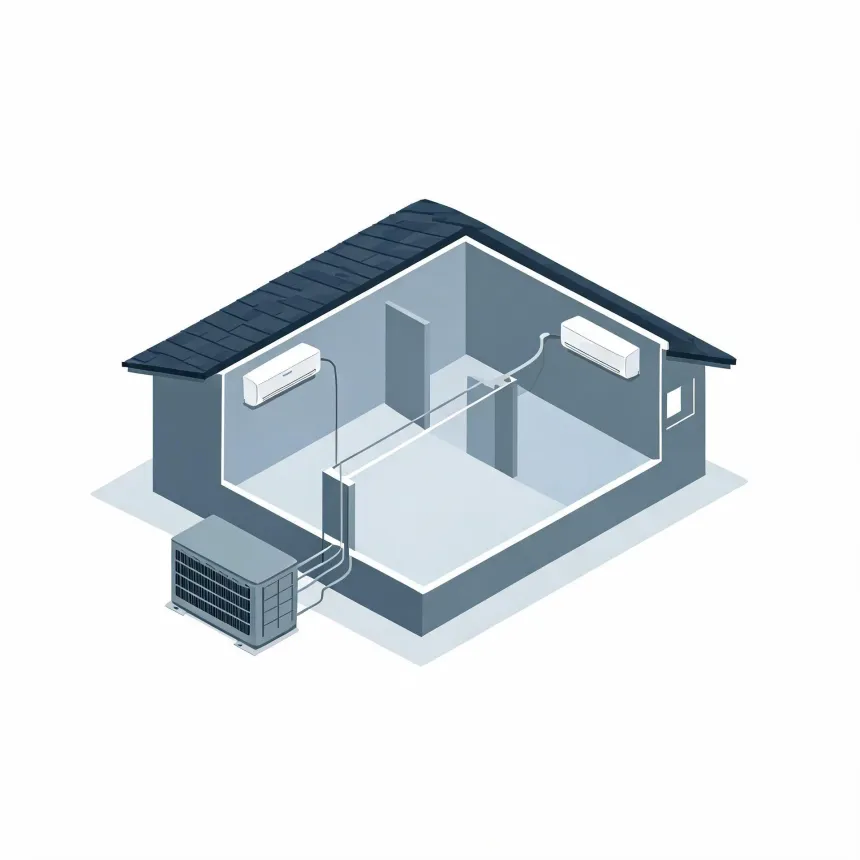
Isometric illustration of a cutaway house showing two wall-mounted mini-split indoor units connected by line sets to a single outdoor condenser beside the exterior wall.
Your system heats October through April and cools June through September.

NOAA nClimDiv, 1991–2020 normals

The number on the label is a ratio, how much heat the unit moves for the power it draws, not a flat number you can expect.

A higher rated unit costs more up front and less every month it runs after that.

Half the homes here were built by 1947, and a mini split has to fit the house it's going into

Half the homes here were built by 1947
Cooling runs June through September
Summer afternoons average 87°F
Most of Baltimore heats with gasUtility gas heats 62.1% of occupied homes in Baltimore city, electricity heats 31.1%

Cooling starts in June here, so May is the month to have a mini split in and running. That gives time to catch a bad install before the season starts, a line set that needs a tighter bend, a head mounted where it's fighting direct sun. Once June hits, the system runs for four months straight with no real break, and a problem that would've been a quick fix in May turns into a stretch of summer without cooling. Scheduling it ahead of the season also means the contractor isn't rushing the sizing and the placement just to get you running before the heat sets in. Done in May, it's done once, done right.

Baltimore sets the minimum efficiency. A federal credit can offset the rest.

Baltimore falls in climate zone 4A, which asks real work of both heating and cooling. Any mini split installed here, ductless units included, has to meet the federal minimum of 14.3 SEER2 for cooling and 7.5 HSPF2 for heating. That floor narrows what a contractor can sell you, and a federal tax credit is available on top of it for units that qualify.

Find a contractor
A man in a cap, gray long-sleeved shirt and tan work pants, seen from behind, carries a canvas tool bag up steps toward an orange front door of a gray clapboard house, with a potted shrub to the right.
A white mini-split air conditioner outdoor condenser unit mounted on metal brackets against a beige stucco exterior wall, with a blue sky and scattered clouds in the background.

Built in 1947 or earlier, running day and night

If a mini split is going into a home built around 1947 or earlier, the install matters more than the unit. An old wall may not give the line set a straight path to the outdoor compressor. An old electrical panel may not have the capacity already sitting open for it. A contractor working on a house like this has to look at what's actually there before mounting anything, not just pick a spot on the wall that looks convenient. Ask what they found when they checked.

Sizing comes from a room by room heat load, not square footage

A contractor works out how much heat a room gains in summer and loses in winter, counting the windows, the exterior walls, the insulation, and the ceiling height. A room with west facing glass needs more capacity than one the same size without it. Square footage alone skips all of that.
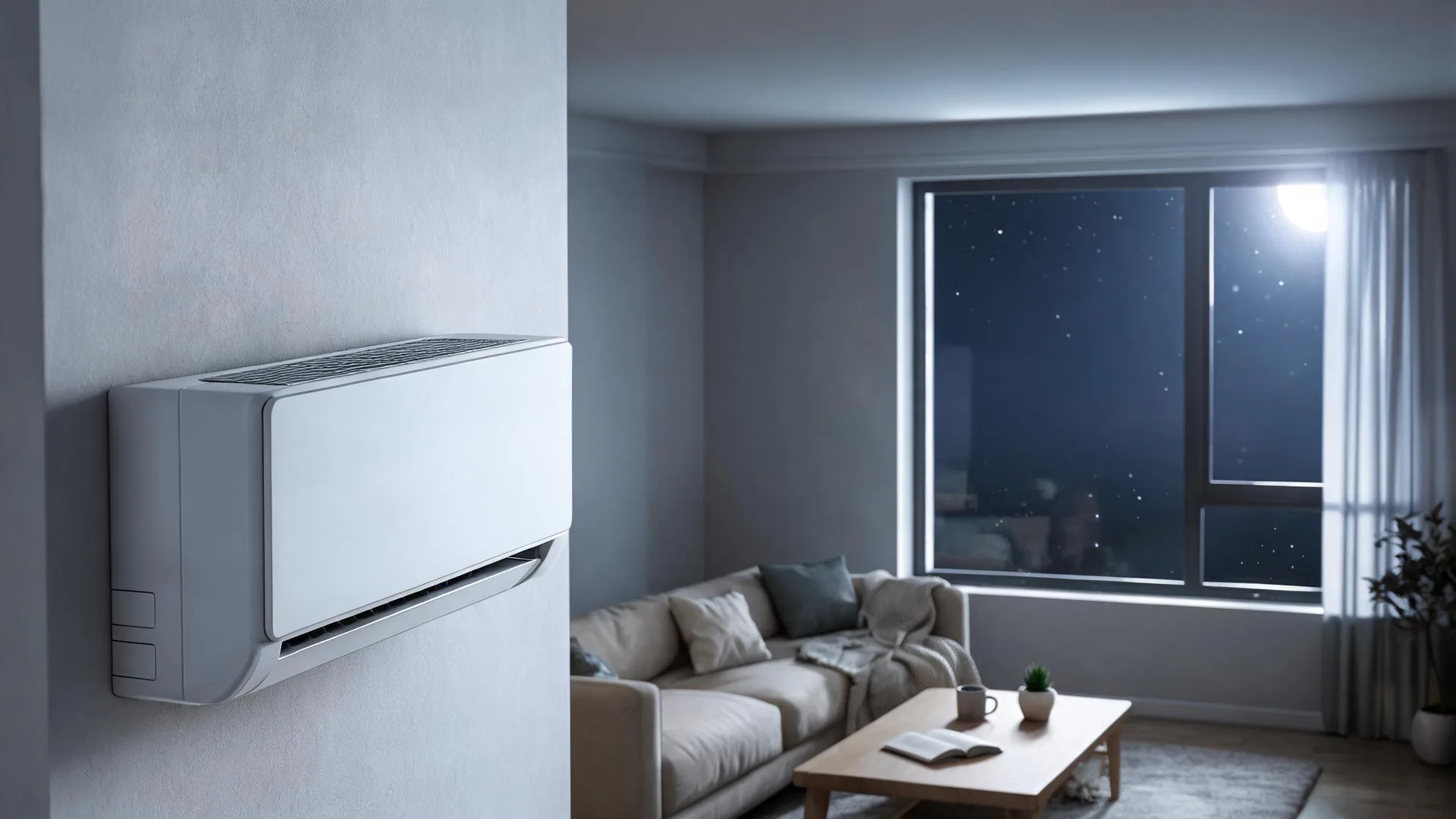
Oversized or undersized, the unit fights the room either way

A unit too big for the space cools or heats it fast, then shuts off before it pulls the moisture out of the air, so the room feels cold and damp rather than comfortable. A unit too small runs constantly, never quite reaching the set temperature, and wears out faster trying.

If there's ductwork already in place for a furnace or central AC, that system usually stays. A mini split doesn't need to replace it, it works alongside it, covering a room or a zone the ducted system struggles with. If the old equipment being replaced is a window unit or an older ductless system, the outdoor compressor and indoor head both come out, and the old line set usually isn't reused, a new one gets run to match the new equipment. If a wall sleeve or old mounting bracket is already there, a contractor will check whether it fits the new unit before building around it. Whatever comes out has refrigerant in it, and that gets recovered properly rather than vented, it's not something that gets left to the homeowner to handle.

Install day starts with the outdoor compressor and where it sits, since that location decides how the line set runs from there. Inside, the indoor head gets mounted to a bracket on the wall or ceiling, then a small hole gets drilled through to the outside for the line set, the drain, and the electrical wiring to pass through as one bundle. The lines get connected at both ends, then the system gets evacuated with a vacuum pump to pull out any air and moisture before refrigerant ever enters the lines. Skipping that step is what causes a unit to run poorly or fail early, so a contractor won't skip it even though it adds time. Once the system holds vacuum, refrigerant gets released into the lines, the unit gets powered on, and the contractor checks the temperature split between the air going in and the air coming out. That reading tells them the system is actually moving heat the way it should before they call the job done.