





A row of similar two-story wood-sided houses with gabled roofs and porches behind a white picket fence, with lawns and large shade trees.

Mini Split Installation in Bowie, MD

Tell us about the job

Takes about a minute. No obligation.

New system or replacementMini-splitPrince George's County, MD
Step 1 of 2

What ZIP code is the job in?

Maryland homes paid 17.86 cents per kilowatthour for electricity in 2024, well above what most states pay. A mini split earns its keep against that rate. It moves heat instead of burning fuel or resisting current to make it, so it puts out more heat and cooling per watt than a window unit or electric baseboard. The efficiency rating on the unit you choose matters more here than it would somewhere with cheap power, because every point of it shows up on the bill every month you run it.

7 months
October through April, your system heats
4 months
June through September, it cools
28°F
the average winter night it heats against
86°F
the average summer afternoon it cools against
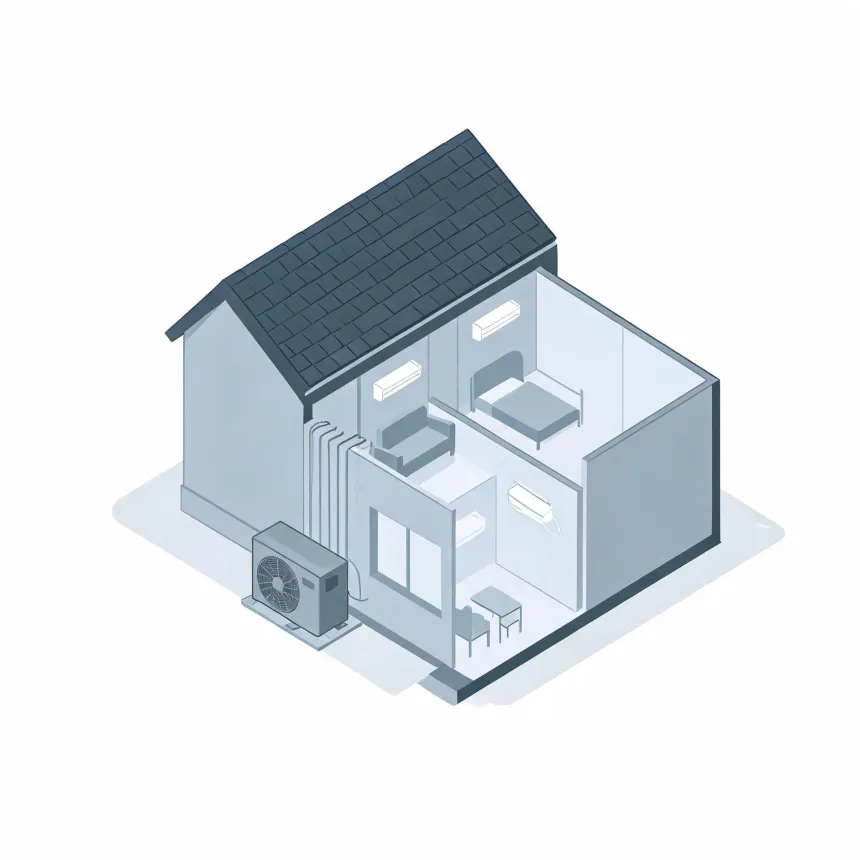
Isometric illustration of a cutaway house with a dark shingled gable roof, showing interior rooms with a bed, chairs and table, three wall-mounted mini-split indoor units connected by line sets to an outdoor condenser unit on a pad outside.
Your system heats October through April and cools June through September.

NOAA nClimDiv, 1991–2020 normals

Prince George's County logged 222 damaging wind events and 10 winter storms in the last ten years.

A standard mini split, sized and installed right, holds up fine against that. No reason to size up or pay for more than you need.

A typical Bowie home needs nothing out of the ordinary from a mini split

Half the homes here were built by 1977
Climate zone 4A
Power costs 17.86 cents a kWh statewide

Cooling here runs June through September, about four months. July afternoons average 86°F, warm enough to keep a mini split working but not the kind of heat that calls for extra capacity. The county falls in zone 4A, a mixed climate that asks for real heating in winter and real cooling in summer, and a standard mini split sized to the space handles both sides of that without strain. Nothing about Bowie's weather pushes you toward a bigger unit or a higher-tier one. Get the sizing right for the square footage and the insulation you have, and a standard system will do the job.

Have it running before June

Cooling in Bowie starts in June and runs about four months, through September. Put a mini split in during May and it's ready before the first hot week, installed and tested on your timeline instead of during a breakdown.

Find a contractor
A man in a dark shirt and tan pants carries a waxed canvas tool bag up porch steps toward an orange front door, with a potted olive tree beside the entry.
A white outdoor air conditioner condenser unit mounted on metal wall brackets against gray horizontal siding, with a blue sky and white clouds behind it.

It runs most of the year, so ask what happens on the days it isn't working hard

A mini split covers both heating and cooling, so it runs across more of the year than a furnace or a window unit that only works one season. That changes what's worth asking when you compare systems. Ask what it does on the mild days, the stretches in spring and fall where it isn't working hard. A system that can slow itself down on those days wears less and holds a steadier temperature than one that just switches on and off at full speed. Ask how the outdoor unit handles defrost in cold weather, since ice on the coil cuts heating output right when you need it most if the defrost cycle isn't doing its job. And ask about filter and coil access, because a system that runs for most of the year needs its filter checked more often than a seasonal one, and a unit that's awkward to open tends to get skipped.

The rating tells you the ratio, not the comfort

The efficiency number on a mini split compares the heat it moves against the power it draws. A higher rated unit moves more heat per watt than a lower rated one. It says nothing about how quiet the indoor head runs, how evenly it holds a room, or how well it handles a mild afternoon. Those come down to the equipment and the install, not the number on the label.
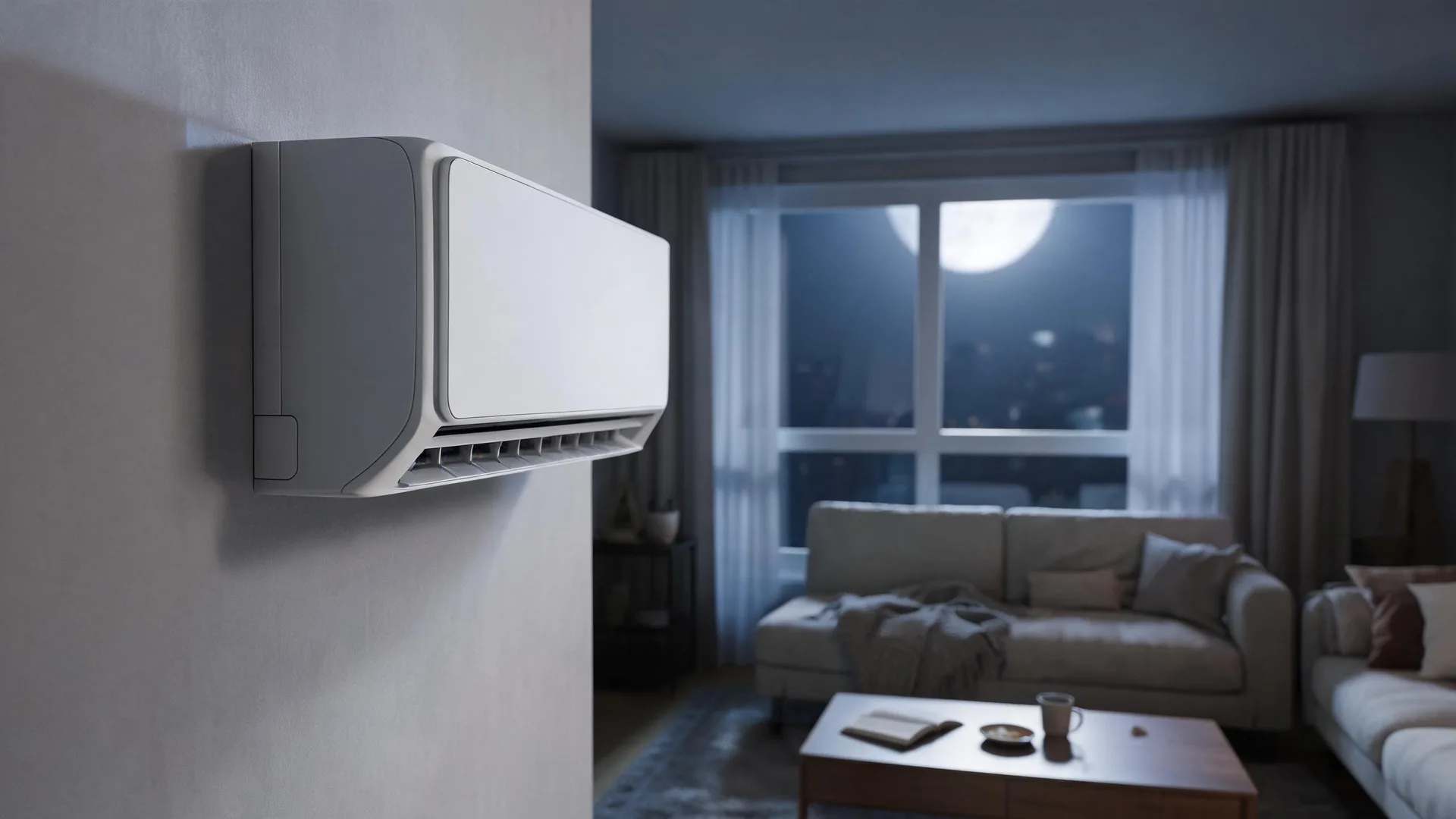
The rating only pays off if the room holds what it makes

A mini split rated high still loses ground in a room that leaks air around the windows or has little insulation in the walls. The unit has to run longer and harder to make up for what escapes, and that erases the gain the rating promised. Before paying more for a higher tier, it's worth knowing whether the space it's heating and cooling can hold onto that output.

Whoever handles the install still has to deal with whatever is heating or cooling the space now. A window unit comes out easy enough, just a bracket and a pane to reset. A furnace or a central air system tied into ductwork is a bigger job, since that ductwork either gets capped off or left in place for a backup source of heat. Baseboard heaters usually come out with the wall patched where the wiring ran. If the old system used a line set or a refrigerant line, that gets recovered properly rather than just cut, since venting refrigerant into the air isn't legal and isn't safe. None of this changes how the mini split gets sized or installed, but it's worth asking upfront who's responsible for hauling the old equipment away and patching whatever it leaves behind.

Price comes down to how many zones you're running and how far the lines have to travel. One indoor head paired with one outdoor unit costs less than a multi-zone setup feeding several rooms, since each extra head adds its own line set, its own mounting work, and another port the outdoor unit has to support. Distance matters too. A line set that runs straight through a wall to an outdoor unit sitting just outside costs less to install than one snaking up through a chase to a unit on a roof or around the far side of the house. The outdoor unit's resting spot plays in as well, since a wall that needs reinforcing or a pad that needs pouring before the unit can sit adds work beyond the mini split itself. Electrical capacity is worth asking about early. If the panel has room for the new circuit, the install goes straight through. If it doesn't, that's its own job before the mini split goes in at all.